Structural Steel Fabrication in the Southern Cone: The Role of Buenos Aires
The industrial landscape of Argentina, centered heavily in the Buenos Aires metropolitan area, serves as a critical hub for structural steel fabrication across the Southern Cone. As infrastructure projects expand into the remote regions of the Pampas and Patagonia, the demand for high-precision steel processing has intensified. The primary challenge for fabricators in these vast territories is the maintenance of operational uptime for complex machinery situated thousands of kilometers from technical service centers. The deployment of the H-Beam Plasma Cutter integrated with advanced cloud-based telemetry has emerged as a necessary evolution for the region’s heavy industry.
In the context of Argentine manufacturing, the transition from manual layout and mechanical sawing to automated plasma processing is driven by the need for higher throughput and tighter tolerances. Large-scale projects, including bridge construction, energy infrastructure in Vaca Muerta, and high-rise commercial developments in Puerto Madero, require structural components that meet international ISO standards. This necessitates a shift toward multi-axis robotic systems capable of handling complex geometries with minimal human intervention.
Technical Specifications of the H-Beam Plasma Cutter
The modern H-Beam Plasma Cutter utilized in the Buenos Aires industrial corridor is characterized by its use of 6-Axis Robotic Kinematics. Unlike traditional 2D plate cutters, these systems utilize a robotic arm to maneuver a plasma torch around a stationary or moving workpiece. This allows for the execution of bolt holes, coping, notches, and weld preparations on all four sides of an H-beam, I-beam, or square tube in a single pass.
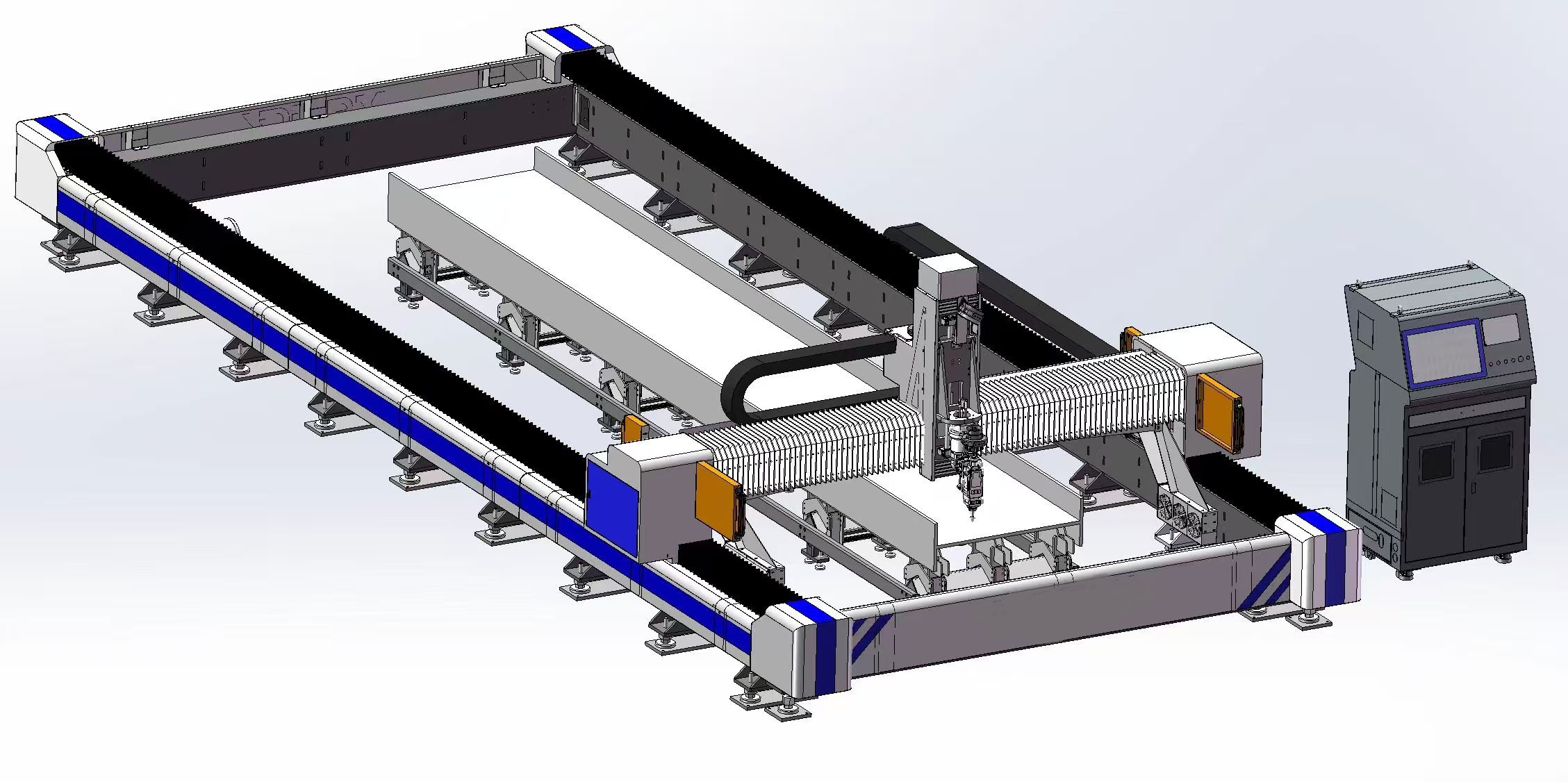
Industrial Application of H-Beam Plasma Cutter
Key technical parameters of these systems include:
1. Positional Accuracy: Most industrial-grade robotic cutters maintain a repeatability of +/- 0.1mm, ensuring that structural joints align perfectly during field assembly.
2. Plasma Power Source: High-definition plasma units, typically ranging from 130 to 400 amps, allow for dross-free cutting of carbon steel thicknesses up to 50mm.
3. Material Handling: Integrated conveyor systems with laser measuring sensors automatically detect the leading edge and length of the beam, compensating for any material camber or sweep in real-time.
By automating the marking and cutting process, fabricators in Buenos Aires have reported a reduction in labor hours per ton of steel by as much as 70 percent. However, the complexity of these robotic systems introduces a high dependency on specialized software and electronic calibration.
The Challenge of Geographic Isolation and Vast Regions
Argentina is the eighth-largest country in the world by land area, characterized by significant distances between industrial centers and remote project sites. A fabrication facility located in the Greater Buenos Aires area may supply steel to a mining operation in the Andes or a wind farm in Santa Cruz. When a technical fault occurs in a high-tech H-Beam Plasma Cutter, the logistical cost and time delay associated with dispatching a specialized technician can be prohibitive.
In many instances, the “down-time” cost exceeds the actual repair cost. For a Tier 1 fabricator, a single day of halted production can result in tens of thousands of dollars in lost revenue and contractual penalties. This geographic reality has mandated the integration of Remote Cloud Diagnostics. This technology bridges the gap between the local operator and the global manufacturer’s engineering support team, regardless of the physical distance.
Implementing Remote Cloud Diagnostics and IIoT
The integration of the Industrial Internet of Things (IIoT) into plasma cutting systems allows for the continuous streaming of machine health data to a centralized cloud platform. In Buenos Aires, service providers are now utilizing these data streams to provide proactive rather than reactive maintenance. The diagnostic system monitors variables such as gas pressure, arc voltage, motor torque, and cabinet temperature.
When the system detects a deviation from standard operating parameters—for example, a fluctuation in the pilot arc voltage that suggests electrode wear—the cloud platform generates an automated alert. Technical support teams in Europe, North America, or Asia can log into the machine’s control interface via a secure VPN. They can perform real-time PLC (Programmable Logic Controller) adjustments, update software firmware, or calibrate the robotic arm’s tool center point without being physically present on the shop floor.
This remote capability is particularly vital for the “Vast Regions” aspect of the Argentine market. A machine operating in a remote province can be serviced by an expert in Buenos Aires or overseas, ensuring that the local workforce only needs to perform the physical component replacement as directed by the remote diagnostic report.
Data-Driven Maintenance and Predictive Algorithms
The transition to cloud-connected machinery allows for the implementation of Predictive Maintenance Algorithms. By analyzing historical data from hundreds of machines globally, the cloud platform can predict the failure point of specific consumables or mechanical parts. For Argentine fabricators, this means spare parts inventory can be managed with extreme precision.
In a region where import logistics can be complex and time-consuming, knowing exactly when a specific bearing or torch component will reach its end-of-life allows the company to initiate the import process well in advance. This data-centric approach minimizes the reliance on “safety stock” and optimizes the capital allocation of the fabrication firm. Furthermore, the cloud system logs every cut made, providing management with accurate data on gas consumption, electricity usage, and operator efficiency, which are critical metrics for competitive bidding in the B2B sector.
Economic Viability and ROI for the Argentine Market
The capital expenditure required for a cloud-enabled H-beam processing line is significant. However, the Return on Investment (ROI) is calculated based on the elimination of manual errors and the drastic reduction in field-fit issues. In the Buenos Aires market, where labor costs and inflation are variable, the ability to lock in production costs through automation provides a stabilizing effect on project margins.
Moreover, the ability to demonstrate “Cloud-Verified Quality Control” is becoming a requirement for international tenders. When every hole and cut is logged and verified against the original BIM (Building Information Modeling) file, the fabricator can provide a digital twin of the processed steel. This level of transparency is highly valued by global engineering firms operating in Argentina’s energy and mining sectors.
Industry Insight: The Future of Autonomous Fabrication
The integration of H-beam plasma cutting with remote diagnostics in Buenos Aires represents a microcosm of a larger global trend: the decoupling of technical expertise from physical location. As we look toward the next decade, the structural steel industry will likely move toward fully autonomous fabrication cells where the role of the local operator shifts from manual labor to system oversight.
For vast regions like Argentina, the development of 5G infrastructure and low-latency satellite internet will further enhance the reliability of cloud diagnostics. The insight for the industry is clear: the competitive advantage no longer resides solely in the hardware of the plasma cutter, but in the data ecosystem that surrounds it. Companies that fail to adopt cloud-integrated maintenance models will find themselves marginalized by the logistical costs of the very geography they inhabit. The future of heavy industry in South America is digital, remote, and precision-driven.
Industrial Expertise & Support
Are you looking for high-performance H-Beam Plasma Cutter tailored for the Global market? Our engineering team provides comprehensive solutions for modern manufacturing.





