Optimization of Structural Steel Fabrication: The H-Beam Plasma Cutter in Buenos Aires
The industrial landscape of Buenos Aires, Argentina, has long served as a critical hub for South American infrastructure and heavy manufacturing. As global demand for structural steel increases, the transition from traditional mechanical sawing and drilling to automated thermal cutting has become a necessity for maintaining competitive throughput. At the center of this transition is the H-Beam Plasma Cutter, specifically those integrated with energy-efficient fiber source technology. This shift represents a move toward high-precision, multi-axis processing that reduces secondary finishing requirements and operational overhead.
In the Zárate-Campana industrial corridor, engineering firms are increasingly deploying CNC-controlled plasma systems to handle complex geometries in structural members. The integration of fiber source technology into these systems addresses the dual challenges of rising energy costs in the Southern Cone and the requirement for tighter tolerances in international construction standards, such as those dictated by the AISC (American Institute of Steel Construction) and Eurocode 3.
Technical Architecture of Fiber-Driven Plasma Systems
The core of the modern H-Beam Plasma Cutter lies in its power delivery system. Traditional plasma systems relied heavily on gas-cooled or water-cooled electrodes with significant energy loss during the arc stabilization phase. Modern fiber-integrated sources utilize a solid-state gain medium, which offers a higher wall-plug efficiency compared to legacy CO2 or standard air-plasma configurations. This technical advancement allows for a more concentrated energy density at the point of contact, resulting in a narrower Heat-Affected Zone (HAZ).
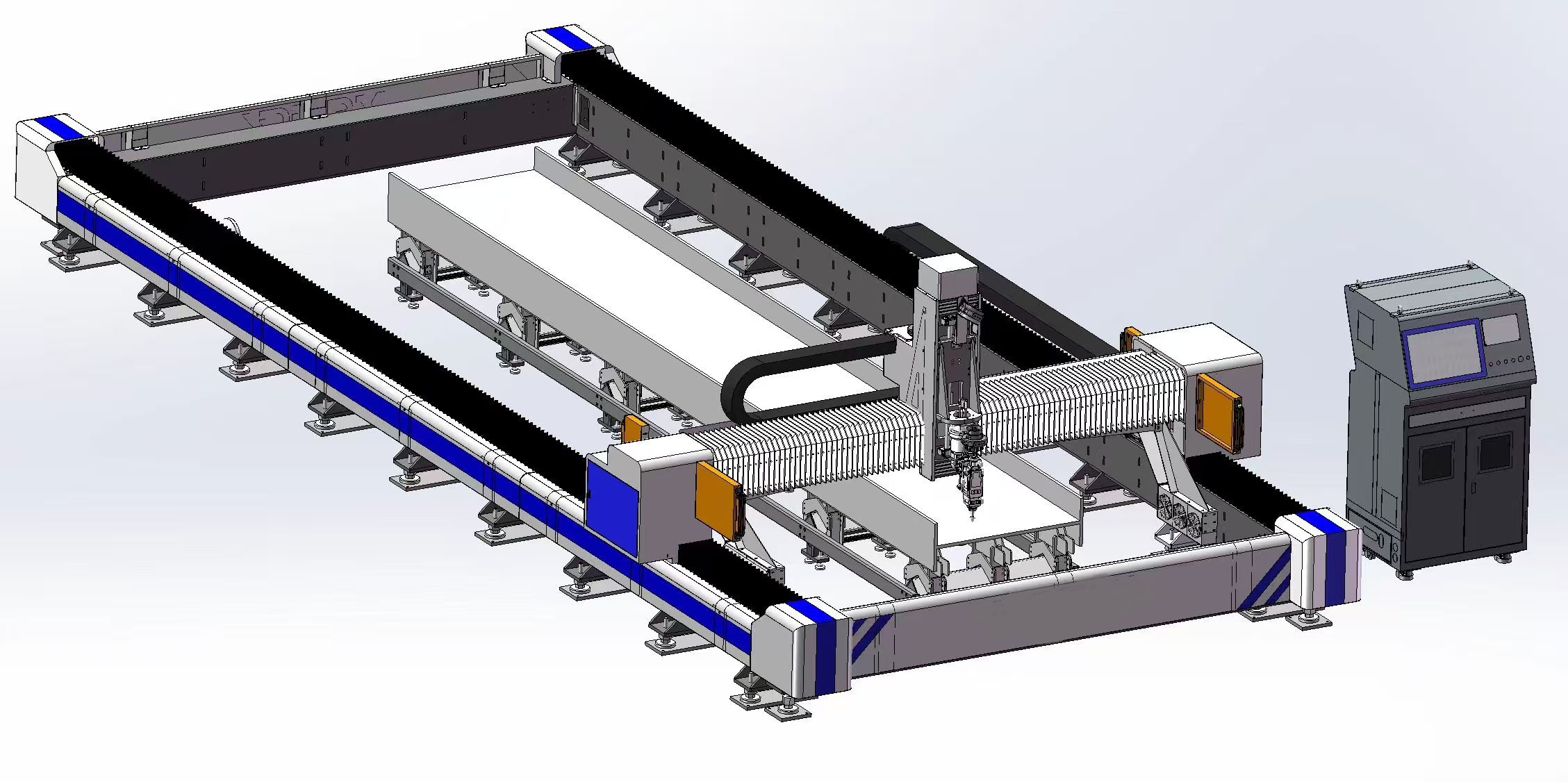
Industrial Application of H-Beam Plasma Cutter
For structural steel fabricators in Buenos Aires, the reduction of the HAZ is critical. When cutting H-beams, I-beams, or channels, excessive heat can lead to structural warping or metallurgical changes that compromise the integrity of the flange-to-web transitions. Fiber source technology ensures that the thermal input is localized, maintaining the mechanical properties of the ASTM A36 or AR 400 steel grades commonly processed in the region.
Multi-Axis Robotic Integration and Kinematics
Processing H-beams requires more than a simple linear cut. The geometry of a wide-flange beam necessitates a system capable of 3D motion. Advanced cutters in the Argentinian market utilize 6-axis or 7-axis robotic arms. These systems are programmed to perform coping, miter cutting, and bolt-hole piercing in a single pass. The kinematics of these robots are synchronized with the plasma power supply to adjust the torch height and angle in real-time, compensating for any dimensional irregularities in the raw mill-produced beams.
The precision of these movements is governed by high-resolution encoders and CNC controllers that interface directly with BIM (Building Information Modeling) software. By importing Tekla or AutoCAD files directly into the machine’s interface, fabricators eliminate manual layout errors, which historically accounted for significant material waste in large-scale infrastructure projects.
Energy Efficiency and Operational ROI in the Argentinian Context
Energy consumption is a primary variable in the total cost of ownership (TCO) for heavy machinery in Buenos Aires. Fiber source technology provides a distinct advantage by reducing the kVA requirement during peak operation. Unlike traditional plasma units that require constant high-voltage stabilization, fiber-enhanced systems utilize high-frequency switching power supplies that optimize power draw based on the material thickness being processed.
Comparative Data: Fiber vs. Traditional Plasma
Data from industrial installations indicates that fiber-integrated plasma systems can achieve a 20 percent to 30 percent reduction in electricity consumption per meter of cut. Furthermore, the Duty Cycle of these machines often reaches 100 percent at maximum output, allowing for 24/7 operation in high-output facilities. This is particularly relevant for Argentinian exporters who must balance local labor costs with the need for high-volume production for the global market.
Beyond electricity, the consumption of shielding gases—such as Oxygen, Nitrogen, or F5 (95 percent Hydrogen, 5 percent Nitrogen)—is optimized through automated gas consoles. These consoles regulate flow rates based on the specific cutting phase (piercing versus edge cutting), further driving down the cost per part.
Maintenance and Longevity of Fiber Source Components
One of the most significant technical advantages of the Fiber Laser Source and associated plasma technology is the reduction in consumable wear. In traditional plasma cutting, the frequent replacement of nozzles and electrodes contributes to downtime. Modern fiber-coupled systems utilize advanced cooling geometries that extend the life of these components by up to 40 percent.
In the Buenos Aires industrial sector, where supply chain logistics for specialized parts can sometimes face delays, the extended lifespan of consumables is a critical operational safeguard. Moreover, the solid-state nature of the fiber source means there are fewer moving parts and no mirrors to align, which significantly reduces the frequency of scheduled maintenance intervals compared to CO2-based thermal cutting systems.
Strategic Implementation in Global Supply Chains
The adoption of high-efficiency H-beam cutters in Argentina is not merely a local upgrade but a strategic alignment with global supply chain requirements. As international construction projects demand higher traceability and precision, the data-logging capabilities of these CNC systems become invaluable. Every cut, hole, and mark can be timestamped and verified against the digital twin of the structural design.
This level of CNC Multi-Axis Robotics integration allows Argentinian fabricators to compete on a global scale, offering prefabricated structural components that are ready for immediate assembly upon arrival at the construction site. The reduction in on-site welding and adjustment leads to faster project completion times and lower overall structural costs.
Industry Insight: The Shift Toward Green Structural Fabrication
The global structural steel industry is currently undergoing a paradigm shift toward “Green Steel” and sustainable manufacturing processes. While much of the focus remains on the smelting process, the fabrication stage plays a vital role in reducing the carbon footprint of a project. The implementation of energy-efficient fiber source technology in H-beam processing is a tangible step toward this goal. By minimizing material waste through high-precision nesting and reducing energy draw through advanced power electronics, the industrial sector in Buenos Aires is positioning itself at the forefront of sustainable heavy manufacturing. The future of structural fabrication lies in the intersection of robotic automation and energy-dense thermal processing, ensuring that the built environment of tomorrow is constructed with maximum efficiency and minimal environmental impact.
Industrial Expertise & Support
Are you looking for high-performance H-Beam Plasma Cutter tailored for the Global market? Our engineering team provides comprehensive solutions for modern manufacturing.





