Introduction: The Industrial Evolution of Structural Steel in Bogotá
The industrial landscape of Bogotá, Colombia, has undergone a significant transformation, positioning itself as a primary hub for structural steel fabrication in the Andean region. As infrastructure projects and high-rise commercial developments expand, the demand for precision-engineered structural components has shifted from traditional manual processing to automated CNC solutions. Central to this transition is the deployment of the H-Beam Plasma Cutter, a machine designed to handle complex geometries, including cope cuts, bolt holes, and flange thinning, with high repeatability. In the current B2B climate, procurement logic has shifted from minimizing initial capital expenditure to maximizing the total life-cycle value of the equipment. This article examines the technical synergy between high-end power sources, such as IPG and Raycus, and the long-term residual value of these machines within the Colombian industrial sector.
Technical Architecture and Plasma Source Integration
The efficiency of an H-beam processing line is fundamentally dictated by its power source and the integration of its motion control system. While plasma cutting remains the industry standard for thick structural steel due to its cost-to-speed ratio, the inclusion of high-stability power modules like those from IPG or Raycus—traditionally leaders in fiber laser technology—indicates a move toward Power Density Stability and higher precision in thermal cutting applications. These sources provide a consistent arc or beam quality that minimizes the Heat Affected Zone (HAZ), a critical factor in maintaining the structural integrity of ASTM A36 or A572 grade steel commonly used in Bogotá’s construction projects.
Integrating a 6-axis robotic arm or a multi-axis CNC gantry with these power sources allows for 360-degree processing of the beam. This eliminates the need for manual flipping or repositioning, which historically introduced dimensional inaccuracies. By utilizing high-frequency power modulation, the H-Beam Plasma Cutter achieves kerf widths that are significantly narrower than older transformer-based models. This precision reduces secondary grinding processes, directly impacting the throughput of the fabrication shop.
The Economic Impact of IPG and Raycus Sources on Residual Value
In the secondary machinery market, the brand of the internal components often dictates the resale price more than the frame itself. IPG and Raycus have established a global footprint that ensures parts availability and technical support, which are vital for Secondary Market Liquidity. In Bogotá, where import lead times for specialized electronics can be lengthy, owning a machine equipped with globally recognized power sources reduces the risk for future buyers.
Technical data suggests that machines equipped with high-efficiency solid-state or fiber-integrated sources experience lower rates of thermal degradation in their internal circuitry compared to generic alternatives. This longevity translates to a higher residual value, often retaining 60 to 70 percent of their original value after five years of operation, provided the duty cycle is managed within manufacturer specifications. For Colombian firms, this represents a strategic hedge against currency fluctuation and equipment depreciation.
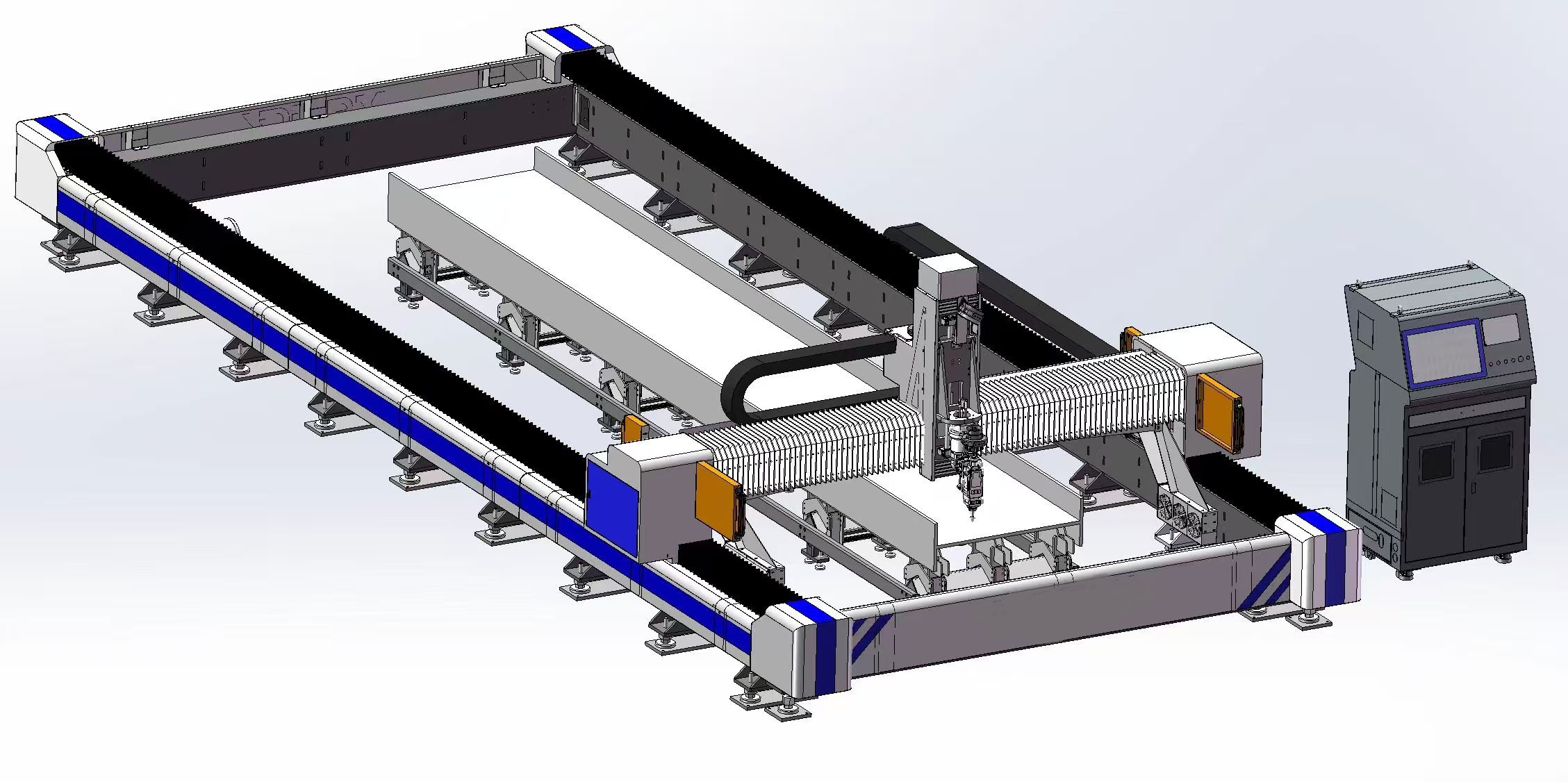
Industrial Application of H-Beam Plasma Cutter
Operational Efficiency in the Bogotá Industrial Corridor
Bogotá’s altitude and environmental conditions require equipment with robust cooling systems and dust filtration. The H-Beam Plasma Cutter units deployed in this region are often customized with high-capacity chillers to maintain the optimal operating temperature of the IPG or Raycus modules. The efficiency of these power sources—often exceeding 30 to 40 percent wall-plug efficiency—results in lower electricity consumption per meter of cut. In a region where energy costs are a significant variable in operational overhead, the lower “cost-per-cut” enhances the machine’s attractiveness to both current operators and future owners.
Furthermore, the software integration in these systems allows for direct importing of TEKLA or AutoCAD files. This digital workflow ensures that the Structural Steel Fabrication process is seamless from design to execution. The ability to track gas consumption, arc-on time, and consumable wear through the CNC interface provides a data-driven approach to maintenance, further preserving the mechanical integrity of the unit over time.
Logistics and Maintenance: The Local Advantage
The concentration of technical expertise in Bogotá for CNC maintenance has grown in tandem with the adoption of high-tech cutters. The presence of local technicians trained in IPG and Raycus diagnostics means that downtime is minimized. For a B2B entity, the “Return on Assets” is heavily influenced by the Mean Time To Repair (MTTR). Machines with standardized, high-quality components benefit from a predictable maintenance schedule, which prevents the catastrophic failures associated with lower-tier power sources. This predictability is a cornerstone of high residual value, as it provides a documented history of operational health.
Comparative Analysis: Plasma vs. Hybrid Solutions
While traditional plasma cutting is the primary focus, the introduction of fiber-capable sources into the H-beam market is a notable trend. Fiber sources (like those from IPG) offer a level of precision in thinner-walled beams that plasma cannot match. However, for the heavy-duty beams used in Colombian seismic-resistant structures, the plasma arc’s ability to penetrate thicknesses of 20mm to 50mm remains essential. The high residual value of these machines in Bogotá is tied to their versatility; they can handle the heavy-duty requirements of bridge building while maintaining the precision required for complex architectural steelwork.
Concluding Industry Insight
The global structural steel market is moving toward a “Smart Factory” model where data transparency and component reliability are the primary drivers of procurement. In Bogotá, the adoption of the H-Beam Plasma Cutter equipped with IPG or Raycus sources reflects a sophisticated understanding of long-term asset management. The industry insight here is clear: the initial price of a CNC machine is becoming less relevant than its projected exit value and its operational uptime. As the South American market continues to mature, we expect to see a consolidation of the market around high-tier component manufacturers. Firms that invest in premium power sources today are not merely purchasing a tool for current production; they are securing a liquid asset that will remain technologically relevant and operationally viable in the global secondary market for the next decade. The intersection of robust mechanical engineering and elite power electronics is the new benchmark for industrial success in the region.
Industrial Expertise & Support
Are you looking for high-performance H-Beam Plasma Cutter tailored for the Global market? Our engineering team provides comprehensive solutions for modern manufacturing.





