The Strategic Implementation of H-Beam Plasma Cutting in Bogotá’s Industrial Sector
Bogotá, Colombia, has solidified its position as a primary industrial node in South America, particularly within the sectors of structural engineering and heavy manufacturing. As infrastructure projects across the Andean region demand higher precision and faster throughput, the adoption of the H-Beam Plasma Cutter has transitioned from an optional upgrade to a technical necessity. This equipment facilitates the automated processing of structural profiles, including H-beams, I-beams, channels, and angles, replacing traditional manual layout and mechanical drilling methods. The integration of these systems within the Bogotá corridor requires a strict adherence to international safety protocols, specifically CE and NR-12, to ensure both operational reliability and workforce protection.
Technical Architecture of 3D Structural Steel Processing
The core functionality of a modern H-Beam Plasma Cutter revolves around multi-axis robotic integration. Unlike 2D plate cutting, beam processing requires a 6-Axis Robotic Arm capable of maneuvering around the stationary or moving workpiece to execute complex geometries. This includes bolt holes, copes, notches, and weld preparations such as miter cuts and beveling. The precision of these cuts is governed by advanced CNC controllers that interpret DSTV or STEP files directly from structural BIM software.
In the high-altitude environment of Bogotá, thermal management and atmospheric pressure variables must be accounted for in the plasma arc stabilization. High-definition plasma power sources utilize secondary gas shielding to constrict the arc, resulting in a higher energy density. This technical approach minimizes the Heat Affected Zone (HAZ) and reduces Thermal Distortion Control requirements post-cut. For B2B stakeholders, this translates to a reduction in secondary grinding operations and a significant decrease in the total cost per ton of fabricated steel.
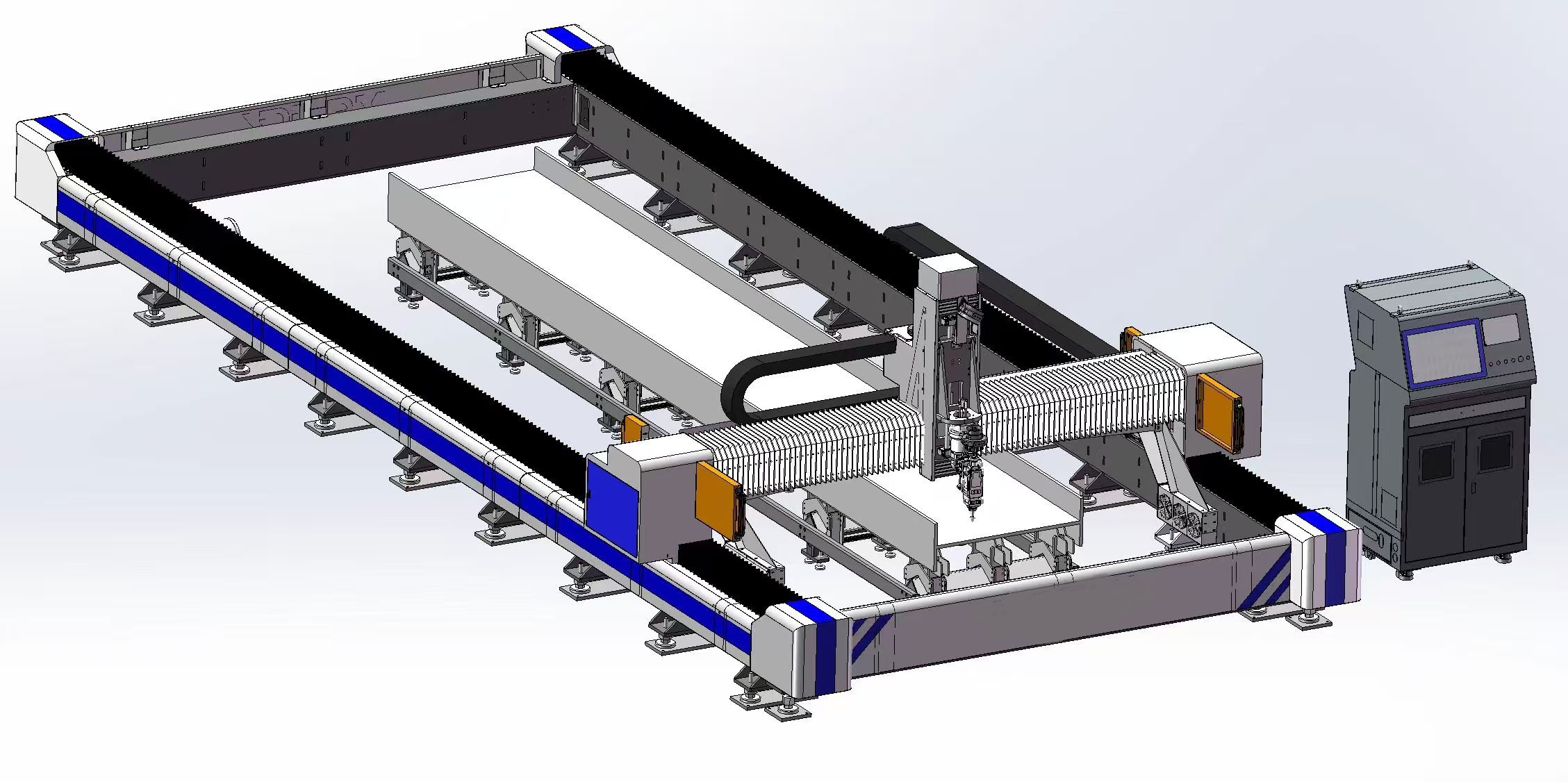
Industrial Application of H-Beam Plasma Cutter
CE Certification: Engineering for Global Standardization
For industrial machinery operating in a globalized market, CE (Conformité Européenne) marking serves as a mandatory declaration that the equipment meets European Union safety, health, and environmental protection requirements. In the context of H-beam plasma systems, CE compliance involves several critical directives:
1. Machinery Directive (2006/42/EC): This ensures that the structural integrity of the cutter and its moving components are engineered to prevent mechanical failure during high-speed operations.
2. Electromagnetic Compatibility (EMC) Directive: High-frequency plasma ignition systems generate significant electromagnetic interference. CE compliance ensures that the machine does not disrupt other electronic infrastructure within the Bogotá manufacturing facility, nor is it susceptible to external interference.
3. Low Voltage Directive: This governs the electrical safety of the control cabinets and power distribution units, ensuring that insulation and grounding systems prevent electrical hazards to operators.
NR-12 Compliance: Technical Safety Requirements for South America
While CE is a global benchmark, the NR-12 (Norma Regulamentadora 12) standard is increasingly relevant for equipment deployed in South American jurisdictions, including Colombia. NR-12 focuses heavily on the “Safety of Machinery and Equipment” and is often more prescriptive regarding physical barriers and redundancy systems than other international standards.
Implementation of Safety PLC Systems is a cornerstone of NR-12. These systems utilize dual-channel redundancy to monitor emergency stops, light curtains, and interlocking gates. If a safety breach is detected, the Safety PLC ensures a controlled, category-0 or category-1 stop of all hazardous motion. In Bogotá’s fabrication shops, where floor space optimization is critical, NR-12 compliant systems utilize laser scanners and physical perimeter fencing to create a “safe zone” around the robotic gantry, preventing unauthorized access during the high-speed plasma cycle.
Operational Efficiency and CAD/CAM Integration
The efficiency of an H-Beam Plasma Cutter is not solely dependent on the hardware but on the seamless flow of data from the design office to the shop floor. Modern systems utilize sophisticated nesting software that optimizes the arrangement of parts on a single beam to minimize scrap. In Bogotá, where material costs are influenced by international shipping and local logistics, a 2% to 5% increase in material utilization can result in substantial annual savings.
Furthermore, the integration of automatic measurement probes allows the system to detect deviations in the beam’s dimensions. Structural steel is rarely perfectly straight; it often possesses camber or sweep. The CNC system uses touch-probing or laser sensors to map the actual profile of the beam and adjusts the cutting path in real-time. This ensures that bolt holes remain perfectly aligned across long spans, a critical factor for the modular construction projects currently prevalent in Colombia’s urban development.
Environmental and Maintenance Considerations in Bogotá
Operating heavy industrial machinery at Bogotá’s elevation (approximately 2,640 meters) requires specific considerations for cooling and air filtration. The thinner atmosphere affects the heat dissipation of the plasma torch and the power supply. Consequently, robust liquid cooling systems and high-capacity air filtration units are integrated to maintain optimal operating temperatures. Furthermore, the extraction of plasma fumes is handled by high-efficiency particulate air (HEPA) filtration systems, ensuring that the facility maintains air quality standards in compliance with local environmental regulations.
Concluding Industry Insight: The Shift Toward Autonomous Fabrication
The industrial landscape in Bogotá is moving toward a decentralized yet highly integrated manufacturing model. The transition to H-beam plasma cutting technology represents a broader shift from labor-intensive processes to capital-intensive, high-precision automation. As global supply chains remain volatile, the ability to fabricate complex structural components locally with international-grade precision (CE and NR-12) provides a competitive advantage for Colombian firms.
The future of the industry lies in the convergence of “Digital Twin” technology and robotic fabrication. By maintaining a digital replica of the fabrication process, companies can predict maintenance cycles and simulate production runs before a single arc is struck. For B2B entities, investing in compliant, high-specification plasma technology is no longer just about the cut—it is about the data-driven optimization of the entire structural steel lifecycle. As Bogotá continues to modernize its infrastructure, the H-beam plasma cutter will remain the centerpiece of the high-output, safety-compliant fabrication facility.
Industrial Expertise & Support
Are you looking for high-performance H-Beam Plasma Cutter tailored for the Global market? Our engineering team provides comprehensive solutions for modern manufacturing.





