Operational Efficiency in Structural Steel: A Case Study from Belo Horizonte
The industrial landscape of Belo Horizonte, Brazil, serves as a critical hub for mining, infrastructure, and heavy engineering. Within this competitive ecosystem, structural steel fabricators face increasing pressure to optimize throughput while maintaining tight dimensional tolerances. Traditional methods of processing structural members, particularly H-beams, have historically relied on manual layout and oxy-fuel torch cutting. However, a recent transition by a mid-sized fabrication facility in the region demonstrates the quantifiable economic benefits of integrating an H-Beam Plasma Cutter into the production line. By automating the thermal cutting process, the facility achieved a documented reduction in operational expenditure exceeding $5,000 per month, primarily through the elimination of redundant manual labor and a significant decrease in material waste.
The Limitations of Manual H-Beam Processing
Prior to the implementation of automated systems, the fabrication process in the Belo Horizonte facility required a multi-stage manual workflow. This involved manual marking of hole locations, cope geometries, and flange thinnings based on 2D technical drawings. The reliance on human operators for layout introduces a high probability of dimensional variance. In structural steel, a deviation of even 3mm can lead to significant fit-up issues during site assembly, necessitating expensive rework or field welding.
Manual oxy-fuel cutting also presents technical challenges regarding the Heat Affected Zone (HAZ). The high heat input required for oxy-fuel processes often results in material warping and a wider kerf compensation requirement. Furthermore, the secondary processing time—including grinding to remove dross and slag—added approximately 25 percent to the total fabrication time per beam. These inefficiencies represent a hidden cost that direct labor figures often fail to capture fully.
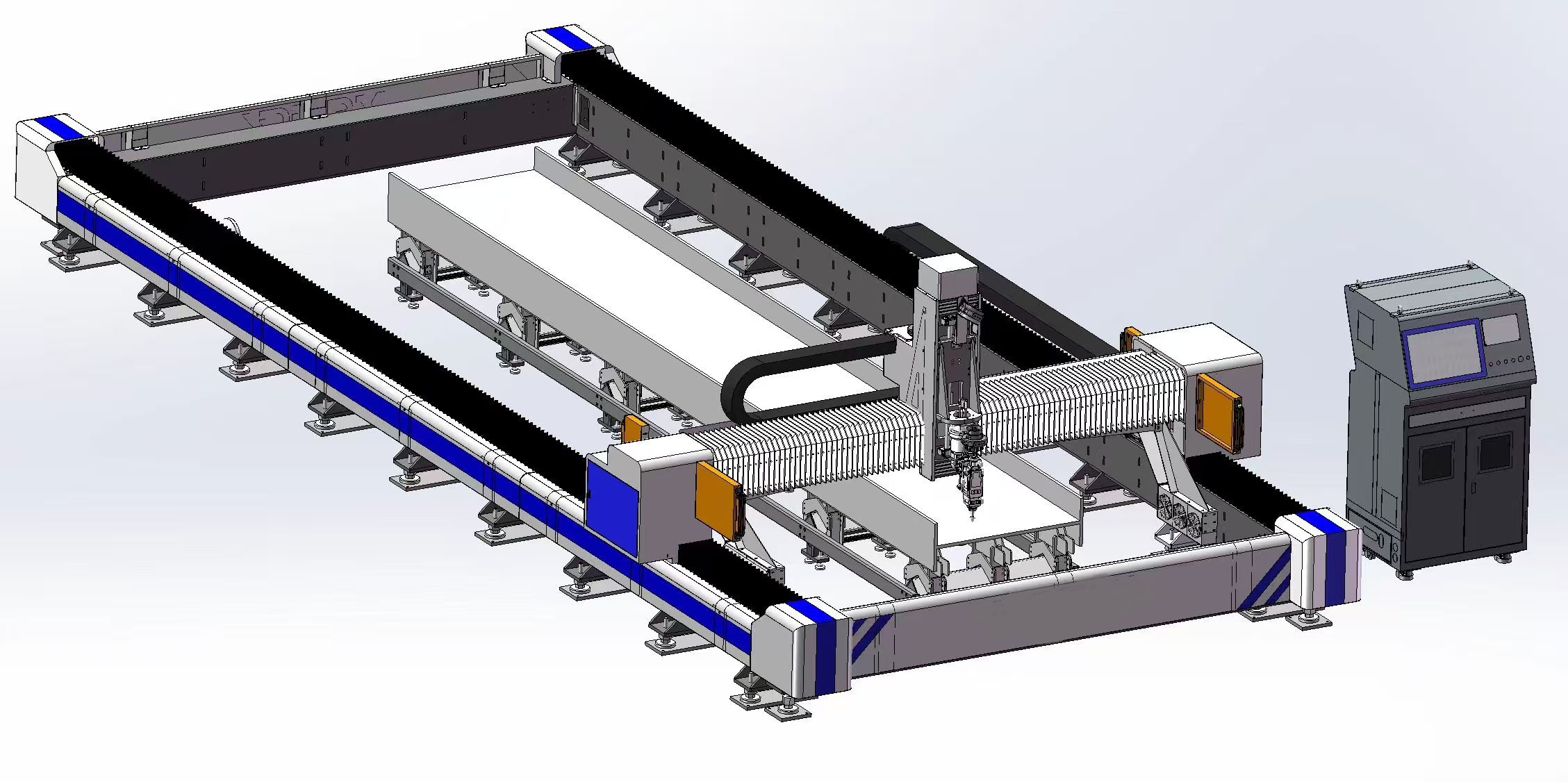
Industrial Application of H-Beam Plasma Cutter
Technical Integration of the H-Beam Plasma Cutter
The solution implemented was a multi-axis H-Beam Plasma Cutter equipped with a high-definition plasma power source and a sophisticated CNC robotic trajectory system. Unlike standard 2D plasma tables, this system utilizes a robotic arm or a specialized gantry capable of rotating around the fixed beam. This allows for the simultaneous processing of the web and both flanges without the need to flip the workpiece.
The integration of specialized nesting software allows the facility to import Tekla or AutoCAD files directly into the machine interface. The software calculates the most efficient cutting path, optimizing the sequence of bolt holes, slots, and complex cope cuts. By utilizing structural steel fabrication software suites, the system ensures that every cut is executed with a repeatability of +/- 0.5mm, a level of precision unattainable through manual methods.
Financial Breakdown: Achieving $5,000 Monthly Savings
The $5,000 monthly saving is derived from three primary pillars: labor reduction, consumable efficiency, and material yield optimization. In the Belo Horizonte market, the cost of skilled welders and fabricators includes not only base wages but also significant social security contributions and overheads.
1. Labor Reallocation: The automated system replaced the work of four manual layout and cutting technicians. These individuals were reallocated to high-value assembly and final welding roles, effectively increasing the plant’s total output without increasing headcount. The direct labor savings alone accounted for approximately $3,200 per month.
2. Reduction in Secondary Processing: Because the plasma system produces a much cleaner edge with minimal dross, the requirement for manual grinding was reduced by 80 percent. This saved approximately 120 man-hours per month, valued at roughly $1,200.
3. Material Yield and Consumables: Manual cutting often results in higher scrap rates due to measurement errors. The CNC system’s precision reduced scrap by 4 percent. For a facility processing 100 tons of steel monthly, a 4-ton reduction in waste, combined with the lower cost of plasma gas versus oxygen/acetylene cylinders, contributed the remaining $600 in savings.
Throughput and Cycle Time Analysis
Technical data from the facility indicates that the cycle time for a standard 6-meter H-beam with multiple bolt holes and end-copes dropped from 45 minutes (manual) to under 8 minutes (automated). The H-Beam Plasma Cutter operates at constant speeds, unaffected by operator fatigue or environmental conditions. This consistency allows production managers to forecast project timelines with 98 percent accuracy, a critical factor when bidding for large-scale infrastructure projects in the Minas Gerais region.
Impact on Downstream Assembly
The benefits of automated cutting extend beyond the cutting station. Because the holes and notches are cut with CNC precision, the fit-up during the assembly phase is nearly perfect. This reduces the need for “forcing” joints into place using hydraulic jacks, which can introduce internal stresses into the structure. The accuracy of the H-Beam Plasma Cutter ensures that the structural integrity of the final assembly meets international standards, such as AISC or Eurocode, without the need for extensive non-destructive testing (NDT) to verify manual corrections.
Safety and Environmental Considerations
Transitioning to an automated H-Beam Plasma Cutter also improved the facility’s safety profile. Manual torch cutting exposes workers to intense heat, UV radiation, and localized metal fumes. The automated system is equipped with integrated dust extraction and filtration units that capture 99 percent of particulate matter at the source. By removing the operator from the immediate cutting zone, the facility reduced the incidence of minor burns and respiratory complaints, further lowering the indirect costs associated with workplace injuries and insurance premiums.
Concluding Industry Insight: The Shift Toward Autonomous Fabrication
The case study in Belo Horizonte is representative of a broader global trend in the structural steel industry. As labor markets tighten and the complexity of architectural designs increases, the transition from manual to autonomous fabrication is no longer a luxury but a requirement for survival. The ability to save $5,000 per month is a significant milestone, but the true value lies in the scalability that automation provides.
The industry is moving toward a “lights-out” fabrication model where the H-Beam Plasma Cutter is just one component of a fully digital workflow. Future developments will likely see the integration of AI-driven nesting algorithms that can predict material deformations in real-time and adjust the CNC robotic trajectory accordingly. For fabricators globally, the lesson from Brazil is clear: the initial capital expenditure for automated plasma systems is rapidly amortized through the elimination of the high costs and inherent variabilities of manual labor. Companies that fail to adopt these precision technologies will find themselves unable to compete on price, speed, or quality in an increasingly digitized global market.
Industrial Expertise & Support
Are you looking for high-performance H-Beam Plasma Cutter tailored for the Global market? Our engineering team provides comprehensive solutions for modern manufacturing.





