Industrial Integration: The Role of H-Beam Plasma Cutting in Barranquilla’s Mining Supply Chain
The industrial landscape of Barranquilla, Colombia, has evolved into a strategic nexus for heavy machinery fabrication and maintenance, driven largely by its proximity to the massive open-pit coal operations in the Guajira and Cesar departments. Within this ecosystem, the demand for rapid, high-precision customization of wear-resistant components has necessitated the adoption of advanced thermal cutting technologies. The H-Beam Plasma Cutter has emerged as a critical asset in this sector, providing the multi-axis flexibility required to process both structural steel and complex wear-plate geometries. As mining operators seek to minimize Mean Time To Repair (MTTR), the integration of automated plasma systems in local fabrication hubs offers a quantifiable reduction in lead times compared to traditional machining or manual oxy-fuel processes.
Technical Specifications and Multi-Axis Capability
Modern mining operations utilize large-scale equipment such as draglines, excavators, and dump truck bodies that are subjected to extreme abrasive forces. The structural integrity of these machines relies on H-beams and I-beams that often require precise coping, slotting, and bolt-hole synchronization. An H-Beam Plasma Cutter utilized in the Barranquilla industrial sector typically features a robotic arm configuration with five or six axes of motion. This allows the plasma torch to maintain a perpendicular or specific beveled orientation relative to the workpiece surface, even when navigating the complex transitions between the web and the flanges of a beam.
From a technical standpoint, these systems utilize Computer Numerical Control (CNC) to execute complex cutting paths derived from 3D CAD models. This digital integration ensures that every notch or bevel is cut with a repeatability tolerance often within +/- 0.5mm. For the mining industry, this precision is not merely a matter of aesthetics; it ensures that replacement wear plates and structural reinforcements fit perfectly during field installation, eliminating the need for on-site grinding or thermal adjustment, which can compromise the metallurgical properties of the steel.
Wear-Plate Customization and Material Science
Wear plates used in mining, such as AR400, AR500, and specialized Hadfield manganese steels, are designed to resist high-stress abrasion and impact. However, the same properties that make these materials durable also make them difficult to process. Traditional mechanical cutting methods often result in excessive tool wear and slow throughput. Plasma Arc Cutting (PAC) circumvents these issues by using a constricted ionized gas jet to melt and blow away material, regardless of the hardness of the alloy.
In Barranquilla’s fabrication facilities, the customization of these plates involves intricate nesting patterns to maximize material utilization. The high energy density of the plasma arc allows for significantly faster travel speeds compared to oxy-fuel cutting, particularly on plates ranging from 15mm to 50mm in thickness. Furthermore, the ability of the H-Beam Plasma Cutter to perform 3D profiling means that wear plates can be pre-beveled for weld preparation in a single pass. This integration of cutting and edge preparation reduces the total work cycles required to produce a finished component.
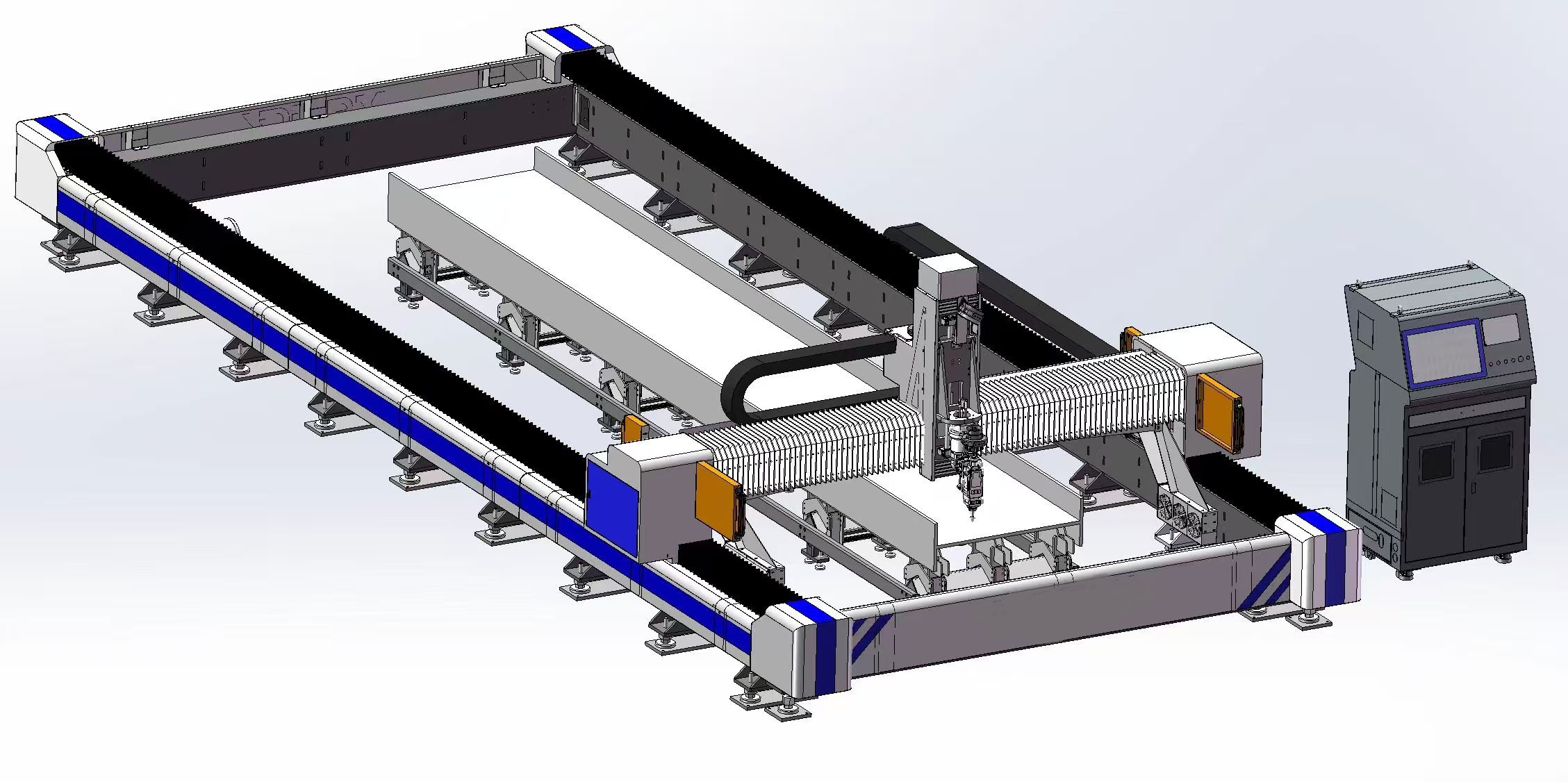
Industrial Application of H-Beam Plasma Cutter
Managing the Heat-Affected Zone (HAZ) in High-Strength Steels
A primary technical concern when applying thermal cutting to quenched and tempered steels is the Heat-Affected Zone (HAZ). Excessive heat input can lead to localized softening of the wear plate, reducing its abrasive resistance at the edges. Advanced plasma systems in the Barranquilla region mitigate this risk through high-definition plasma technology. By utilizing a narrower arc and higher gas flow rates, these systems concentrate the thermal energy into a smaller area, thereby narrowing the Heat-Affected Zone (HAZ) and preserving the bulk material properties of the wear plate.
Technical data indicates that high-definition plasma systems can reduce the width of the HAZ by up to 40% compared to conventional air-plasma systems. This is critical for mining components that face high-velocity particulate impact, where any localized softening can become a point of premature failure. Fabricators in Barranquilla are increasingly utilizing water-injection or underwater plasma cutting tables in conjunction with their beam-processing lines to further dissipate heat and control distortion in thin-gauge wear liners.
Operational Efficiency and Logistical Advantages
The decision to locate high-capacity H-Beam Plasma Cutter units in Barranquilla is strategically sound due to the city’s status as a major port. Raw steel sections and wear-resistant alloys can be imported directly and processed immediately, bypassing the logistical bottlenecks associated with inland transportation of heavy, unprocessed materials. For a mining operation in Northern Colombia, sourcing a customized wear-plate kit from Barranquilla can reduce the supply chain cycle by several days compared to importing pre-cut parts from overseas or from more distant industrial centers like Medellín or Bogotá.
Furthermore, the software suites accompanying these plasma systems allow for “just-in-time” manufacturing. When a specific component failure is identified at a mine site, the digital geometry can be transmitted to the fabricator in Barranquilla, programmed into the CNC controller, and cut within hours. This rapid response capability is essential for maintaining the high availability rates required for profitable mining operations.
Concluding Industry Insight
The integration of H-Beam Plasma Cutter technology in the Caribbean region of Colombia represents a broader shift toward decentralized, high-tech industrial maintenance. As global mining operations move toward more autonomous and data-driven models, the supporting fabrication infrastructure must keep pace. The ability to provide rapid, high-precision customization of wear-resistant components is no longer an optional service but a fundamental requirement for operational resilience. Looking forward, the industry will likely see further convergence between robotic plasma cutting and additive manufacturing, where worn components are not just replaced, but structurally reinforced using hybrid thermal processes. For Barranquilla, maintaining a lead in these automated metallurgical processes will be vital to sustaining its role as the primary service hub for the South American extractive industry. The focus must remain on reducing the thermal footprint of the cutting process while increasing the geometric complexity of the output, ensuring that the next generation of mining machinery can withstand the harshest environments with minimal downtime.
Industrial Expertise & Support
Are you looking for high-performance H-Beam Plasma Cutter tailored for the Global market? Our engineering team provides comprehensive solutions for modern manufacturing.





