Introduction to Structural Steel Fabrication in Asunción
The industrial landscape of Asunción, Paraguay, is undergoing a significant transformation as the demand for complex infrastructure and heavy machinery manufacturing increases within the Mercosur region. Central to this evolution is the adoption of advanced thermal cutting technologies designed to handle large-scale structural components. The implementation of the H-Beam Plasma Cutter has become a focal point for local engineering firms seeking to meet international standards for structural integrity and precision. As projects move toward more intricate designs, the transition from traditional mechanical sawing to automated plasma systems is no longer optional but a technical necessity for maintaining competitive throughput and weld quality.
Technical Specifications of 45-Degree Beveling
In the context of structural steel, the preparation of joints is the most critical phase preceding the welding process. The 45-degree beveling capability of modern plasma systems allows for the creation of precise V-grooves and Y-grooves, which are essential for full-penetration welds. When an H-beam undergoes a 45-degree cut, the system must account for the thickness of the flange and the web simultaneously.
Advanced CNC controllers manage the torch height and angle in real-time, compensating for any deviations in the beam’s straightness. A 45-degree bevel increases the surface area for the filler metal, ensuring that the weld root achieves complete fusion with the base material. This is particularly vital in Asunción’s growing high-rise construction sector, where seismic considerations and load-bearing requirements dictate zero-tolerance for weld defects. The precision of the bevel determines the uniformity of the heat-affected zone (HAZ), which directly impacts the fatigue life of the structural assembly.
The Mechanics of CNC Structural Steel Fabrication
The integration of CNC structural steel fabrication software allows for the direct translation of BIM (Building Information Modeling) data into machine code. In Asunción’s fabrication shops, this technology eliminates the manual layout process. The plasma torch is mounted on a multi-axis robotic arm or a specialized gantry system capable of rotating 360 degrees around the H-beam.
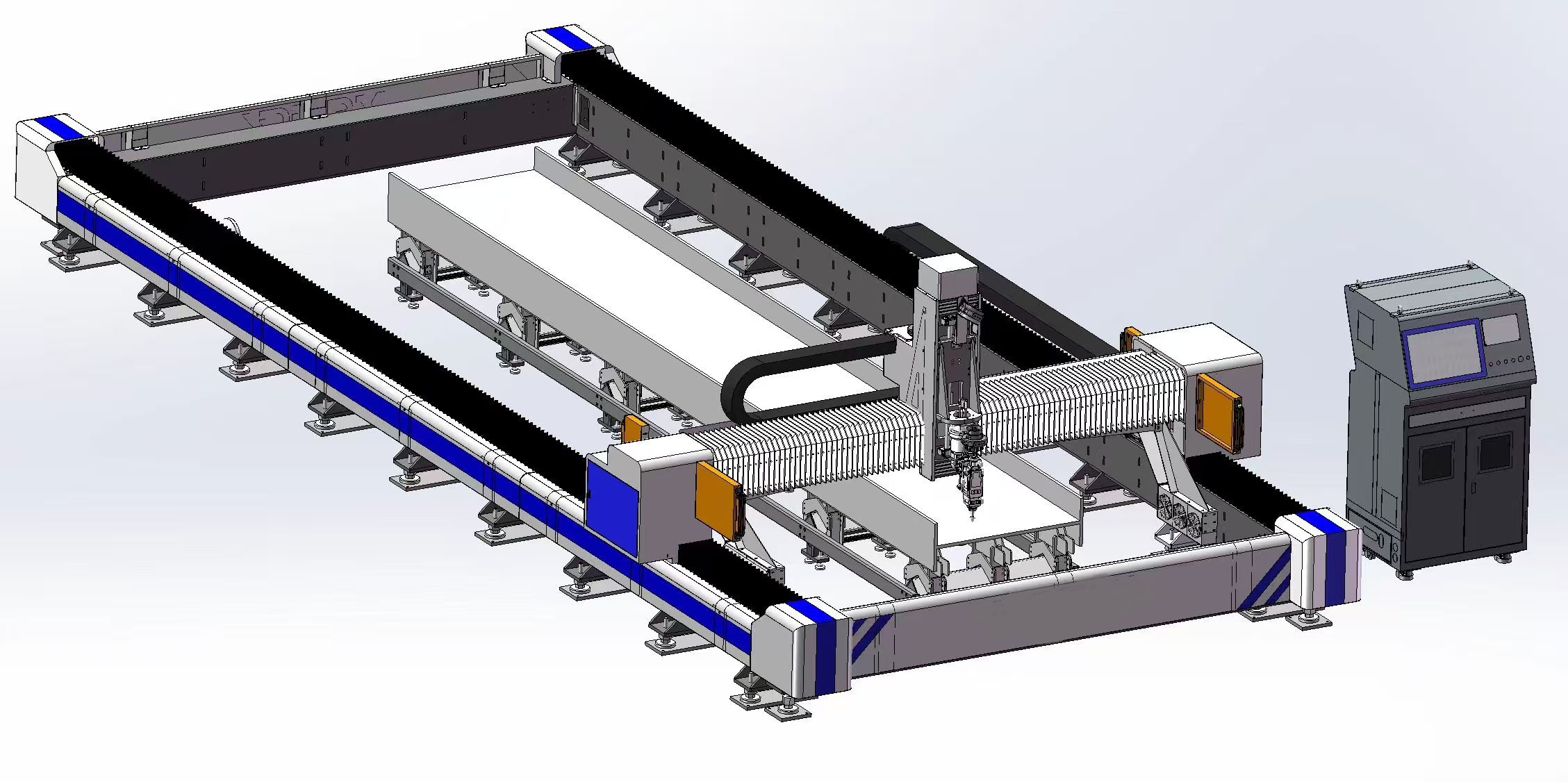
Industrial Application of H-Beam Plasma Cutter
The cutting process utilizes high-definition plasma power sources, typically ranging from 130 to 400 amps. These power sources employ a combination of secondary gases, such as oxygen or nitrogen, to constrict the plasma arc. This constriction results in a higher energy density, which is required to maintain a clean 45-degree angle without significant dross accumulation on the bottom edge of the flange. For H-beams with thicknesses exceeding 20mm, the stability of the plasma arc voltage is monitored millisecond by millisecond to ensure the torch-to-workpiece distance remains constant, preventing angular deviation.
Optimizing Weld Prep for Seamless Integration
Seamless welding is the primary objective of any high-precision beveling operation. In traditional methods, a 45-degree bevel would require secondary grinding to remove oxidation and achieve the required surface roughness for ultrasonic testing. However, modern H-Beam Plasma Cutter units in Paraguay are now equipped with high-frequency start mechanisms and precision gas metering valves that produce a weld-ready surface.
By achieving a consistent 45-degree angle across the entire profile of the H-beam—including the transition from the flange to the web—fabricators can utilize automated welding tractors or robotic welding cells. The uniformity of the plasma-cut bevel ensures that the welding arc remains stable and that the weld bead geometry is predictable. This reduction in fit-up time and the elimination of manual rework represent a significant reduction in man-hours per ton of steel processed.
Material Handling and Dimensional Accuracy in Asunción
Operating a plasma system in the climate of Asunción requires consideration of thermal expansion and material storage. The H-beams are typically moved via heavy-duty conveyor systems integrated with the plasma unit. Probing sensors, either laser or mechanical, are used to locate the exact position of the beam before the first arc is struck.
The dimensional accuracy of the 45-degree cut is maintained through sophisticated nesting software that calculates the kerf width—the amount of material removed by the plasma arc. Because the torch is tilted at 45 degrees, the effective thickness of the material increases (calculated as the actual thickness divided by the cosine of the angle). The CNC system automatically adjusts the feed rate to ensure that the energy input is sufficient to penetrate the increased material path without causing excessive melting of the top edge.
Economic and Operational Efficiency
From a B2B perspective, the investment in a specialized H-beam cutting system in the Paraguayan market is justified by the reduction in consumable costs and the increase in output. Traditional oxy-fuel cutting, while capable of beveling, introduces significantly more heat into the metal, leading to warping and longer cooling times. Plasma cutting, with its higher travel speeds and concentrated heat source, minimizes distortion.
Furthermore, the ability to perform “one-pass” processing—where the beam is cut to length, mitered, and beveled in a single sequence—drastically streamlines the shop floor workflow. In Asunción, where logistics and lead times can be impacted by regional supply chain variables, the ability to process raw H-beams into finished components in-house provides a significant strategic advantage.
Concluding Industry Insight
The global structural steel industry is moving toward a “Digital-to-Fabrication” model where manual intervention is minimized to reduce human error and increase safety. In South American hubs like Asunción, the adoption of the H-Beam Plasma Cutter with advanced beveling capabilities is a precursor to fully autonomous fabrication environments. The industry is shifting away from generalized cutting tools toward application-specific machinery that can handle the complex geometries of modern architecture. As metallurgical standards become more stringent, the focus will continue to sharpen on the precision of the initial cut. Fabricators who master the technical nuances of 45-degree plasma beveling today will be the primary contractors for the infrastructure of tomorrow, ensuring that every joint and every beam meets the rigorous demands of global engineering specifications.
Industrial Expertise & Support
Are you looking for high-performance H-Beam Plasma Cutter tailored for the Global market? Our engineering team provides comprehensive solutions for modern manufacturing.





