Strategic Implementation of H-Beam Plasma Cutting Systems in the Arequipa Industrial Corridor
The industrial landscape of Arequipa, Peru, serves as a critical node for the South American mining and structural steel sectors. As projects in the Andes demand increasingly complex steel geometries, the transition from manual fabrication to automated systems has become an operational necessity. The integration of the H-Beam Plasma Cutter into this regional supply chain represents a significant shift toward high-precision structural processing. This article examines the technical requirements, localized support infrastructures, and maintenance protocols essential for maintaining high-uptime operations in the high-altitude industrial zones of Southern Peru.
Arequipa’s proximity to major mining operations like Cerro Verde necessitates a fabrication standard that meets international structural codes. Traditional methods of drilling, sawing, and manual torching are no longer sufficient to meet the throughput demands of modern infrastructure projects. The adoption of CNC-driven plasma systems allows for the execution of complex cope cuts, bolt holes, and weld preparations in a single pass, significantly reducing the total man-hours per ton of processed steel.
Technical Specifications and Kinematic Precision
The modern H-Beam Plasma Cutter utilized in the Arequipa region is typically defined by its multi-axis robotic architecture. Unlike standard plate cutters, these systems utilize 6-axis or 8-axis robotic manipulators to navigate the flanges and webs of structural profiles. This multi-degree-of-freedom movement is governed by CNC robotic trajectory control, which ensures that the plasma torch maintains a constant standoff distance and optimal angle of attack across varying beam dimensions.
In terms of raw power, these systems are integrated with high-definition plasma power sources capable of piercing thicknesses up to 50mm or more, depending on the gas mixture. The synchronization between the power supply and the motion controller is vital. In the thin air of Arequipa (approximately 2,335 meters above sea level), the cooling efficiency of the power source and the ionization of the plasma gas must be calibrated to compensate for atmospheric pressure variations. This ensures that the dross levels remain minimal and the heat-affected zone (HAZ) is kept within metallurgical tolerances.
Localized Spare Parts Inventory and Supply Chain Resilience
For industrial operators in Peru, the primary bottleneck has historically been the lead time for specialized components. A H-Beam Plasma Cutter is a complex assembly of consumables, electronics, and pneumatic systems. The establishment of a localized spare parts hub in Arequipa addresses the critical need for immediate component availability. This inventory typically includes high-wear items such as electrodes, nozzles, swirl rings, and shields, as well as critical mechanical components like gear racks, encoders, and solenoid valves.
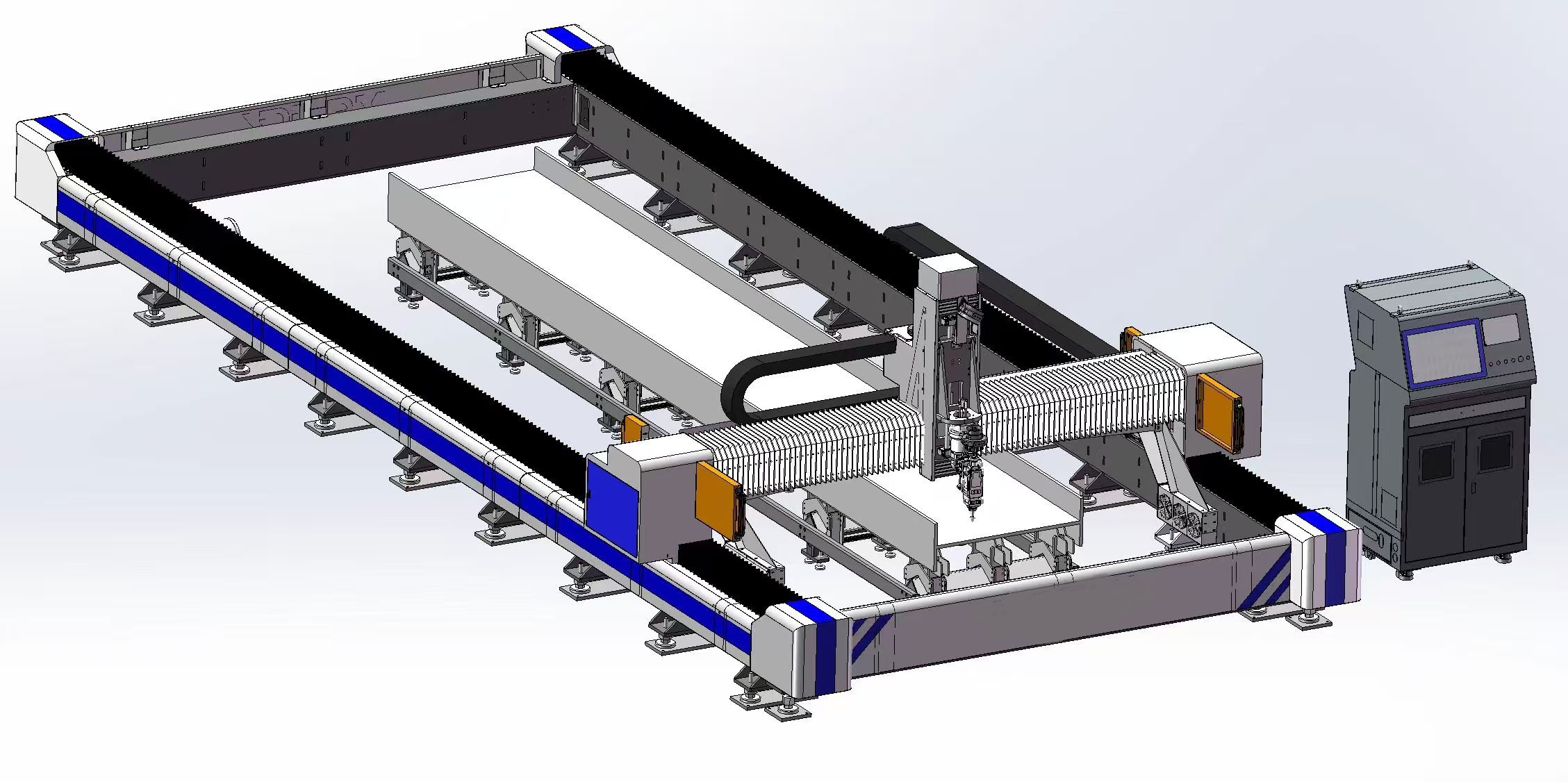
Industrial Application of H-Beam Plasma Cutter
Maintaining a local inventory is not merely about convenience; it is a strategy for mitigating the risks associated with international logistics and customs delays. When a machine enters a “down” state due to a failed pilot arc controller or a damaged torch lead, the financial impact is measured in thousands of dollars per hour of lost production. By housing plasma power supply synchronization modules and robotic drive components within the Arequipa city limits, OEMs can reduce the Mean Time to Repair (MTTR) from weeks to hours.
The 24-Hour Service Response Framework
Technical support in the B2B sector is defined by its Service Level Agreement (SLA). In the context of Arequipa’s heavy industry, a 24-hour service response is the benchmark for operational viability. This framework involves two primary tiers: remote diagnostics and on-site field engineering. Initial troubleshooting is often conducted via VPN-linked control systems, allowing engineers to analyze error logs and sensor data in real-time.
If the fault requires physical intervention, field engineers based in Arequipa are dispatched to the site. These technicians are trained in thermal deformation compensation, a technical process where the machine’s software is calibrated to account for the expansion and contraction of steel beams under fluctuating ambient temperatures. This level of localized expertise ensures that the machine does not just “run,” but operates at its peak rated accuracy of +/- 0.5mm, regardless of the environmental conditions found in the Peruvian highlands.
Optimizing Throughput and Operational Lifecycle
The long-term ROI of an H-Beam Plasma Cutter is contingent upon its duty cycle and the efficiency of its nesting software. Advanced algorithms allow fabricators to minimize scrap by optimizing the placement of cuts across standard 12-meter beam lengths. Furthermore, the integration of automated loading and unloading conveyors reduces the idle time between processing cycles. In Arequipa, where labor costs are rising and the demand for rapid project delivery is high, these marginal gains in efficiency compound into significant competitive advantages.
Preventative maintenance schedules are also localized. Given the dust and particulate matter common in mining-heavy regions, filtration systems and rail cleaning mechanisms require more frequent intervals of service. Localized service teams provide structured maintenance audits that include checking the integrity of the grounded electrical path—a critical safety and performance factor for high-voltage plasma systems.
Concluding Industry Insight: The Decentralization of Technical Expertise
The evolution of the Arequipa industrial sector reflects a broader global trend: the decentralization of high-tier technical support. As manufacturing hubs emerge outside of traditional Western and East Asian centers, the “ship and forget” model of machinery sales is becoming obsolete. The success of complex systems like the H-Beam Plasma Cutter in Peru is now inextricably linked to the strength of the local service ecosystem.
Industry data suggests that companies investing in localized “Service-as-a-Product” models see a 30% higher retention rate and significantly higher equipment lifetime value. For the global structural steel industry, the lesson is clear: technical excellence in hardware must be matched by geographical proximity in support. As Arequipa continues to expand its role in the global mining supply chain, the presence of robust, localized technical infrastructure will be the deciding factor in which fabricators lead the market and which are left behind by the pace of automated innovation.
Industrial Expertise & Support
Are you looking for high-performance H-Beam Plasma Cutter tailored for the Global market? Our engineering team provides comprehensive solutions for modern manufacturing.





