Operational Efficiency in Structural Steel: A Case Study from Antofagasta, Chile
In the industrial corridors of Antofagasta, Chile, the demand for structural steel fabrication is driven primarily by the massive infrastructure requirements of the Atacama region’s mining sector. For decades, the throughput of fabrication shops in this region was governed by manual processes involving mechanical layout, manual oxy-fuel cutting, and magnetic base drilling. However, a recent shift toward high-degree automation has demonstrated a paradigm shift in production capacity. This technical analysis examines the implementation of an advanced H-Beam Plasma Cutter and its role in reducing a standard production cycle from 72 hours to just 3 hours.
The transition from manual to automated fabrication is not merely a change in machinery; it represents a total reconfiguration of the structural steel workflow. In high-output environments like Northern Chile, where labor costs and project deadlines are critical variables, the integration of Robotic Beam Coping technology has become a prerequisite for remaining competitive in international bidding for mining infrastructure projects.
The Legacy Workflow: Decomposition of the 72-Hour Cycle
Before the introduction of automated plasma systems, the fabrication of a standard batch of processed H-beams followed a linear, labor-intensive sequence. To understand the 72-hour cycle, one must analyze the individual stages of manual production. First, the layout process required skilled technicians to interpret 2D drawings and manually scribe measurements onto the steel surface. For a complex series of beams with multiple bolt holes, notches, and weld preparations, the layout alone could consume 15 to 20 percent of the total production time.
Following the layout, the cutting phase typically utilized oxy-fuel torches. While effective for simple severance, oxy-fuel introduces a significant Heat Affected Zone (HAZ) and often results in slag accumulation that requires extensive secondary grinding. Furthermore, the drilling of bolt holes was performed using magnetic drills, a process that is notoriously slow and prone to dimensional deviations. When factoring in material handling—moving beams between marking stations, cutting stations, and drilling stations via overhead cranes—the cumulative downtime and “wait-state” intervals extended the cycle for a standard project load to three full working days.
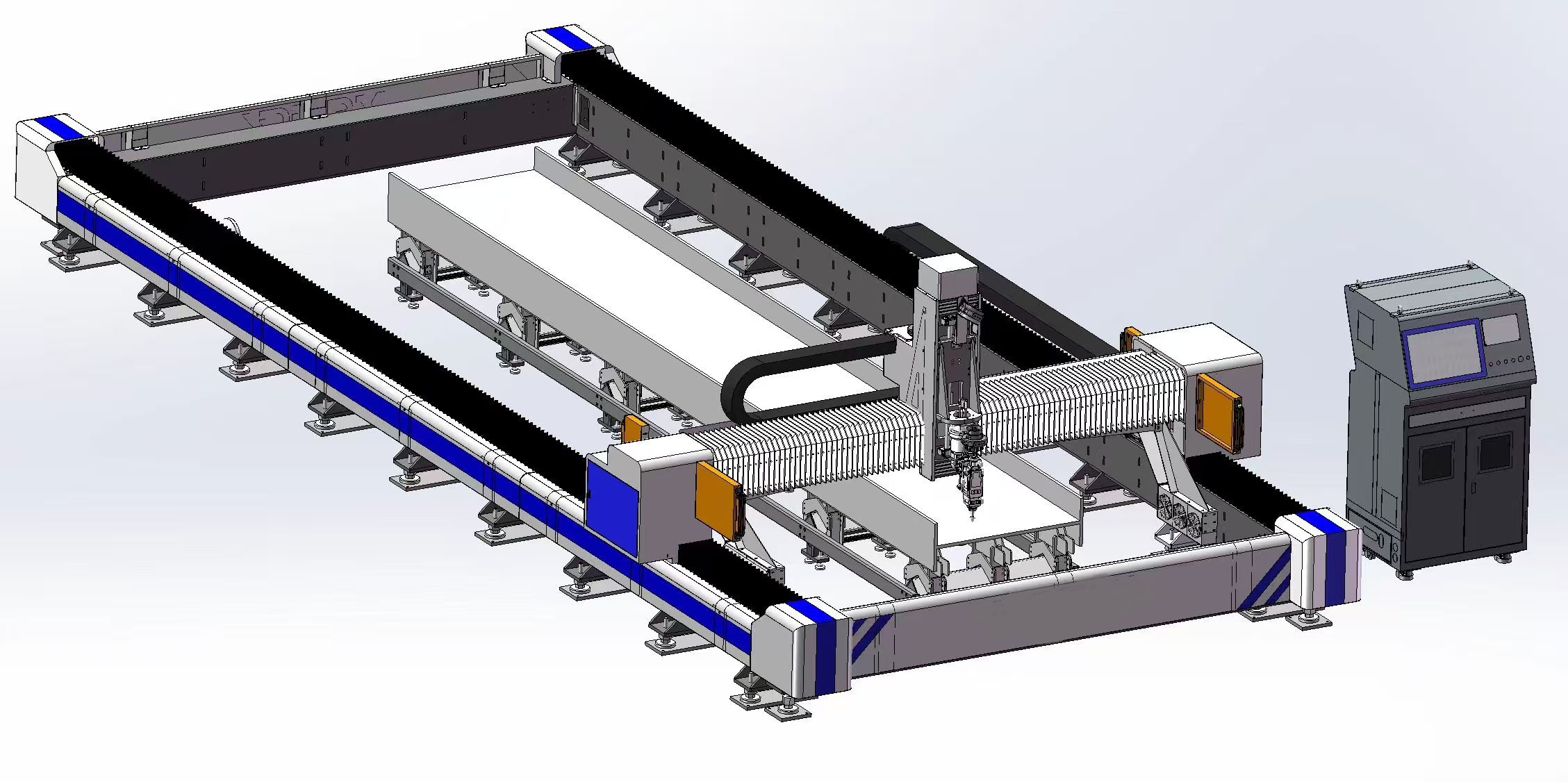
Industrial Application of H-Beam Plasma Cutter
Technical Specifications of the H-Beam Plasma Cutter
The intervention in the Antofagasta facility involved the installation of a multi-axis H-Beam Plasma Cutter equipped with a high-definition plasma power source and sophisticated nesting software. Unlike standard plate cutters, these systems utilize a 6-axis robotic arm capable of maneuvering around the stationary or moving profile of the beam. This allows for the simultaneous processing of the web and both flanges without the need to rotate the workpiece.
The system operates on a direct-to-machine data flow. Engineering files, typically in DSTV or IFC formats exported from BIM software like Tekla Structures, are fed directly into the machine’s controller. This eliminates the manual layout phase entirely. The Thermal Cutting Accuracy of these systems is measured in sub-millimeter tolerances, ensuring that bolt holes are perfectly aligned for field assembly, which is a critical factor in the harsh, remote environments of Chilean mine sites where on-site corrections are prohibitively expensive.
The 3-Hour Workflow: Process Optimization
The reduction to a 3-hour cycle is achieved through the consolidation of multiple fabrication steps into a single pass. When the raw H-beam enters the automated cell via a motorized conveyor system, the following actions occur in rapid succession:
1. Automated Probing and Sensing: The machine uses laser or mechanical probes to detect the actual dimensions of the beam, accounting for any mill tolerances or slight deviations in the steel profile. This ensures the cut paths are adjusted in real-time to the physical reality of the material.
2. High-Speed Plasma Processing: The plasma torch executes all bolt holes, copes, blocks, and miter cuts. Because the plasma arc reaches temperatures exceeding 20,000 degrees Celsius, the cutting speed is exponentially higher than oxy-fuel. A standard 20mm bolt hole that previously took minutes to drill is now pierced and cut in seconds.
3. Weld Preparation: The robotic arm can bevel the edges of the beam flanges at precise angles (e.g., 30 or 45 degrees) in the same operation. This eliminates the need for secondary manual bevelling with hand-held grinders.
By removing the need to move the material between different workstations and eliminating manual measurement, the “beam-to-finished-part” time is condensed into a fraction of the previous requirement. The 3-hour window now accounts for the processing of an entire project’s worth of beams that previously sat in the shop for three days.
Data-Driven Comparative Analysis
To quantify the impact, we can look at the Structural Steel Automation metrics observed in this case. In the manual 72-hour model, the labor-to-material ratio was high, with a significant portion of the budget allocated to man-hours. In the 3-hour automated model, the primary costs shift toward equipment amortization and electricity, while labor is reallocated to high-value tasks such as final assembly and quality assurance.
Furthermore, the reduction in cycle time directly correlates to an increase in shop capacity. A facility that previously handled 100 tons of steel per month can, with the same footprint, scale to 400 or 500 tons per month. This scalability is vital for Antofagasta-based firms serving the copper mining industry, where project timelines are often compressed and penalties for delay are severe.
Environmental and Safety Considerations
Beyond speed, the technical transition offers significant improvements in the working environment. Manual oxy-fuel cutting and grinding generate substantial amounts of localized heat, noise, and particulate matter. The H-Beam Plasma Cutter is typically integrated with high-capacity dust extraction and filtration systems that capture metallic dust and fumes at the source. Additionally, by reducing the manual handling of heavy beams via cranes, the risk of workplace accidents related to material movement is significantly mitigated.
Concluding Industry Insight: The Future of Global Fabrication
The case study in Antofagasta serves as a microcosm for a broader trend in the global structural steel industry. As the complexity of architectural and industrial designs increases, the tolerance for human error in fabrication decreases. The shift from a 72-hour cycle to a 3-hour cycle is not just an incremental improvement; it is a fundamental change in the economic viability of a fabrication business.
The industry insight here is clear: Automation is no longer an optional upgrade for high-cost labor markets; it is a global necessity for maintaining dimensional integrity and supply chain velocity. In the coming decade, the integration of Artificial Intelligence with plasma cutting systems will likely allow for even greater optimization, where nesting algorithms and real-time defect detection further minimize material waste. For fabricators in emerging industrial hubs, the adoption of high-precision thermal cutting technology is the single most effective strategy for bridging the gap between local production and global engineering standards. The success in Chile demonstrates that even in geographically isolated regions, technical excellence in automation can yield world-class efficiency.
Industrial Expertise & Support
Are you looking for high-performance H-Beam Plasma Cutter tailored for the Global market? Our engineering team provides comprehensive solutions for modern manufacturing.





