Introduction: The Industrial Evolution of Structural Steel Fabrication
The industrial landscape of Antofagasta, Chile, serves as a critical epicenter for global mining and heavy infrastructure development. As the gateway to the Atacama’s mineral wealth, the region demands structural steel components that meet rigorous mechanical specifications. Traditionally, the fabrication of large-scale structural members, such as H-beams, I-beams, and channels, relied on manual layout and conventional oxy-fuel or standard plasma systems. However, the integration of the H-Beam Plasma Cutter equipped with advanced fiber source technology is redefining the parameters of throughput and precision in this high-stakes environment. This transition is not merely a localized trend but a response to the global necessity for energy-efficient, high-speed fabrication that minimizes material waste and operational overhead.
The Shift to Fiber-Integrated Plasma Systems in Northern Chile
In the arid and corrosive atmosphere of Northern Chile, machinery must exhibit exceptional durability and efficiency. The adoption of Fiber Source Technology within plasma cutting systems represents a significant leap over legacy CO2 or standard transformer-rectifier power sources. Fiber-based delivery systems provide a more stable arc and higher energy density, which is essential when processing the thick-gauge carbon steel used in mining frameworks. Unlike traditional systems that suffer from significant energy loss through heat dissipation, fiber-integrated sources optimize the photon conversion process, ensuring that a higher percentage of input wattage is directed into the cutting kerf.
For fabricators in Antofagasta, this efficiency translates directly into lower kVA requirements from the local power grid. Given the high cost of industrial electricity in remote mining sectors, reducing the power draw while maintaining or increasing cutting speeds provides a measurable competitive advantage. The fiber source also eliminates many of the sensitive optical components found in older laser-assisted systems, reducing the maintenance intervals required in dusty, high-salinity environments.
Technical Specifications and Robotic Kinematics
Modern H-beam processing requires more than simple linear cuts. The complexity of modern architectural and industrial designs necessitates coping, beveling, and the creation of bolt holes with high tolerances. To achieve this, the 6-Axis Robotic Kinematics integrated into these plasma cutters allow for a full range of motion around the stationary workpiece. This multi-axis capability ensures that the plasma torch can maintain an optimal perpendicular or specified bevel angle relative to the beam’s flange or web at all times.
Data-driven performance metrics indicate that these systems can maintain a positioning accuracy within +/- 0.5mm over a 12-meter beam length. The software control systems utilize G-code or direct CAD/CAM imports (such as TEKLA structures) to automate the nesting process. This automation minimizes the Heat-Affected Zone (HAZ), a critical factor in maintaining the structural integrity of the steel. A narrower HAZ ensures that the metallurgical properties of the H-beam—specifically its tensile strength and ductility—remain uncompromised during the thermal cutting process.
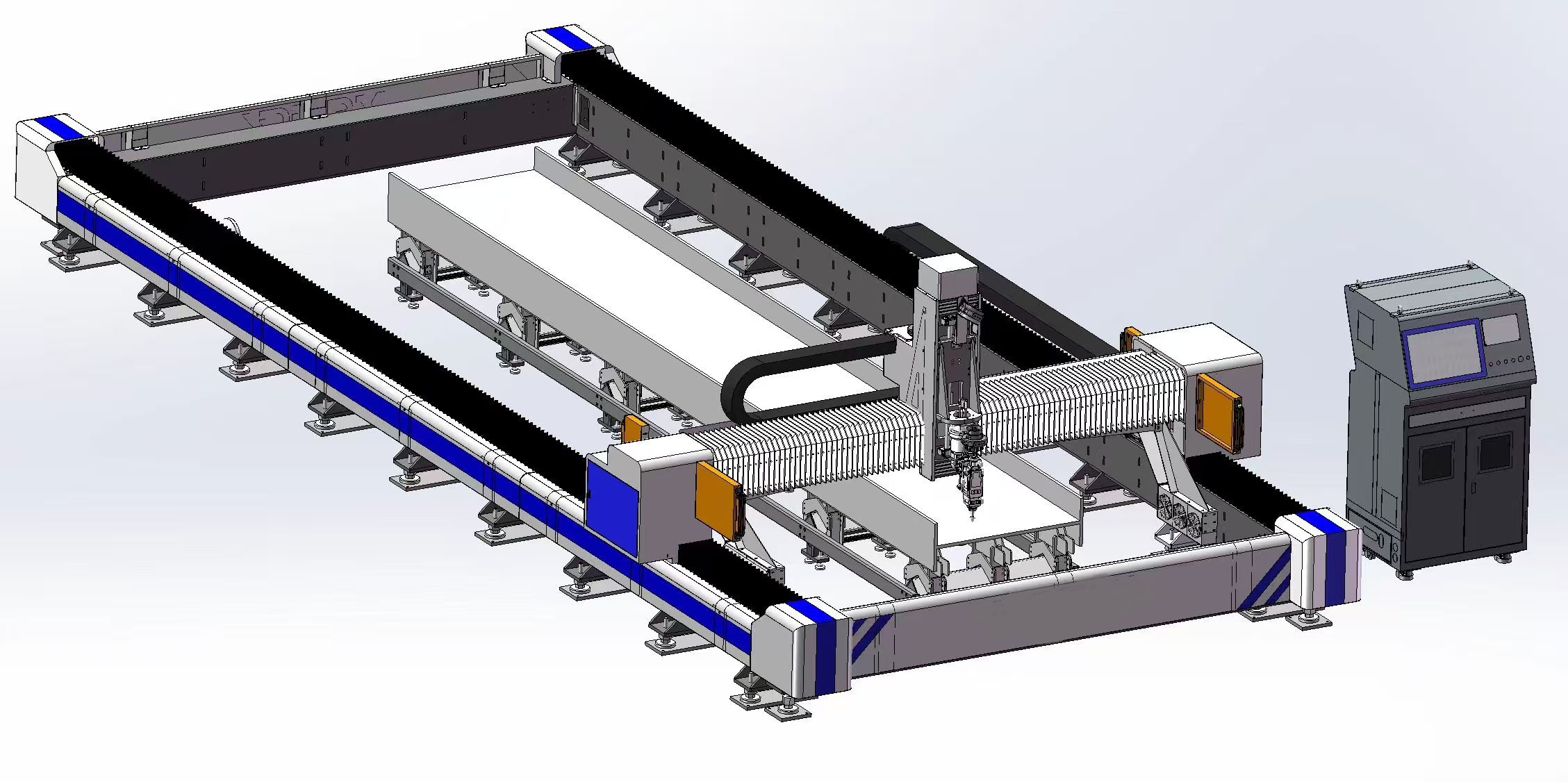
Industrial Application of H-Beam Plasma Cutter
Energy Efficiency and Operational Expenditure (OPEX)
When evaluating the total cost of ownership (TCO) for structural steel machinery in the B2B sector, energy consumption is a primary variable. Fiber-enhanced plasma sources operate with a wall-plug efficiency of approximately 30-40%, compared to the 10-12% efficiency of older CO2-based technologies. In the context of Antofagasta’s industrial sector, where 24/7 operation is common, these percentages translate into thousands of dollars in annual savings.
Beyond raw power consumption, the “energy-efficient” label extends to gas dynamics. Advanced plasma cutters utilize secondary gas shielding and precision flow meters to reduce the consumption of oxygen and nitrogen. The high-speed piercing capabilities of fiber-integrated torches also reduce the “idle time” of the compressor systems. By accelerating the transition from arc ignition to full-speed cutting, the system maximizes the duty cycle of the power supply, ensuring that energy is only consumed during active material removal.
Environmental Resilience in the Atacama Region
Antofagasta’s proximity to the Pacific Ocean introduces high levels of airborne particulates and salinity, which are historically detrimental to precision electronics and high-voltage equipment. The latest generation of H-beam cutters utilizes sealed cabinets and liquid-to-air heat exchangers to protect the fiber source and the CNC controller. By isolating the internal components from the external environment, manufacturers ensure that the energy-efficient benefits of the system are not negated by frequent downtime or component failure caused by corrosion.
Furthermore, the integration of high-definition plasma technology allows for cleaner cuts that require zero secondary grinding. In traditional fabrication, the energy used in post-process grinding and slag removal is often overlooked. By producing a weld-ready surface directly from the plasma table, the total energy footprint of the fabrication workflow is significantly reduced, aligning with global ISO 14001 environmental management standards.
Strategic Advantages for Global Mining Contractors
For global engineering, procurement, and construction (EPC) firms operating in Chile, the deployment of high-end plasma technology is a strategic necessity. The ability to process H-beams with variable geometries—including tapered beams and non-standard sections—allows for more innovative structural designs that use less total steel to achieve the same load-bearing capacity. This “dematerialization” is a key component of sustainable industrial growth.
The H-Beam Plasma Cutter also facilitates “just-in-time” manufacturing. Instead of relying on pre-fabricated components shipped from overseas, local Antofagasta service centers can produce custom structural members on demand. This reduces the carbon footprint associated with logistics and ensures that project timelines are not held hostage by international shipping delays or port congestion.
Concluding Industry Insight
The convergence of robotic automation and fiber-based energy efficiency marks a definitive shift in the structural steel industry. As we look toward the next decade of industrial development, the reliance on manual, energy-intensive fabrication methods will become economically unsustainable. The data suggests that the future of the industry lies in “smart fabrication”—where the efficiency of the power source is matched by the intelligence of the motion control system. In regions like Antofagasta, which serve as the backbone of the global transition to renewable energy and advanced mineral extraction, the adoption of high-efficiency plasma technology is not just an operational upgrade; it is a fundamental requirement for maintaining global competitiveness. The integration of fiber technology into heavy-duty plasma systems ensures that precision and sustainability are no longer mutually exclusive goals, but rather the dual pillars of modern industrial excellence.
Industrial Expertise & Support
Are you looking for high-performance H-Beam Plasma Cutter tailored for the Global market? Our engineering team provides comprehensive solutions for modern manufacturing.





