Introduction: The Industrial Evolution of Structural Steel in Antofagasta
Antofagasta, Chile, serves as the primary logistical and industrial hub for the global copper and lithium mining sectors. The demand for robust structural steel infrastructure in this region necessitates high-precision fabrication methods capable of withstanding extreme environmental conditions. As mining projects scale, the transition from manual layout and oxy-fuel cutting to automated solutions has become a strategic necessity. The deployment of the H-Beam Plasma Cutter in this region represents a significant advancement in structural steel processing, enabling local fabricators to meet international quality benchmarks while adhering to rigorous safety protocols. This article examines the technical integration of robotic plasma cutting systems, focusing on the dual compliance requirements of CE and NR-12 safety standards within the South American industrial framework.
Technical Specifications of 6-Axis Robotic Plasma Systems
Modern structural steel fabrication in Antofagasta utilizes 6-axis robotic kinematics to execute complex geometries on H-beams, I-beams, channels, and hollow structural sections (HSS). Unlike traditional CNC plate cutters, an H-beam plasma system must account for the dimensional variances inherent in hot-rolled steel. These systems utilize sophisticated laser profiling or physical probing sequences to map the actual dimensions of the beam before the cutting process begins.
The core of the system is the high-definition plasma power supply, which allows for precise kerf compensation and minimal heat-affected zones (HAZ). Technical data indicates that high-definition systems can achieve cutting speeds exceeding 3,000 mm/min on 12mm web thicknesses while maintaining a surface finish that meets or exceeds ISO 9013 Range 3 or 4. The integration of DSTV file integration allows the robotic controller to interpret data directly from BIM software such as Tekla Structures, eliminating manual programming errors and ensuring that bolt holes, copes, and weld preparations are executed with sub-millimeter accuracy.
CE Certification: Ensuring Global Quality and Electrical Integrity
For industrial machinery operating in a global market, CE (Conformité Européenne) certification is a baseline requirement for electrical and mechanical integrity. In the context of an H-beam plasma system, CE compliance focuses on several critical directives. The Machinery Directive 2006/42/EC ensures that the robotic arm and its peripheral conveyors are designed to minimize risks to operators through mechanical stability and ergonomic control placement.
Furthermore, the Electromagnetic Compatibility (EMC) Directive is vital for plasma cutting environments. Plasma arcs generate significant electromagnetic interference (EMI) which can disrupt nearby sensitive electronics or the robot’s own control logic. CE-compliant systems utilize advanced shielding, galvanic isolation, and specialized filtering to ensure that the high-frequency start of the plasma torch does not compromise the facility’s power grid or data networks. For fabricators in Antofagasta, this certification provides assurance that the equipment will integrate seamlessly with existing industrial power infrastructures without causing harmonic distortion.
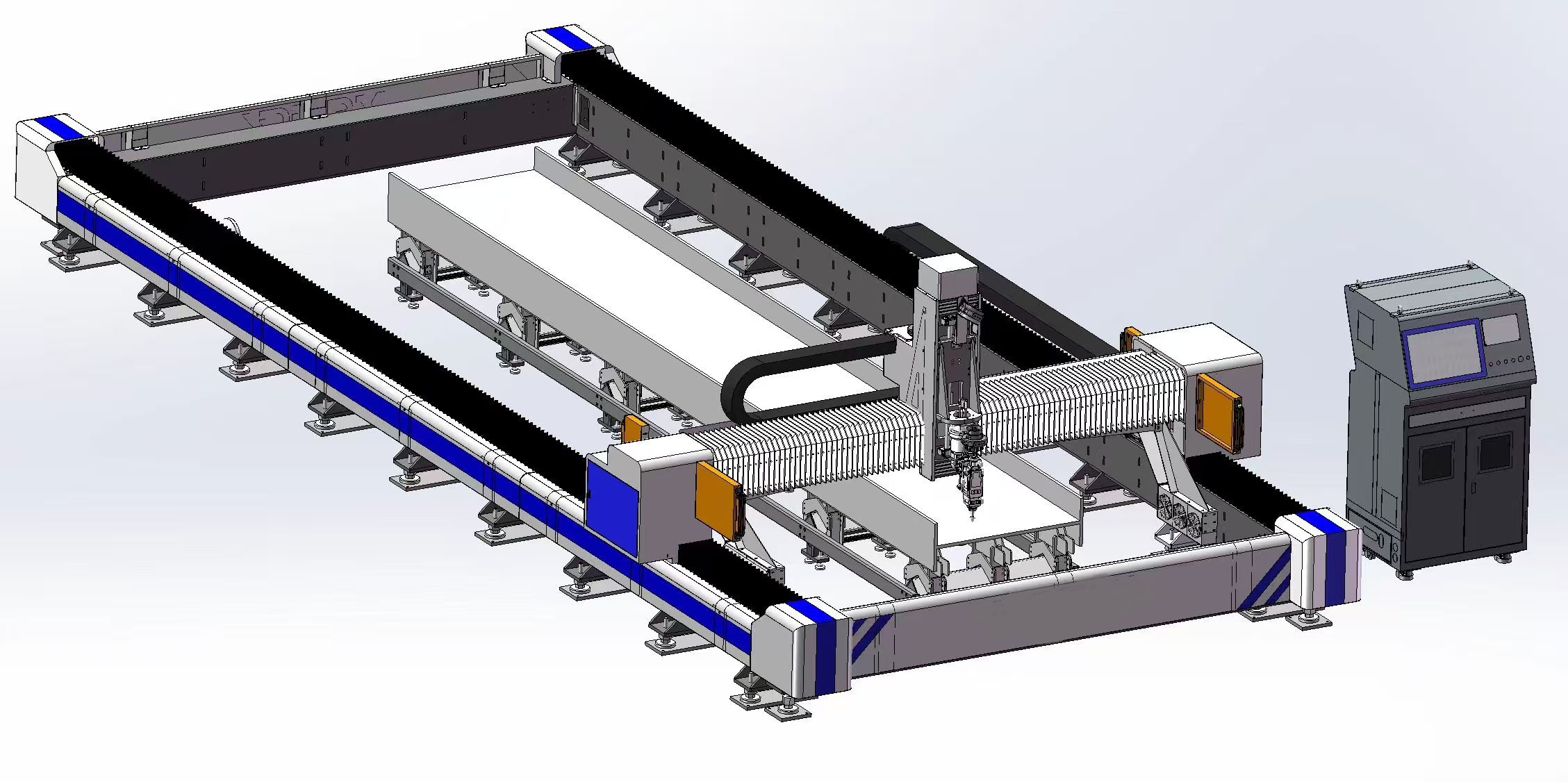
Industrial Application of H-Beam Plasma Cutter
NR-12 Compliance: Navigating Safety Regulations in the South American Market
While CE certification covers European standards, the NR-12 (Norma Regulamentadora 12) standard is a stringent Brazilian regulation that has become a benchmark for machinery safety across South America, including Chile. NR-12 compliance is often more prescriptive than CE, particularly regarding the prevention of unauthorized access to the machine’s workspace. For an H-Beam Plasma Cutter, NR-12 requires a multi-layered safety architecture.
Key requirements include physical fencing with interlocked gates, light curtains at the beam entry and exit points, and redundant emergency stop circuits. The safety PLC (Programmable Logic Controller) must be Category 4/PLe compliant, ensuring that a single component failure does not lead to a loss of safety function. In the high-throughput environments of Antofagasta’s steel service centers, NR-12 compliance minimizes operational downtime by reducing the likelihood of workplace accidents, which are often subject to heavy legal and financial scrutiny in the Chilean mining sector.
Optimizing Throughput with Advanced Nesting and Material Handling
Efficiency in H-beam processing is not solely dependent on cutting speed; it is heavily influenced by material handling and nesting logic. Automated systems in Antofagasta utilize heavy-duty infeed and outfeed conveyors equipped with cross-transfers to manage 12-meter to 18-meter beams. The software layer optimizes the sequence of cuts to minimize the movement of the robotic arm and reduce the rotation of the beam, which is often the bottleneck in 3D fabrication.
Advanced nesting algorithms allow for ‘common line cutting’ where applicable and the efficient use of remnants. By processing all four sides of a beam in a single pass—including the flanges and the web—the system replaces multiple traditional machines, such as drill lines, band saws, and coping stations. This consolidation of processes reduces the footprint of the fabrication facility and significantly lowers the cost per ton of processed steel.
Environmental Considerations for High-Altitude and Coastal Operations
Antofagasta presents unique environmental challenges, including high salinity from the Pacific coast and high UV radiation. The high-definition plasma power supply and the robotic controllers must be housed in climate-controlled NEMA 4 or IP65-rated enclosures to prevent the ingress of conductive dust and corrosive sea air. Furthermore, the extraction and filtration systems must be sized correctly to handle the high volume of particulate matter generated during the plasma process. High-efficiency pulse-jet dust collectors are standard in these installations to ensure compliance with local environmental regulations regarding air quality in industrial zones.
The Impact of Automation on Structural Integrity
In mining infrastructure, structural failure is not an option. The precision of robotic plasma cutting ensures that weld preparations, such as bevels and J-grooves, are consistent across the entire length of the joint. This consistency is critical for achieving full-penetration welds that meet AWS (American Welding Society) or CWB (Canadian Welding Bureau) standards. By eliminating the variability of manual grinding and cutting, fabricators can guarantee the structural integrity of the massive trusses and support frames required for mineral processing plants and conveyor systems.
Industry Insight: The Future of Autonomous Fabrication
The industrial landscape is moving toward a “Lights-Out” manufacturing model where the role of the operator shifts from manual labor to system oversight. In Antofagasta, the integration of H-beam plasma cutting technology is the first step toward a fully digitized supply chain. As the mining industry increasingly adopts digital twins and modular construction, the ability to produce steel components that exactly match the digital model is paramount. The convergence of CE and NR-12 safety standards with 6-axis robotic kinematics is not merely a compliance exercise; it is the foundation for a sustainable, high-output fabrication ecosystem. The next phase of evolution will likely involve AI-driven predictive maintenance, where sensors within the plasma torch and robotic joints anticipate component failure before it occurs, ensuring 24/7 operational availability in the demanding Chilean industrial sector.
Conclusion
The adoption of advanced H-beam plasma cutting technology in Antofagasta represents a pivotal shift for the regional construction and mining sectors. By prioritizing systems that meet both CE and NR-12 standards, companies are investing in long-term operational safety and global competitiveness. The technical synergy between high-definition plasma sources, robotic precision, and integrated software workflows allows for a level of fabrication accuracy that was previously unattainable. As the global demand for minerals continues to rise, the infrastructure supporting this extraction must be built faster, safer, and with greater precision, positioning Antofagasta as a leader in automated structural steel processing.
Industrial Expertise & Support
Are you looking for high-performance H-Beam Plasma Cutter tailored for the Global market? Our engineering team provides comprehensive solutions for modern manufacturing.





