Infrastructure Resilience: Deploying H-Beam Plasma Cutters in the Antofagasta Industrial Corridor
Antofagasta, Chile, functions as the primary logistical and industrial hub for the Atacama Desert’s intensive mining operations. As global demand for copper and lithium escalates, the requirement for rapid structural steel fabrication has shifted from traditional mechanical sawing to advanced thermal cutting processes. However, the region’s unique geographic and electrical landscape presents specific challenges for high-precision machinery. The deployment of an H-Beam Plasma Cutter in this environment requires more than just mechanical accuracy; it necessitates integrated power electronics capable of mitigating the volatility of a remote industrial power grid.
In high-output fabrication facilities, the precision of an H-beam profile is critical for structural integrity in seismic zones like Northern Chile. When processing large-scale structural members, any deviation in the plasma arc—often caused by input voltage instability—can lead to dross accumulation, heat-affected zone (HAZ) expansion, or catastrophic torch collisions. This technical analysis examines the integration of built-in voltage regulation within plasma systems and why this feature is non-negotiable for operators in the Antofagasta region.
The Impact of Grid Volatility on Thermal Cutting Precision
The electrical grid in Northern Chile is characterized by long-distance transmission lines and heavy inductive loads from massive mining equipment, such as primary crushers and conveyor systems. These factors contribute to frequent voltage sags, surges, and harmonic distortions. For a standard CNC plasma system, these fluctuations are detrimental. A 10% drop in input voltage can lead to a proportional drop in the arc voltage, directly affecting the plasma gas ionization process.
When the arc voltage fluctuates, the CNC’s Torch Height Control (THC) attempts to compensate by moving the torch closer to or further from the workpiece. In the case of an H-Beam Plasma Cutter, which must navigate the complex geometry of flanges and webs, erratic THC movements can result in inconsistent bevel angles and reduced consumable life. By utilizing built-in Voltage Regulation Systems, the power source stabilizes the DC output regardless of the AC input variances, ensuring a constant current flow to the electrode.
Technical Architecture of Built-in Voltage Regulation
Modern plasma power supplies engineered for unstable environments utilize a multi-stage regulation architecture. The process begins at the primary inverter stage, where high-speed switching transistors—typically using IGBT Inverter Technology—modulate the incoming power. Unlike older transformer-rectifier sets, these systems can respond to input changes in microseconds.
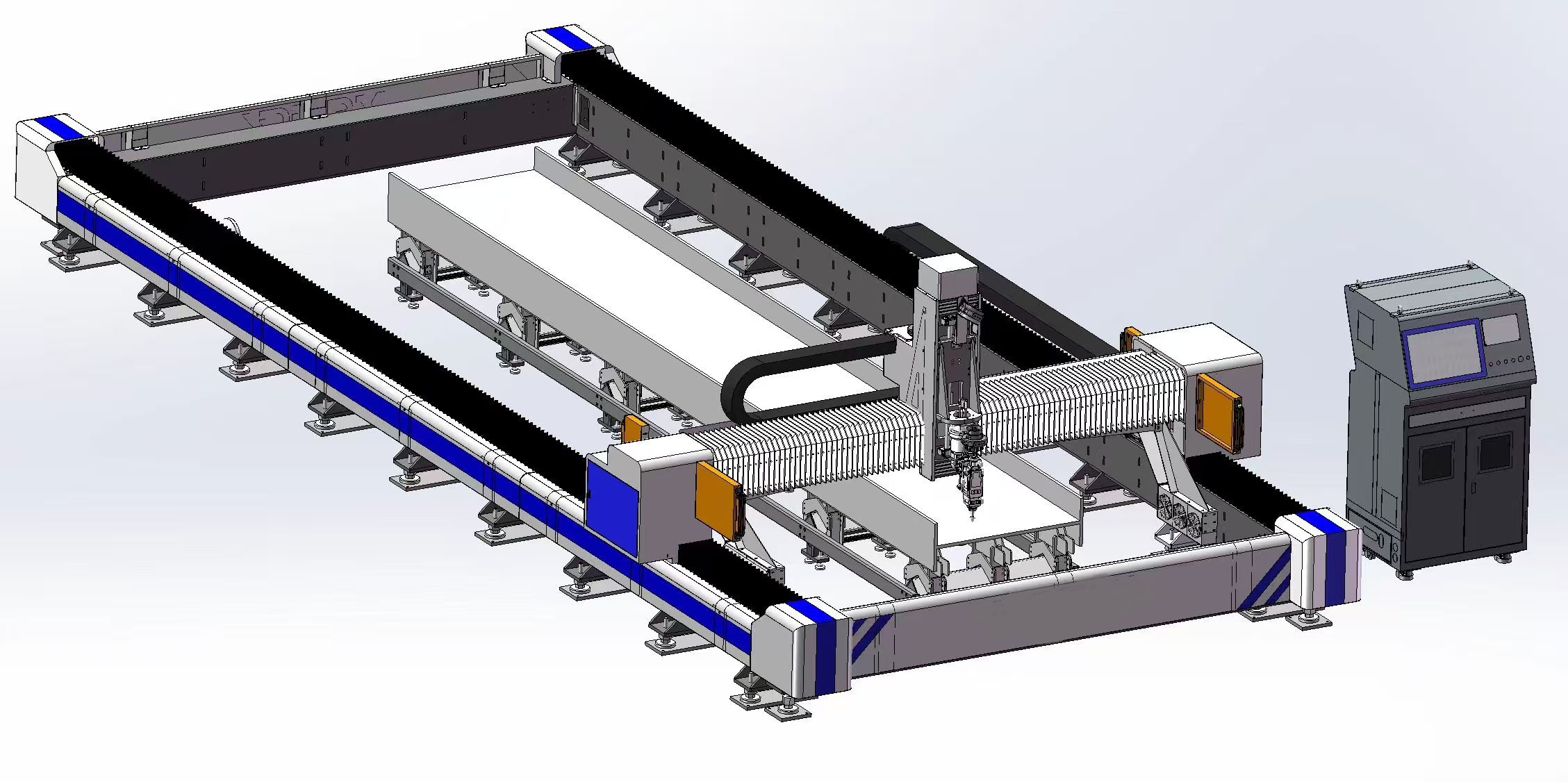
Industrial Application of H-Beam Plasma Cutter
Active Power Factor Correction (PFC)
Integrated PFC circuits are the first line of defense. They ensure that the current waveform follows the voltage waveform, maximizing the real power drawn from the grid and reducing the reactive power component. In Antofagasta’s industrial parks, where power quality penalties may be applied to facilities with low power factors, this feature provides both a technical and a financial advantage. PFC allows the machine to operate efficiently on a wide range of input voltages, typically from 380V to 480V, without manual re-linking of the transformer taps.
Closed-Loop Feedback Mechanisms
The secondary stage involves a closed-loop feedback system. Sensors monitor the output current and voltage at the arc 1,000 times per second. This data is fed back to the central processing unit, which adjusts the Pulse Width Modulation (PWM) duty cycle of the inverters. This ensures that even if a nearby mine starts a high-voltage motor, the plasma arc remains stiff and focused, maintaining the narrow kerf width required for high-tolerance H-beam fit-ups.
Operational Benefits for the Antofagasta Mining Sector
The primary application of H-beams in this region is the construction of heavy-duty processing plants and conveyor galleries. These structures require precise bolt-hole alignments and coping cuts. When an H-Beam Plasma Cutter is equipped with internal regulation, the fabrication shop realizes several quantifiable benefits:
1. Extended Consumable Longevity
Plasma consumables (nozzles and electrodes) are highly sensitive to current spikes. An unregulated surge can cause the hafnium insert in the electrode to melt prematurely, leading to an asymmetrical arc. In remote regions like Antofagasta, reducing the frequency of consumable replacement is vital for maintaining a lean supply chain. Stable voltage ensures a smooth “soft start” and “soft stop” for the arc, doubling or even tripling the life of the cutting tip compared to unregulated systems.
2. Elimination of Secondary Grinding
Inconsistent arc voltage leads to “dross,” or re-solidified metal on the bottom edge of the cut. Removing dross requires manual labor and grinding tools, increasing the cost per ton of fabricated steel. A regulated power source maintains the optimum plasma gas velocity and temperature, resulting in a dross-free cut that is ready for immediate welding or assembly.
Environmental Adaptability: Dust and Temperature Factors
While voltage regulation handles the electrical challenges, the Antofagasta environment also presents particulate challenges. The Atacama’s fine dust is often conductive. High-end H-beam cutters designed for this market feature isolated cooling chambers. The sensitive electronics, including the voltage regulation boards, are housed in a sealed compartment (often rated IP23 or higher), while the cooling air is directed only over the heat sinks. This prevents “flashover” or short-circuiting of the regulation circuits, ensuring that the grid stability features remain operational over the long term.
Comparative Performance: Internal vs. External Regulation
Historically, fabrication shops used external industrial voltage stabilizers to protect their CNC equipment. However, these external units are bulky, expensive, and often introduce a lag in response time. Integrating the regulation directly into the plasma power source allows for Galvanic Isolation and a much tighter integration between the CNC controller and the power unit. This “all-in-one” approach reduces the footprint of the machine on the shop floor and simplifies maintenance protocols for Chilean technicians.
Concluding Industry Insight: The Future of Distributed Power in Fabrication
The industrial landscape is moving toward a model where the “intelligence” of the machine must compensate for the “instability” of the environment. In the coming decade, we expect to see H-beam cutting systems move beyond simple voltage regulation toward predictive power management. This will likely involve integrated energy storage (capacitive buffering) to handle millisecond-level outages that currently cause machine resets.
For B2B stakeholders in the Antofagasta region and similar global mining hubs, the investment in an H-Beam Plasma Cutter with built-in voltage regulation is a strategic hedge against rising energy costs and grid unreliability. As structural specifications become more stringent and project timelines compress, the ability to maintain continuous, high-precision operation in the face of erratic power is the defining factor in fabrication profitability. The convergence of power electronics and heavy-duty thermal cutting is no longer an optional upgrade; it is the baseline for industrial viability in the world’s most demanding environments.
Industrial Expertise & Support
Are you looking for high-performance H-Beam Plasma Cutter tailored for the Global market? Our engineering team provides comprehensive solutions for modern manufacturing.





