Industrial Integration of Fiber Tube Laser Cutters in Santiago: Navigating CE and NR-12 Compliance
Santiago, Chile, has emerged as a primary industrial hub for South American metal fabrication, particularly in the construction, mining equipment, and agricultural machinery sectors. As manufacturing facilities in the region transition from conventional mechanical sawing and plasma cutting to high-speed automated solutions, the Fiber Tube Laser Cutter has become the preferred technology for processing complex profiles. However, the acquisition of such high-energy equipment necessitates a rigorous adherence to international safety standards. For B2B stakeholders in Santiago, ensuring that machinery meets both the European CE (Conformité Européenne) and the South American NR-12 (Norma Regulamentadora 12) standards is not merely a regulatory formality but a critical component of operational risk management and long-term asset protection.
Technical Architecture and the Fiber Advantage
The transition to fiber laser technology is driven by the 1,064-nanometer wavelength, which provides superior absorption rates in metallic materials such as carbon steel, stainless steel, and aluminum. Unlike CO2 lasers, fiber systems utilize solid-state active gain media, eliminating the need for internal moving parts or laser gases. This results in a significantly reduced heat-affected zone (HAZ), preserving the structural integrity of the tube or pipe during high-speed thermal processing.
In the context of tube processing, these machines utilize sophisticated chucking systems—typically pneumatic or hydraulic—to maintain concentricity during rotation. The integration of a 4-axis or 5-axis cutting head allows for complex beveling and weld-preparation geometries. For industrial operators in Santiago, the precision of the beam delivery system ensures that secondary finishing processes are minimized, directly impacting the throughput of the manufacturing line. However, the high power density of these beams requires comprehensive enclosure strategies to prevent ocular damage and diffuse reflections.
CE Certification: The European Benchmark for Chilean Imports
CE marking indicates that a Fiber Tube Laser Cutter complies with the essential requirements of the applicable European Union directives. For the Chilean market, where many high-end components are sourced from European or Tier-1 global manufacturers, CE certification serves as a baseline for electrical and mechanical safety. The certification process involves several key directives:
1. Machinery Directive (2006/42/EC): This ensures the machine is designed and constructed to be operated, adjusted, and maintained without putting persons at risk.
2. Low Voltage Directive (2014/35/EU): This governs the electrical safety of the laser source and the CNC control cabinets, preventing shock hazards and electrical fires.
3. EMC Directive (2014/30/EU): This ensures that the high-frequency discharge of the laser does not interfere with other electronic equipment in the facility, a critical factor for smart factories in Santiago’s industrial parks.

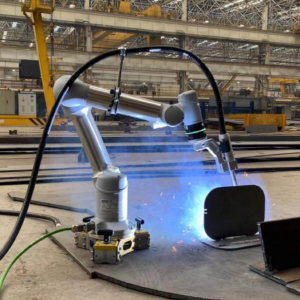
Industrial Application of Fiber Tube Laser Cutter
Furthermore, compliance with EN ISO 11553-1 (Safety of machinery – Laser processing machines) is mandatory under CE. This standard dictates the requirements for laser radiation protection, ensuring that the machine’s interlocked housing prevents any accidental exposure to Class 4 laser radiation.
NR-12 Compliance: Redefining Safety Protocols in South America
While NR-12 is a Brazilian regulatory standard, its influence extends across South America, including Chile, due to its comprehensive approach to worker safety and machine guarding. For a Fiber Tube Laser Cutter to be NR-12 compliant, it must feature a redundant safety architecture. This involves the use of Safety Integrity Level (SIL) rated components that ensure the machine enters a safe state in the event of a component failure.
NR-12 requires specific physical barriers and electronic sensors to prevent access to moving parts—such as the rotating chucks and the longitudinal gantry—while the machine is in operation. In Santiago’s heavy industrial sectors, NR-12 compliance often involves the installation of light curtains, pressure-sensitive mats, and dual-channel emergency stop circuits. The standard also mandates clear technical documentation in the local language, including detailed risk assessments and maintenance protocols, ensuring that Chilean operators are fully equipped to handle the equipment safely.
Integration of Safety Systems and Operational Throughput
A common misconception in the B2B sector is that rigorous safety compliance hinders productivity. On the contrary, modern fiber laser systems integrate safety directly into the CNC logic. For instance, an Automatic Bundle Loader equipped with safety sensors allows for the continuous feeding of raw material while maintaining a secure perimeter. If a breach is detected, the system executes a controlled deceleration rather than an abrupt hard stop, which protects the laser source from back-reflection damage and preserves the current cutting progress.
In Santiago, where labor costs and safety regulations are increasingly scrutinized, investing in a machine that harmonizes CE and NR-12 standards reduces the likelihood of workplace accidents and the associated legal and financial liabilities. Moreover, insurance providers in the region frequently offer more favorable premiums for facilities that utilize certified, compliant machinery.
Technical Data and Performance Metrics
When evaluating a fiber tube laser system for the Chilean market, technical specifications must be viewed through the lens of safety. A typical high-performance unit might feature a 3kW to 6kW laser source, capable of processing tubes up to 220mm in diameter. The acceleration rates, often reaching 1.2G, require robust mechanical damping and reinforced enclosures to contain any potential mechanical failure at high speeds. The cooling system, usually a dual-circuit industrial chiller, must also comply with electrical safety standards to prevent coolant leaks from interacting with high-voltage laser electronics.
Concluding Industry Insight
The industrial landscape in Santiago is currently undergoing a significant shift toward high-precision automation. As the demand for structural steel and complex tubular components grows, the Fiber Tube Laser Cutter will remain a cornerstone of modern fabrication. However, the future of the industry lies in the convergence of high-output performance and uncompromising safety standards. Manufacturers and distributors who prioritize CE and NR-12 compliance are not just following regulations; they are establishing a foundation for sustainable industrial growth. In an increasingly globalized market, the ability to demonstrate rigorous safety certification is a powerful differentiator that reflects technical maturity and a commitment to operational excellence. For Chilean enterprises, the move toward certified laser technology is a strategic investment in both human capital and technological capability, ensuring they remain competitive in a demanding global supply chain.
Industrial Expertise & Support
Are you looking for high-performance Fiber Tube Laser Cutter tailored for the Global market? Our engineering team provides comprehensive solutions for modern manufacturing.