The Industrial Shift: Fiber Tube Laser Cutter Implementation in Mendoza
The industrial landscape of Mendoza, Argentina, historically recognized for its viticulture and energy sectors, is currently undergoing a significant technological transition. This evolution is characterized by the integration of high-precision metal fabrication tools, specifically the Fiber Tube Laser Cutter. As global supply chains demand higher tolerances and lower lead times, regional manufacturing hubs in South America are adopting solid-state laser technology to remain competitive. The shift from traditional CO2 systems or mechanical sawing to fiber-based resonators represents a fundamental change in how structural steel, aluminum, and copper alloys are processed. This article examines the technical specifications of fiber source technology and its operational impact on the Mendoza industrial corridor.
Energy-Efficient Fiber Source Technology: Technical Parameters
The core of modern tube cutting systems lies in the fiber laser source. Unlike gas-based lasers that rely on a mixture of carbon dioxide, helium, and nitrogen, fiber lasers utilize a solid-state medium. The laser beam is generated by seed lasers and amplified in specially designed glass fibers doped with rare-earth elements such as ytterbium. This architecture allows for a Wall-Plug Efficiency (WPE) that significantly exceeds legacy systems. While CO2 lasers typically operate at a WPE of 8 percent to 12 percent, modern fiber sources achieve efficiencies between 35 percent and 45 percent.
This efficiency gain is not merely a reduction in kilowatt-hour consumption; it translates to a reduced thermal load on the system. Because less energy is wasted as heat, the cooling requirements—specifically the BTU capacity of the industrial chillers—are drastically lowered. In the arid climate of Mendoza, where ambient temperatures can fluctuate significantly, the stability of a fiber source ensures consistent beam quality without the complex mirror alignments required by CO2 resonators. The 1.07-micron wavelength of the fiber laser is also more readily absorbed by metallic surfaces, allowing for faster processing speeds at lower power outputs.
Mechanical Precision in Automated Tube Processing
A Fiber Tube Laser Cutter integrates complex motion control systems to handle various geometries, including round, square, rectangular, and open profiles like C-channels or L-angles. The mechanical synchronization between the rotary chucks and the cutting head is critical for maintaining dimensional accuracy over long workpieces, often exceeding 6,000 mm in length. Most high-end systems utilized in the Argentinian metallurgical sector feature a dual-chuck or triple-chuck configuration. The lead chuck provides rotational torque while the secondary chucks provide support and material advancement, minimizing vibration and “tube whip.”
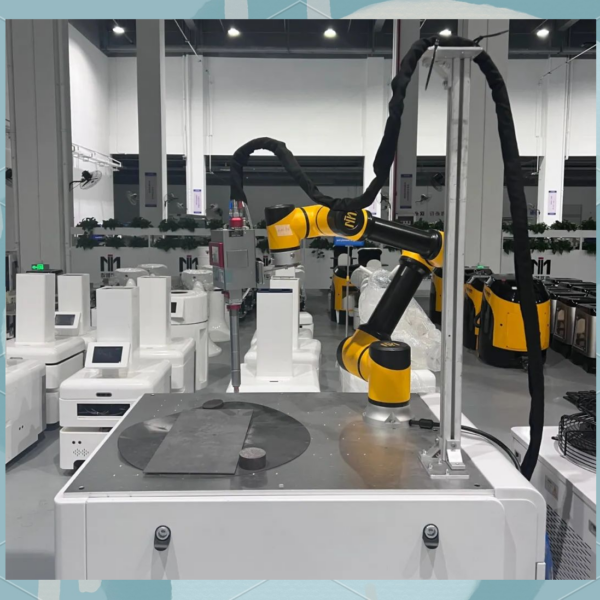
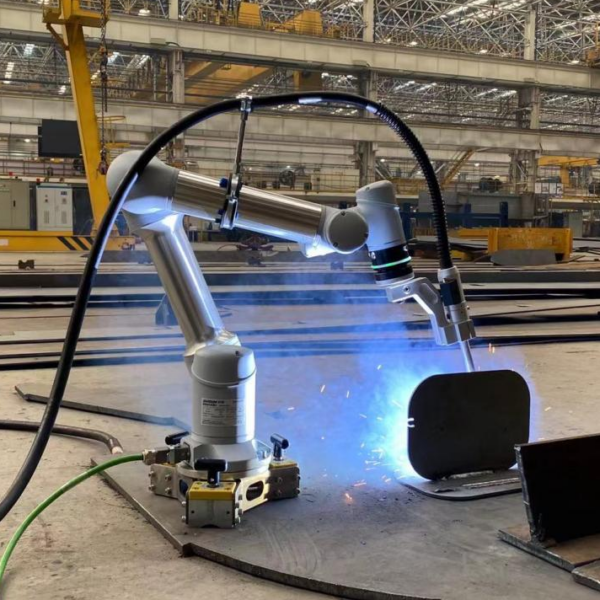
The precision of these machines is measured in microns. Advanced CNC controllers manage the Beam Parameter Product (BPP), ensuring that the focal point remains constant regardless of the material’s wall thickness or surface irregularities. In Mendoza’s heavy machinery and agricultural equipment manufacturing, this precision allows for the elimination of secondary processes. Holes, notches, and complex miters are cut with such accuracy that components can move directly to robotic welding cells without manual deburring or adjustment.

Industrial Application of Fiber Tube Laser Cutter
Material Versatility and Reflective Metal Processing
One of the primary technical advantages of fiber source technology is its ability to process highly reflective materials. In the energy and wine-processing industries of Mendoza, stainless steel and aluminum are ubiquitous. Traditional CO2 lasers struggled with “back-reflection,” where the laser light would bounce off the material surface and damage the internal optics of the resonator. Fiber lasers, due to their wavelength and the use of isolators, can safely cut copper, brass, and high-grade aluminum alloys.
Technical data suggests that for wall thicknesses under 5 mm, a 3kW fiber laser can outperform a 6kW CO2 laser in terms of linear meters per minute. This is particularly relevant for the production of heat exchangers and structural frames used in Mendoza’s large-scale solar arrays and hydroelectric components. The high power density of the fiber beam results in a narrower kerf width, which reduces material waste and allows for more intricate nesting patterns during the CAD/CAM phase of production.
Operating Costs and Maintenance Cycles
The B2B value proposition of the Fiber Tube Laser Cutter is heavily weighted toward the reduction of Total Cost of Ownership (TCO). Fiber sources are essentially maintenance-free for up to 100,000 hours of operation. There are no turboblowers, internal mirrors, or vacuum pumps to service. In a region like Mendoza, where specialized technician dispatch for legacy CO2 systems can be costly and logistically challenging, the reliability of a Solid-State Laser Source is a critical operational advantage.
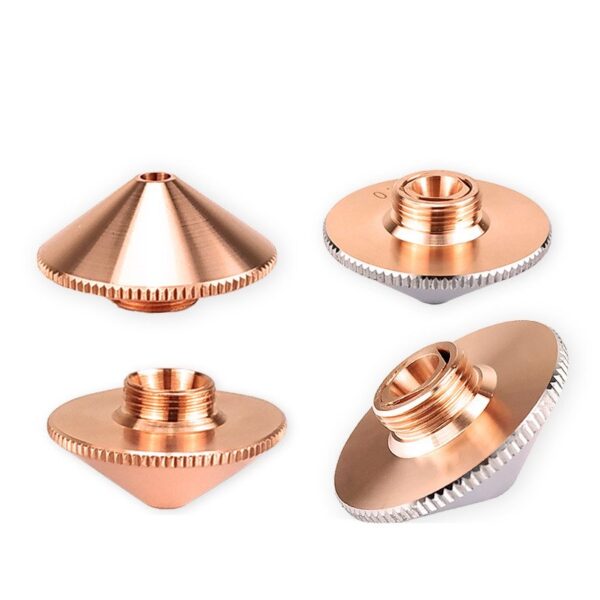
Furthermore, the absence of laser gas requirements reduces the logistical overhead. The only consumables required are cutting gases (typically Nitrogen or Oxygen) and the copper nozzles. When factoring in the reduced electricity consumption and the elimination of expensive optical refurbishments, the cost per part is often 50 percent lower than that of traditional thermal cutting methods. This allows local manufacturers to compete on a global scale, offering high-precision components to international buyers in the aerospace and automotive sectors.
Integration with Industry 4.0 and Smart Manufacturing
Modern tube laser installations in Argentina are increasingly integrated into broader ERP and MES frameworks. Software plays a pivotal role in maximizing the efficiency of the fiber source. Automated nesting algorithms optimize the layout of parts on a single tube to minimize the “remnant” or scrap piece. Furthermore, real-time monitoring of the cutting process—utilizing sensors for pierce detection and plasma monitoring—ensures that the machine adjusts its parameters dynamically to account for variations in material grade.
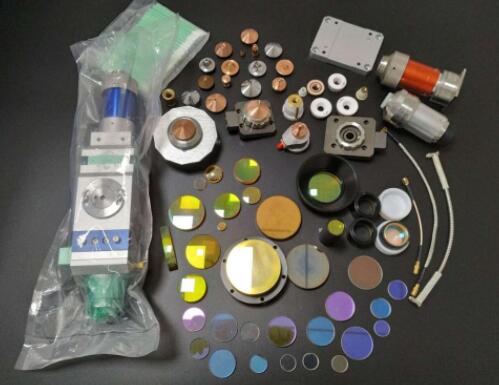
In the context of Mendoza’s industrial growth, the ability to collect and analyze data from the laser cutter allows for predictive maintenance. Operators can monitor the health of the fiber delivery cable and the protective windows of the cutting head via remote diagnostics. This connectivity ensures that the machine maintains peak performance levels, which is essential for high-volume export contracts where downtime can result in significant financial penalties.
Concluding Industry Insight: The Regional Hub Strategy
The deployment of energy-efficient fiber tube laser technology in Mendoza signifies a broader trend in the global manufacturing sector: the rise of specialized regional hubs. As the cost of international logistics remains volatile, the “nearshoring” of high-precision fabrication becomes more attractive to global OEMs. Mendoza is positioning itself not just as a regional provider, but as a technically capable node in the global supply chain. The transition to fiber technology is the catalyst for this change, providing the necessary balance of energy efficiency, material versatility, and micron-level precision. For the B2B sector, the takeaway is clear: investment in high-efficiency laser resonators is no longer an optional upgrade but a prerequisite for participation in the modern industrial economy. The future of metal fabrication in South America will be defined by those who leverage these solid-state advancements to drive down costs while simultaneously increasing the complexity and quality of their output.
Industrial Expertise & Support
Are you looking for high-performance Fiber Tube Laser Cutter tailored for the Global market? Our engineering team provides comprehensive solutions for modern manufacturing.