The Evolution of Metal Fabrication in Caxias do Sul: Integrating Fiber Tube Laser Systems
Caxias do Sul, located in the southern Brazilian state of Rio Grande do Sul, stands as the second-largest metal-mechanic hub in the country. This industrial cluster, traditionally dominated by heavy transport manufacturing and agricultural equipment, is currently undergoing a systemic digital transformation. At the center of this shift is the implementation of the Fiber Tube Laser Cutter, a technology that has superseded conventional mechanical sawing and CO2 laser systems. However, the hardware alone no longer defines competitive advantage. The current industrial paradigm in this region focuses on the digital thread—the seamless integration between Enterprise Resource Planning (ERP) systems and advanced nesting software.
The transition to fiber technology in Caxias do Sul is driven by the 1.06-micron wavelength characteristic of solid-state lasers. This wavelength allows for high absorption rates in non-ferrous metals such as aluminum, brass, and copper, which are frequently utilized in the region’s automotive and wine-processing equipment sectors. To maximize the throughput of these high-speed machines, local manufacturers are moving away from siloed operations toward a fully connected production ecosystem.
Technical Architecture of ERP and Nesting Integration
In a sophisticated manufacturing environment, the Fiber Tube Laser Cutter acts as a physical execution node within a larger data network. The integration begins at the ERP level, where production orders are generated based on demand forecasting and supply chain logistics. In Caxias do Sul, many Tier 1 and Tier 2 suppliers utilize ERP platforms like SAP or TOTVS to manage these high-level data points.
The connectivity bridge is established when the ERP transmits raw production data—including material specifications, tube profiles, wall thicknesses, and delivery deadlines—to the nesting software via an Application Programming Interface (API) or standardized Data Exchange Files (DXF/STEP). This digital handshake eliminates manual data entry, which is the primary source of latency and error in tube fabrication. The nesting software then processes these requirements to generate optimized cutting paths and machine code (G-code).
Nesting Optimization and Material Utilization
Tube nesting presents unique challenges compared to flat-sheet nesting. It requires the management of 3D geometries, weld seam detection, and the consideration of mechanical support during the rotation of the workpiece. Advanced Nesting Optimization algorithms used in the Caxias do Sul cluster analyze the entire production queue to combine multiple orders onto a single raw material length (typically 6 or 12 meters).

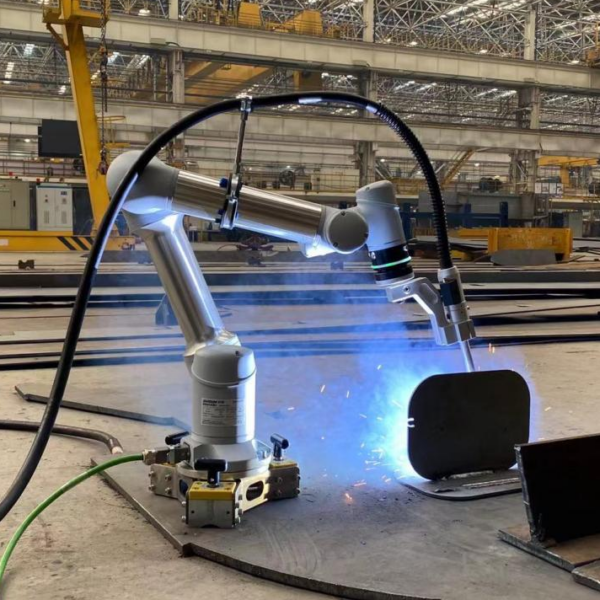
Industrial Application of Fiber Tube Laser Cutter
By utilizing common-line cutting and scrap reduction techniques, these software solutions minimize the “remnant” material. In high-volume production environments, such as the manufacturing of bus chassis or agricultural sprayers, a 5% increase in material utilization can result in significant annual cost savings. Furthermore, the software calculates the precise weight and center of gravity for each part, ensuring that the machine’s chucks and steady rests provide maximum stability during high-acceleration movements.
Real-Time Data Feedback Loops
The connectivity between the Fiber Tube Laser Cutter and the ERP system is not a unidirectional flow. Modern installations in Brazil’s southern industrial pole utilize bidirectional communication. As the laser completes each cut, the machine’s CNC controller sends real-time status updates back to the ERP. This data includes actual processing time, gas consumption (Oxygen or Nitrogen), and power usage.
This feedback loop enables “Actual vs. Standard” costing analysis. If a specific grade of stainless steel tube requires more time to pierce than originally estimated in the ERP’s routing module, the system can automatically adjust future quotes and production schedules. This level of Industry 4.0 Connectivity ensures that the digital twin of the factory remains synchronized with the physical reality of the shop floor.
The Impact of Automated Loading and Unloading Systems
To fully leverage the speed of fiber laser resonators, which can reach power levels exceeding 6kW in tube applications, the integration must extend to material handling. In Caxias do Sul, high-capacity manufacturers are increasingly adopting bundle loaders and automated unloading conveyors. These mechanical systems are governed by the same nesting software that controls the laser head.
When the nesting software determines the sequence of parts, it also dictates the movement of the loading arm. This ensures that the correct tube profile is selected from the magazine without operator intervention. For the unloading phase, the software can instruct the system to sort parts into different bins based on their destination in the assembly line, further reducing post-processing labor. This end-to-end automation is essential for maintaining the high duty cycles required in the competitive global B2B market.
Overcoming Interoperability Challenges
One of the primary technical hurdles in the Caxias do Sul manufacturing sector has been interoperability between different hardware brands and software versions. The solution has been the adoption of Open Platform Communications United Architecture (OPC UA). This machine-to-machine communication protocol allows a Fiber Tube Laser Cutter from one manufacturer to communicate with nesting software from another, and an ERP system from a third party.
By standardizing the data format, companies can avoid vendor lock-in and build a heterogeneous production line that is tailored to their specific technical requirements. This flexibility is critical for the diverse industrial base of Rio Grande do Sul, where a single job shop may handle everything from thin-walled furniture tubing to heavy-duty structural components for the energy sector.
Concluding Industry Insight
The integration of fiber tube laser technology with ERP and nesting software in Caxias do Sul represents more than just a local trend; it is a blueprint for the future of global metal fabrication. The true value of a Fiber Tube Laser Cutter is no longer measured solely by its kilowatts or its traverse speed, but by its ability to function as a transparent node within a digital supply chain. As artificial intelligence begins to infiltrate nesting algorithms—predicting thermal deformation and automatically adjusting cutting parameters in real-time—the gap between the digital design and the physical part will continue to shrink. For global B2B stakeholders, the lesson from the Brazilian metal-mechanic hub is clear: hardware performance is the baseline, but digital connectivity is the multiplier that determines long-term operational viability and profitability in an increasingly automated world.
Industrial Expertise & Support
Are you looking for high-performance Fiber Tube Laser Cutter tailored for the Global market? Our engineering team provides comprehensive solutions for modern manufacturing.