Introduction: The Industrial Evolution of the Manaus Free Trade Zone
The Polo Industrial de Manaus (PIM), situated in the heart of the Amazon, represents one of the most significant industrial clusters in South America. As a hub for electronics, motorcycle manufacturing, and heavy appliance production, the region faces unique logistical and operational challenges. To maintain global competitiveness, manufacturers in Manaus are increasingly pivoting toward advanced thermal processing technologies. Central to this transition is the adoption of the Fiber Laser Welder, a tool that has redefined precision joining through high-density energy application. This shift is not merely a trend in equipment upgrading but a strategic move to address the high costs of energy and the demand for high-throughput production lines within the Brazilian legal framework of the Free Trade Zone.
The Physics of Energy-Efficient Fiber Source Technology
The core of modern laser welding systems lies in the fiber source, typically utilizing ytterbium-doped optical fibers as the active gain medium. Unlike traditional CO2 lasers that rely on gas mixtures and complex mirror arrays, fiber sources generate a high-intensity beam within the fiber itself. This solid-state design allows for a significantly higher Wall-Plug Efficiency (WPE). While conventional CO2 systems operate at a WPE of approximately 8% to 10%, modern fiber laser sources achieve efficiencies exceeding 35% to 40%.
In the context of Manaus, where industrial electricity rates and thermal management are critical factors, this 300% increase in efficiency translates directly into reduced operational overhead. The energy that is not converted into the laser beam is dissipated as heat; therefore, a more efficient source requires less robust cooling infrastructure. This reduces the total power draw of the chiller units, further optimizing the facility’s energy footprint. The 1070 nm wavelength produced by these fiber sources is also more readily absorbed by metallic substrates, particularly reflective materials like aluminum and copper, which are prevalent in the electronic and automotive sectors of the PIM.
Precision Control and the Beam Parameter Product
Technical superiority in welding is often measured by the Beam Parameter Product (BPP), which defines the focusability of the laser beam. Fiber lasers offer a superior BPP, allowing the energy to be concentrated into a much smaller focal spot compared to legacy systems. This concentration of energy results in a high power density, enabling deep penetration welding with a narrow profile.
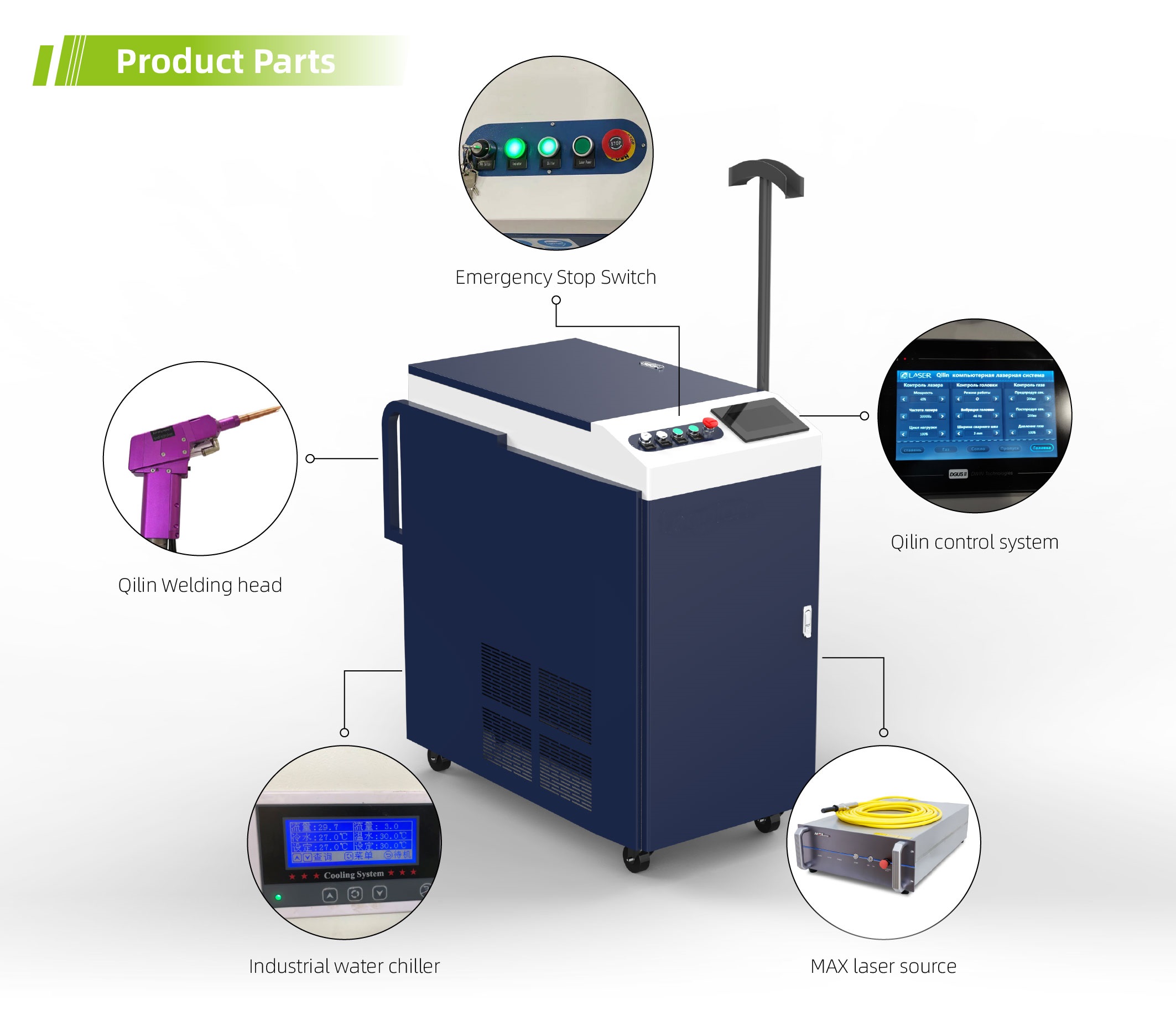
Industrial Application of Fiber Laser Welder
For manufacturers in Manaus specializing in intricate electronics or thin-gauge metal components, this precision is vital. The narrow beam profile minimizes the Heat-Affected Zone (HAZ), the area of base metal that has had its microstructure and properties altered by welding. By limiting the HAZ, engineers can ensure the structural integrity of the component and reduce the risk of thermal distortion. This is particularly critical in the assembly of battery packs and motorcycle frames, where metallurgical stability is a prerequisite for safety and performance standards.
Operational Reliability in Tropical Environments
The environmental conditions in Manaus—characterized by high humidity and consistent ambient temperatures—necessitate industrial equipment with high thermal stability and sealed optical paths. Fiber laser welders are inherently more resilient in these conditions than gas or YAG lasers. The delivery of the laser beam via a flexible fiber optic cable eliminates the need for external beam delivery optics, such as mirrors and bellows, which are susceptible to contamination and misalignment in humid environments.
Furthermore, the modular design of modern fiber sources allows for high Mean Time Between Failures (MTBF). Many systems utilize redundant diode modules; if one diode fails, the system can often continue to operate at a slightly reduced power level, preventing total production line downtime. For the B2B sector in Brazil, where the supply chain for spare parts can sometimes face logistical delays due to the geographic isolation of the Amazon region, this inherent reliability is a significant commercial advantage.
Integration with Industry 4.0 and Automation
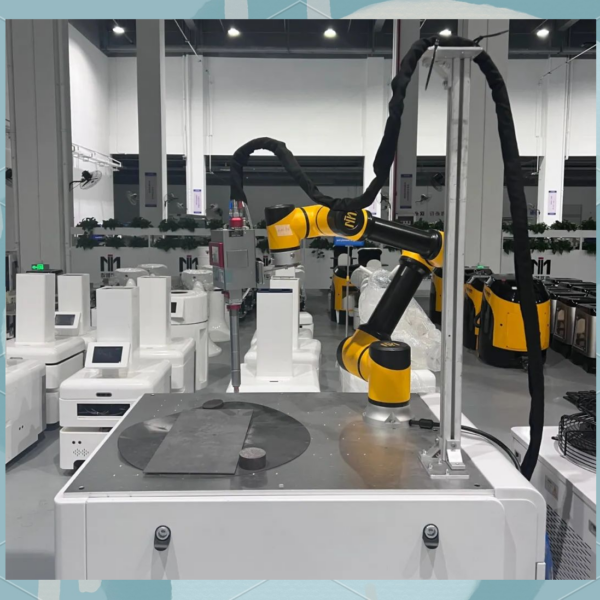
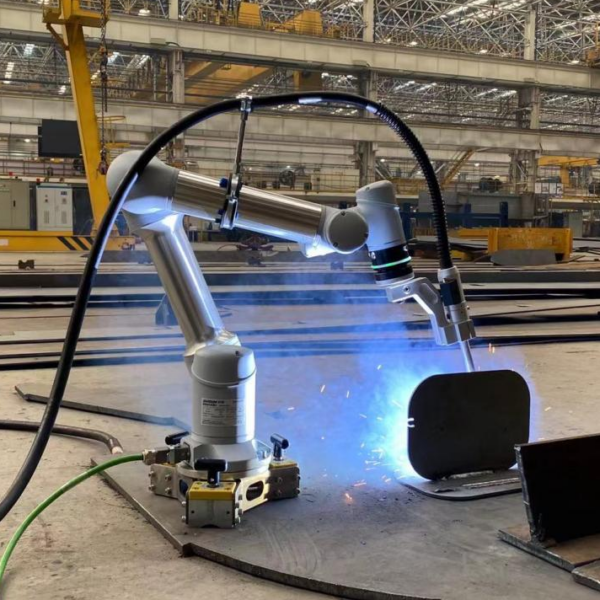
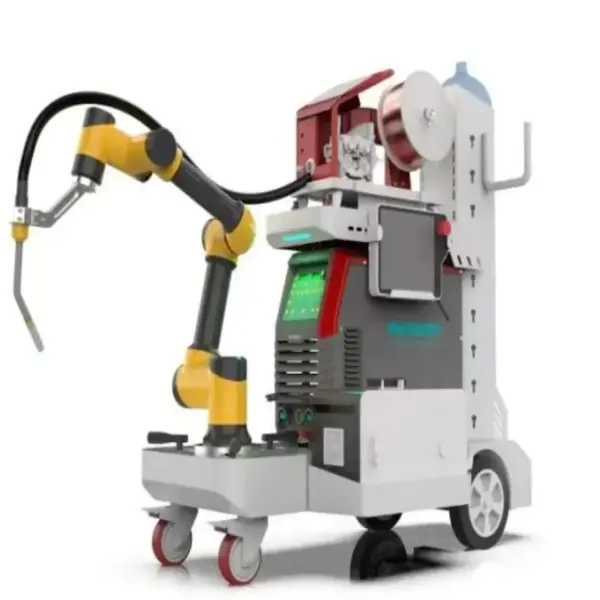
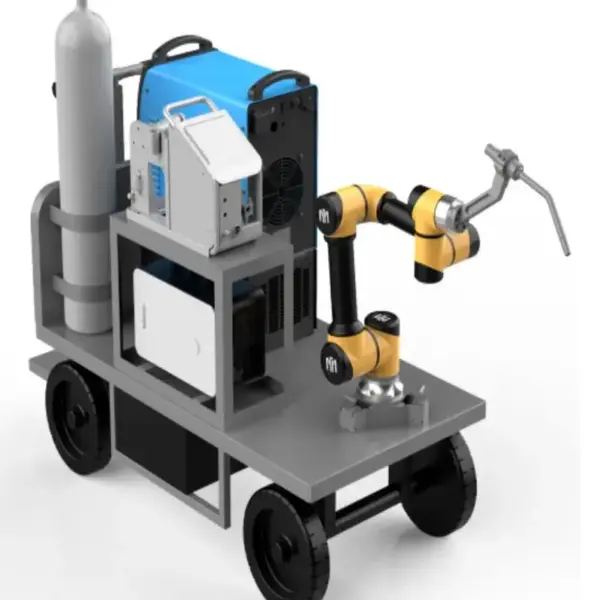
The Manaus industrial sector is currently undergoing a digital transformation, aligning with Industry 4.0 protocols. Fiber laser welding systems are digital-native technologies, allowing for seamless integration with robotic arms and CNC (Computer Numerical Control) gantries. The fiber source can be controlled with microsecond precision, enabling “on-the-fly” welding and complex pathing that manual processes cannot replicate.
Data acquisition is another critical component. Modern fiber laser controllers monitor parameters such as back-reflection, diode temperature, and power output in real-time. This data can be exported to Manufacturing Execution Systems (MES) to provide a full digital twin of the production process. For global companies operating in Manaus, this ensures that the quality produced in the Brazilian plant meets the exact specifications of their European or Asian counterparts, maintaining brand consistency across the global supply chain.
Economic Viability and Return on Investment
While the initial capital expenditure for a high-quality fiber laser system may be higher than traditional MIG/TIG welding setups, the Return on Investment (ROI) is realized through three primary channels: speed, consumables, and post-processing. Fiber laser welding is significantly faster—often up to ten times faster than TIG welding—which increases the units produced per shift.
Secondly, fiber lasers require no electrodes, filler wire (in many autogenous applications), or expensive gas mixtures, drastically reducing the cost per meter of the weld. Finally, the high-quality finish of a fiber laser weld often eliminates the need for secondary grinding or polishing. In the competitive landscape of Manaus, where labor costs and efficiency are under constant scrutiny, the reduction in manual post-processing represents a substantial saving in man-hours and abrasive materials.
Concluding Industry Insight: The Future of Laser Processing in South America
The trajectory of manufacturing in Manaus indicates a clear move toward decarbonization and extreme precision. As Brazil continues to refine its industrial policies, the emphasis will likely shift toward “Green Manufacturing” incentives. Fiber laser technology, with its low energy consumption and lack of chemical consumables, aligns perfectly with these future regulatory requirements.
The industry insight for the coming decade suggests that the Fiber Laser Welder will transition from a specialized tool to a standard requirement for any facility aiming for export-grade quality. We anticipate a surge in the adoption of “Blue Laser” technology for copper welding and high-power kilovolt systems for heavy industry within the region. For global stakeholders, investing in the Manaus industrial hub now requires a commitment to these high-efficiency technologies to mitigate the rising costs of traditional energy and to meet the tightening tolerances of the global electronics and electric vehicle markets. The integration of fiber-based photonics is no longer an optional upgrade; it is the fundamental infrastructure for the next generation of Brazilian manufacturing.
Industrial Expertise & Support
Are you looking for high-performance Fiber Laser Welder tailored for the Global market? Our engineering team provides comprehensive solutions for modern manufacturing.