Advanced Fabrication Paradigms: The 3D Bevel Laser System in Guayaquil’s Industrial Sector
The industrial landscape of Guayaquil, Ecuador, is currently undergoing a structural transformation driven by the adoption of high-precision thermal cutting technologies. As the primary port city and a critical hub for the nation’s metal-mechanic and shipbuilding industries, Guayaquil serves as the testing ground for sophisticated manufacturing workflows. Central to this evolution is the implementation of the 3D Bevel Laser System, a technology that transcends traditional flat-bed cutting by allowing for multi-axis head movement. This capability is essential for creating complex weld preparations directly on the laser machine, eliminating the need for secondary mechanical milling or grinding processes. The integration of these systems is not merely a hardware upgrade; it represents a comprehensive shift toward digital connectivity, where Enterprise Resource Planning (ERP) systems and advanced nesting software synchronize to optimize throughput and material utilization.
Technical Architecture of 5-Axis Bevel Cutting
A 3D Bevel Laser System operates using a sophisticated 5-axis kinematic chain. Unlike standard 2D laser cutters that move strictly along X and Y axes with a vertical Z-axis, a 3D system incorporates A and B axes via a specialized torch head. This allows the laser beam to tilt up to ±45 degrees or more, depending on the specific resonator and head configuration. In the context of Guayaquil’s heavy industry—specifically in the production of pressure vessels and maritime components—this allows for the precise execution of V, X, Y, and K-type bevels.
The technical advantage lies in the consistency of the kerf width and the precision of the land thickness. When cutting thick carbon steel or stainless steel plates, maintaining a constant focal point while the head is tilted requires high-speed interpolation between the CNC controller and the laser source. This ensures that the thermal input is regulated to prevent dross accumulation on the lower edge of the bevel, which is critical for meeting international welding standards such as AWS or ASME.
The Role of CAD/CAM Nesting Algorithms in 3D Environments
The efficiency of a 3D laser system is fundamentally capped by the capabilities of its CAD/CAM Nesting Algorithms. Traditional 2D nesting focuses on geometric tessellation to minimize scrap. However, 3D beveling introduces a volumetric variable. The software must account for the “swing” of the tilted head to prevent collisions with adjacent parts or the machine’s slats.

Industrial Application of 3D Bevel Laser System
In Guayaquil’s fabrication shops, the use of advanced nesting software allows engineers to import complex 3D models directly from platforms like Tekla or SolidWorks. The software automatically identifies bevel attributes and assigns the correct toolpaths. Furthermore, it calculates the necessary compensations for the laser beam’s diameter at various angles. This digital preparation ensures that the “unfolded” geometry of a beveled part fits perfectly during the assembly phase, significantly reducing the “man-hours per ton” metric that defines the competitiveness of Ecuadorian exporters.
ERP Integration and Bi-Directional Data Flow
Modern manufacturing in the Guayas region is moving toward Industry 4.0 Integration, where the 3D laser system acts as a data node within a larger ERP framework. The connectivity between the shop floor and the administrative office is facilitated through Application Programming Interfaces (APIs) that link the nesting software to the ERP system. This creates a bi-directional flow of information: the ERP sends job orders and material specifications to the laser, and the laser provides real-time feedback on cutting time, gas consumption, and remnant dimensions.
For a business operating in Guayaquil, this connectivity addresses the volatility of raw material costs. When the 3D laser system completes a nest, it can automatically update the ERP inventory, marking the used plate as consumed and logging the exact dimensions of any usable remnants. This level of precision in inventory management allows for more accurate job costing and leaner procurement cycles, which is vital for maintaining margins in the global metalworking market.
Weld Preparation Optimization and Downstream Efficiency
The primary economic driver for adopting a 3D Bevel Laser System is the radical improvement in Weld Preparation Optimization. In traditional workflows, a plate is cut to size, then moved to a different station where a technician uses a plasma torch or a mechanical beveling machine to create the weld edge. This manual process is prone to human error, resulting in inconsistent root gaps that require more filler wire and longer welding times.
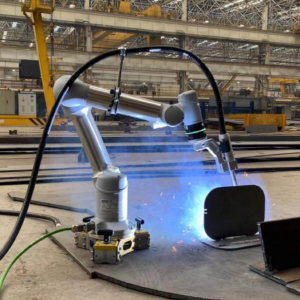
By automating this process through the laser system, the bevel is cut with the same ±0.1mm tolerance as the part itself. When these parts reach the welding station in a Guayaquil shipyard or structural steel plant, the fit-up is seamless. This precision allows for the implementation of robotic welding cells, as the consistency of the joint geometry is high enough for automated sensors to track the seam without constant manual intervention. The cumulative effect is a reduction in total production time by up to 30% compared to conventional methods.
Challenges in Digital Connectivity and Local Implementation
While the technical benefits are clear, the implementation of such systems in Guayaquil requires a robust digital infrastructure. High-speed data transmission is necessary to handle the large files generated by 3D nesting software. Furthermore, there is a requirement for specialized technical training. Operators must transition from being “machine minders” to “process controllers” who understand the interplay between gas pressures, feed rates, and beam focal positions in a multi-axis environment.
Local service providers in Ecuador are increasingly focusing on the “Digital Twin” concept, where a virtual model of the 3D laser system is used to simulate the cutting process before a single spark is generated. This simulation identifies potential head collisions or inefficient traverse paths, protecting the expensive fiber laser optics and ensuring maximum machine uptime.
Concluding Industry Insight: The Future of Automated Fabrication
The adoption of 3D beveling technology combined with ERP-linked nesting software in Guayaquil is a microcosm of a larger global trend: the transition from “isolated automation” to “integrated intelligence.” In the coming decade, the competitive advantage in the B2B metalworking sector will not be held by those who simply own the fastest machines, but by those who possess the most integrated data ecosystems.
As Guayaquil continues to position itself as a regional leader in industrial manufacturing, the ability to deliver “ready-to-weld” components directly from the laser bed will become the baseline requirement rather than a premium service. The convergence of 5-axis fiber laser hardware and cloud-based ERP analytics is creating a manufacturing environment where waste is minimized, and precision is a programmable variable. For global stakeholders, the development of this infrastructure in Ecuador signifies a maturing market capable of meeting the most stringent international engineering specifications through the rigorous application of digital connectivity.
Industrial Expertise & Support
Are you looking for high-performance 3D Bevel Laser System tailored for the Global market? Our engineering team provides comprehensive solutions for modern manufacturing.