Technical Integration of 3-Chuck Tube Laser Systems in the Manaus Industrial Hub
The industrial landscape of Manaus, Brazil, specifically within the Zona Franca de Manaus (ZFM), has undergone a significant transition toward advanced automated fabrication. As a primary hub for motorcycle manufacturing, electronics, and heavy machinery, the demand for high-precision tubular components has necessitated the adoption of sophisticated fiber laser technology. Among the various configurations available, the 3-Chuck Tube Laser has emerged as the benchmark for high-volume production environments requiring both material efficiency and structural integrity. This article examines the technical advantages of the three-chuck kinematic arrangement and the long-term asset valuation associated with IPG and Raycus fiber sources.
Kinematic Advantages of the Three-Chuck Configuration
Traditional two-chuck systems often struggle with material sagging and vibration during the processing of long or heavy profiles. The 3-Chuck Tube Laser architecture addresses these mechanical limitations by introducing an intermediary support mechanism that maintains the tube’s centerline throughout the entire cutting cycle. In a typical sequence, the rear and middle chucks feed the material, while the front chuck ensures stability near the cutting head. As the process nears completion, the middle chuck shifts position, allowing the cutting head to process the material between the middle and front chucks.
This configuration is essential for achieving Zero-Tailing Technology. By enabling the laser to cut extremely close to the clamping point of the final chuck, material waste is reduced to less than 50mm, and in some specialized configurations, near-zero waste is achievable. For manufacturers in Manaus, where raw material logistics involve significant supply chain costs, the reduction of scrap directly correlates to improved margins. Furthermore, the triple-point support minimizes the Heat-Affected Zone (HAZ) distortion by preventing the tube from oscillating during high-speed rotations, ensuring that the kerf width remains consistent across the entire length of the workpiece.
Laser Source Performance: IPG vs. Raycus
The core of any tube laser system is its Fiber Laser Source. In the Manaus market, two dominant brands dictate the performance and subsequent residual value of the machinery: IPG Photonics and Raycus. The selection between these sources involves a strategic trade-off between initial capital expenditure and long-term operational efficiency.
IPG Photonics is recognized for its high electro-optical conversion efficiency, often exceeding 40 percent. This efficiency reduces the thermal load on the internal components, extending the diode life and maintaining beam stability over thousands of operational hours. For heavy-duty industrial applications in the ZFM, IPG sources offer a robust service network and a reputation for reliability that minimizes unplanned downtime. This reliability is a critical factor in the secondary market, where machines equipped with IPG sources command a premium.

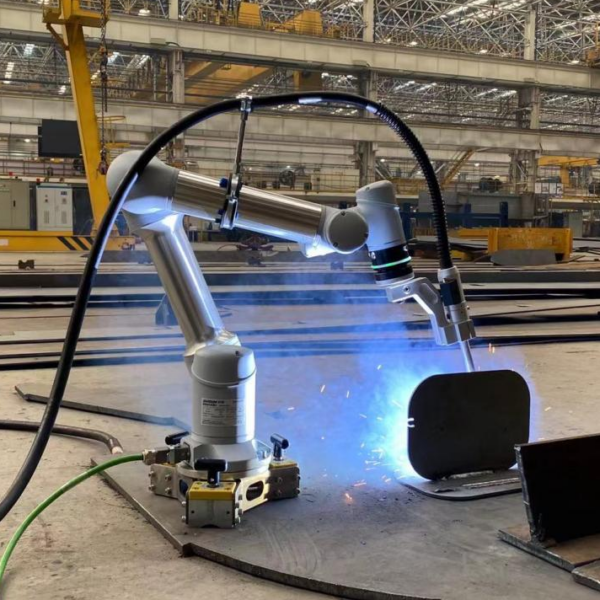
Industrial Application of 3-Chuck Tube Laser
Raycus, conversely, provides a highly competitive performance-to-cost ratio. In recent years, Raycus has closed the technical gap by improving the stability of its high-power modules. For many fabrication shops in Brazil, Raycus offers the necessary power density to process carbon steel and stainless steel with high precision while lowering the entry barrier for fiber laser adoption. While the depreciation curve for Raycus-equipped machines may be slightly steeper than those with IPG, the rapid ROI achieved through lower initial costs often justifies the investment for high-growth enterprises.
Residual Value and Asset Longevity in the Brazilian Market
The residual value of a 3-Chuck Tube Laser is influenced by its mechanical stability and the brand equity of its internal components. In the context of Manaus, where industrial equipment is subject to high humidity and continuous duty cycles, the build quality of the machine bed and the sophistication of the CNC controller are paramount. A machine bed that has been stress-relieved through high-temperature annealing maintains its geometric accuracy over a decade, preventing the misalignment issues that plague lighter, entry-level systems.
From a valuation perspective, the three-chuck system is inherently more valuable on the used market than two-chuck alternatives. This is because the three-chuck design is capable of handling a wider range of tube diameters and weights, making it more versatile for subsequent owners. When combined with a reputable Fiber Laser Source, the machine remains a liquid asset. Buyers in the secondary market prioritize systems where spare parts are readily available and where the laser source can be serviced or refurbished by the original manufacturer rather than replaced entirely.
Logistical and Operational Considerations in Manaus
Operating high-end laser machinery in the Amazon region presents unique challenges. The humidity levels require robust environmental controls within the laser cabinet to prevent condensation on the optics. Systems equipped with integrated dust extraction and advanced filtration are necessary to maintain the integrity of the linear guides and rack-and-pinion drives. When these maintenance protocols are followed, the 3-Chuck Tube Laser retains its precision, further bolstering its long-term market value.
Moreover, the tax incentives provided by the Suframa (Superintendência da Zona Franca de Manaus) allow companies to invest in higher-specification machinery that might otherwise be cost-prohibitive. By opting for a 3-chuck system with a premium laser source, manufacturers are not just purchasing a tool; they are securing a high-value asset that benefits from the unique economic status of the region. This strategic investment ensures that the facility remains competitive against international imports by producing high-tolerance components locally.
Industry Insight: The Shift Toward Full Automation
The global trajectory for tube processing is moving toward the total elimination of manual intervention. The 3-chuck system is a prerequisite for this shift, as it provides the mechanical foundation for automatic loading and unloading sequences that can run unattended. As labor costs in Brazil continue to evolve and the demand for “Just-in-Time” manufacturing increases, the ability to process raw tubes into finished parts in a single setup is no longer an advantage—it is a requirement.
The integration of Industry 4.0 features, such as real-time monitoring of Electro-Optical Efficiency and predictive maintenance alerts for the chuck actuators, will define the next generation of these machines. For decision-makers in Manaus and beyond, the focus must remain on the total cost of ownership (TCO). A 3-chuck system with a high-tier laser source represents a higher upfront cost but provides a significantly lower cost-per-part over the machine’s lifecycle, coupled with a robust resale price that protects the company’s capital. In the coming decade, the ability to minimize material waste through superior kinematics will be the primary differentiator between profitable fabrication centers and those burdened by inefficient overhead.
Industrial Expertise & Support
Are you looking for high-performance 3-Chuck Tube Laser tailored for the Global market? Our engineering team provides comprehensive solutions for modern manufacturing.