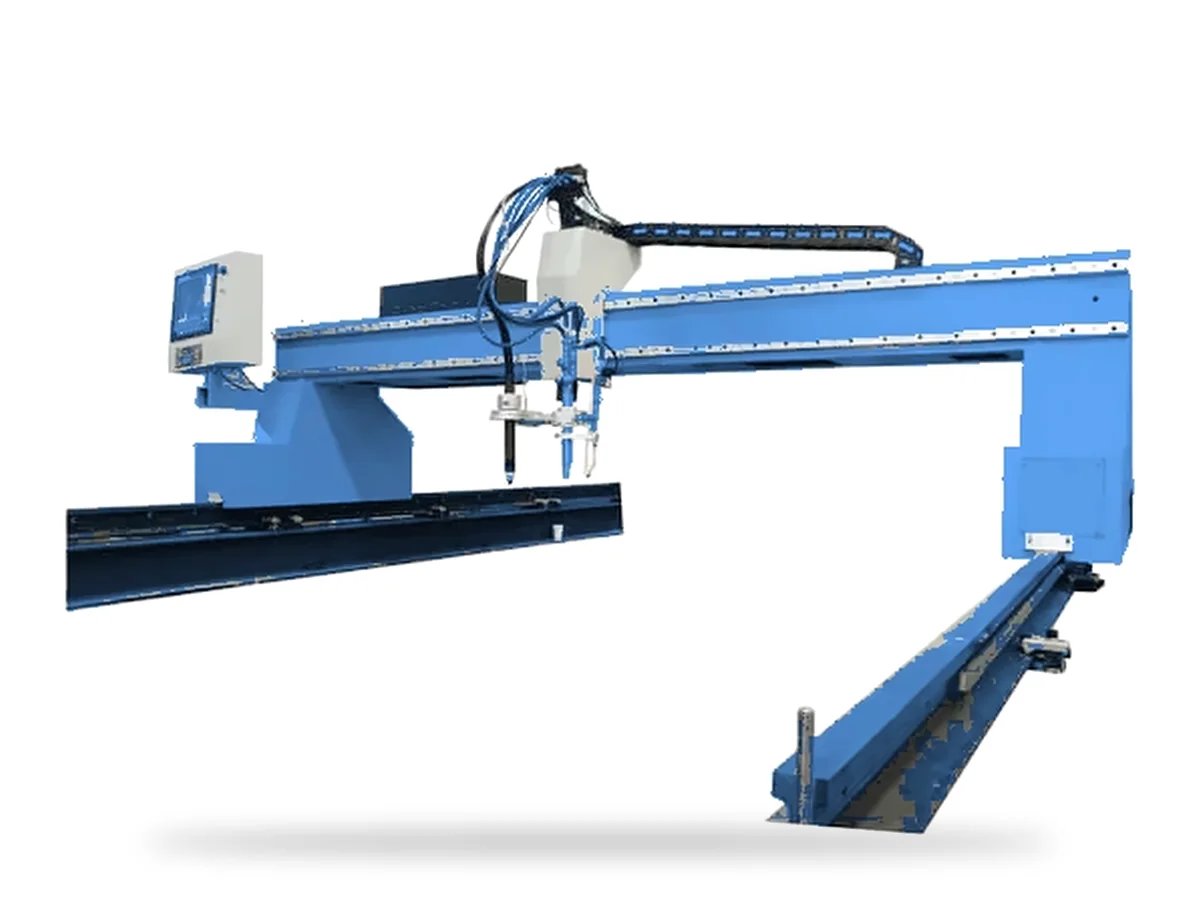
On a CNC plasma table, kerf is not a fixed number. It changes with amperage, cut speed, gas, material grade and how worn the consumables are. That is why the same 1.5 mm setting that works on a fresh nozzle can leave a 2 mm gap after a week of production.
What determines kerf width
Amperage sets the arc energy; higher current widens the kerf. Cut speed changes how long the arc dwells in the cut, so a slow speed widens kerf and overheats the edge. Oxygen cutting on mild steel behaves differently from nitrogen on stainless.
How to compensate in CAM
Cut compensation offsets the toolpath by half the kerf so the finished part keeps its nominal size. Measure kerf on a test coupon, not from the nozzle diameter, and re-measure after every consumable change.
When kerf drifts
A widening kerf usually means a worn nozzle or electrode, a drop in gas pressure, or a speed override left on. Log the kerf measurement with each consumable change so drift is visible before parts fail inspection.