Industrial Evolution in São Paulo: Advanced Thermal Cutting Systems
The industrial landscape of São Paulo, Brazil, represents the primary engine of South American manufacturing, accounting for a significant percentage of the continent’s heavy machinery and structural steel output. As the region pivots toward more complex architectural designs and high-conductivity electrical components, the demand for precision in non-ferrous metal processing has surged. Traditional thermal cutting methods often struggle with the inherent physical properties of copper and aluminum, specifically their high thermal conductivity and optical reflectivity. The introduction of the specialized H-Beam Plasma Cutter equipped with integrated anti-reflection technology has addressed these challenges, providing local fabricators with the capability to process structural sections and heavy plates with unprecedented accuracy.
This transition is not merely about speed; it is about the management of the plasma arc’s stability when encountering materials that reflect energy rather than absorbing it. In the context of São Paulo’s automotive and aerospace sectors, where aluminum alloys are ubiquitous, the ability to maintain a consistent kerf width and minimize the Heat Affected Zone (HAZ) is a critical technical requirement for maintaining structural integrity.
The Physics of Reflectivity in Plasma Arc Cutting
Copper and aluminum present unique obstacles to standard plasma systems. Unlike carbon steel, which absorbs thermal energy efficiently, these metals possess high Non-Ferrous Thermal Conductivity. This property causes heat to dissipate rapidly from the cut zone, requiring a higher energy density to maintain a molten state. Furthermore, the reflective nature of these surfaces can interfere with the torch’s height control sensors, which typically rely on arc voltage sampling.
In a standard plasma environment, the arc is a concentrated column of ionized gas. When cutting highly reflective materials, back-scattering of electromagnetic interference can disrupt the high-frequency start mechanism or cause the torch to misinterpret the distance to the workpiece. This results in “diving” or “snagging,” which damages both the consumables and the material. The anti-reflection technology integrated into modern systems in the São Paulo industrial corridor utilizes digital signal processing to filter out this interference, ensuring the torch maintains an optimal standoff distance throughout the entire geometry of the H-beam.
Advanced Power Supply Modulation
The core of anti-reflection technology lies in the power supply’s ability to modulate current at microsecond intervals. When the system detects a shift in the electrical resistance of the arc—often caused by the rapid heat dissipation of copper—it compensates by adjusting the amperage and gas flow dynamically. This prevents the arc from extinguishing and ensures that the cut face remains perpendicular, a necessity for the interlocking joints required in H-beam construction.
Mechanical Integration: The H-Beam Plasma Cutter Architecture
The H-Beam Plasma Cutter utilized in Brazilian heavy industry is typically a multi-axis robotic or gantry-based system. Unlike flat-plate cutters, these machines must navigate the complex geometry of structural steel, including the web and the flanges. When these beams are composed of or clad in aluminum or copper for specialized industrial applications (such as high-voltage busbar supports or cryogenic infrastructure), the mechanical precision of the system becomes paramount.
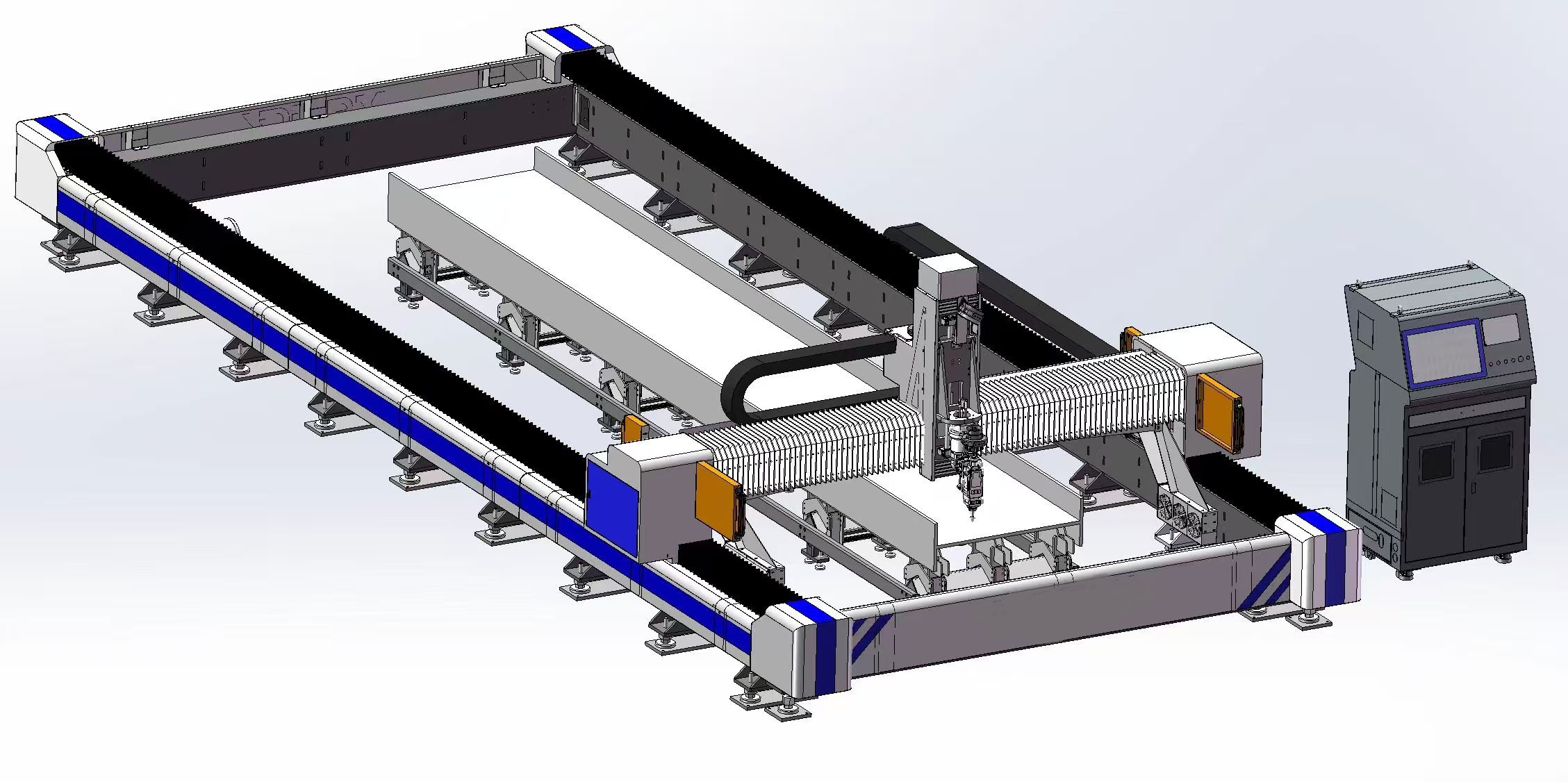
Industrial Application of H-Beam Plasma Cutter
Multi-Axis Torch Kinematics
To process an H-beam, the plasma torch must rotate around the workpiece, maintaining a consistent angle relative to the surface. The integration of 5-axis or 6-axis movement allows for beveling and cope cuts, which are essential for structural welding. In São Paulo’s fabrication shops, these systems are increasingly paired with Arc Voltage Sampling technology that has been hardened against the electromagnetic feedback common when cutting reflective alloys. This ensures that even as the torch moves from the thick web to the thinner flange, the arc remains constricted and stable.
Gas Shielding Strategies for Non-Ferrous Metals
The choice of plasma and shield gases is critical when dealing with anti-reflection protocols. For aluminum, a mixture of Argon and Hydrogen (H35) is frequently used to provide a high-energy environment that overcomes the metal’s thermal conductivity. For copper, Nitrogen is often preferred to prevent excessive oxidation. The anti-reflection systems in São Paulo are calibrated to manage these gas flows in synchronization with the current modulation, providing a clean, dross-free edge that requires minimal secondary processing.
Economic Impact on the Brazilian Manufacturing Sector
The adoption of these high-tech systems provides a measurable ROI for São Paulo-based enterprises. By reducing the reliance on mechanical sawing or manual oxy-fuel cutting (which is ineffective on aluminum and copper), manufacturers have seen a significant reduction in labor hours. The precision of the H-Beam Plasma Cutter allows for “bolt-ready” parts to be produced directly from the machine, eliminating the need for drilling or grinding.
Reduction in Consumable Costs
One of the hidden costs of cutting reflective metals is the rapid degradation of electrodes and nozzles. Back-reflection of heat and energy often leads to premature orifice expansion. Anti-reflection technology mitigates this by stabilizing the arc and preventing “double-arcing” within the torch head. This extends the life of consumables by up to 30 percent compared to standard plasma systems, a vital factor given the import costs of high-quality consumables in the Brazilian market.
Material Utilization and Waste Management
Given the high market value of copper and industrial-grade aluminum, minimizing kerf loss is an economic necessity. The high-definition plasma arcs used in these machines produce a narrower kerf than traditional air-plasma systems. When combined with sophisticated nesting software, São Paulo fabricators can maximize material yield, directly impacting the bottom line of large-scale infrastructure projects.
Technical Specifications and Data Integrity
Modern H-beam systems in Brazil are now being integrated with Industry 4.0 standards. This involves the real-time monitoring of cutting parameters. For reflective metals, the system logs data on Secondary Electron Emission and arc stability. This data is used to predict maintenance cycles and to refine the cutting parameters for future batches of material. The precision of these systems is typically measured in sub-millimeter tolerances, ensuring that large-scale structural assemblies in São Paulo’s construction sector meet international safety and quality standards.
Concluding Industry Insight
The industrial landscape is moving toward a future where material versatility is as important as raw speed. In São Paulo, the integration of anti-reflection technology within the H-Beam Plasma Cutter framework signifies a shift away from “brute force” thermal cutting toward intelligent, feedback-driven fabrication. As global supply chains demand more complex components using highly conductive materials like copper and aluminum, the ability to process these metals without the risks of energy reflection will become a baseline requirement rather than a premium feature. The convergence of robotic kinematics and advanced power electronics is effectively neutralizing the traditional physical barriers of non-ferrous metalwork, allowing for a more streamlined, automated, and cost-effective structural steel industry.
Industrial Expertise & Support
Are you looking for high-performance H-Beam Plasma Cutter tailored for the Global market? Our engineering team provides comprehensive solutions for modern manufacturing.

