Industrial Integration of H-Beam Plasma Cutter Technology in Concepción, Chile
The industrial landscape of Concepción, Chile, particularly within the Biobío Region, has undergone a significant transition toward automated structural steel fabrication. As a primary hub for maritime engineering, mining infrastructure, and large-scale construction, the demand for high-precision longitudinal and cross-sectional profiling of structural members has intensified. The deployment of the H-Beam Plasma Cutter in this region represents a strategic investment in capital equipment designed to meet rigorous international engineering standards. This technical analysis explores the operational efficiencies of these systems, the specific integration of IPG and Raycus power sources, and the factors contributing to high residual asset value in the global secondary market.
Concepción’s proximity to major port facilities and steel production plants like CAP Acero provides a logistical advantage for heavy industry. However, the corrosive maritime environment and the high-stress requirements of seismic-resistant structural steel necessitate a level of fabrication precision that manual methods cannot achieve. The implementation of multi-axis CNC thermal cutting systems allows for the execution of complex geometries, including cope cuts, bolt holes, and weld preparations, with a degree of repeatability that ensures structural integrity across large-scale projects.
Kinematics and Structural Design of H-Beam Processing Cells
The mechanical architecture of an H-Beam Plasma Cutter typically involves a high-rigidity gantry system or a multi-axis robotic arm configuration. In the context of H-beam processing, the machine must account for the dimensional variances inherent in hot-rolled steel. Advanced systems utilize laser profiling sensors to map the actual dimensions of the beam—including flange tilt and web eccentricity—before the cutting sequence begins. This real-time data acquisition allows the CNC controller to adjust the cutting path dynamically, ensuring that the kerf width and bevel angles remain within the specified tolerances of ISO 9013.
In Concepción’s heavy industrial sector, the preference is often for 7-axis robotic systems. These units provide the necessary degrees of freedom to process all four sides of an H-beam, as well as the ends, without requiring the workpiece to be flipped. This reduces material handling time and eliminates the cumulative errors associated with manual repositioning. The integration of high-definition plasma or fiber laser sources into these robotic cells dictates the thermal output and the resulting heat-affected zone (HAZ), which is a critical metric for metallurgical integrity in seismic zones.
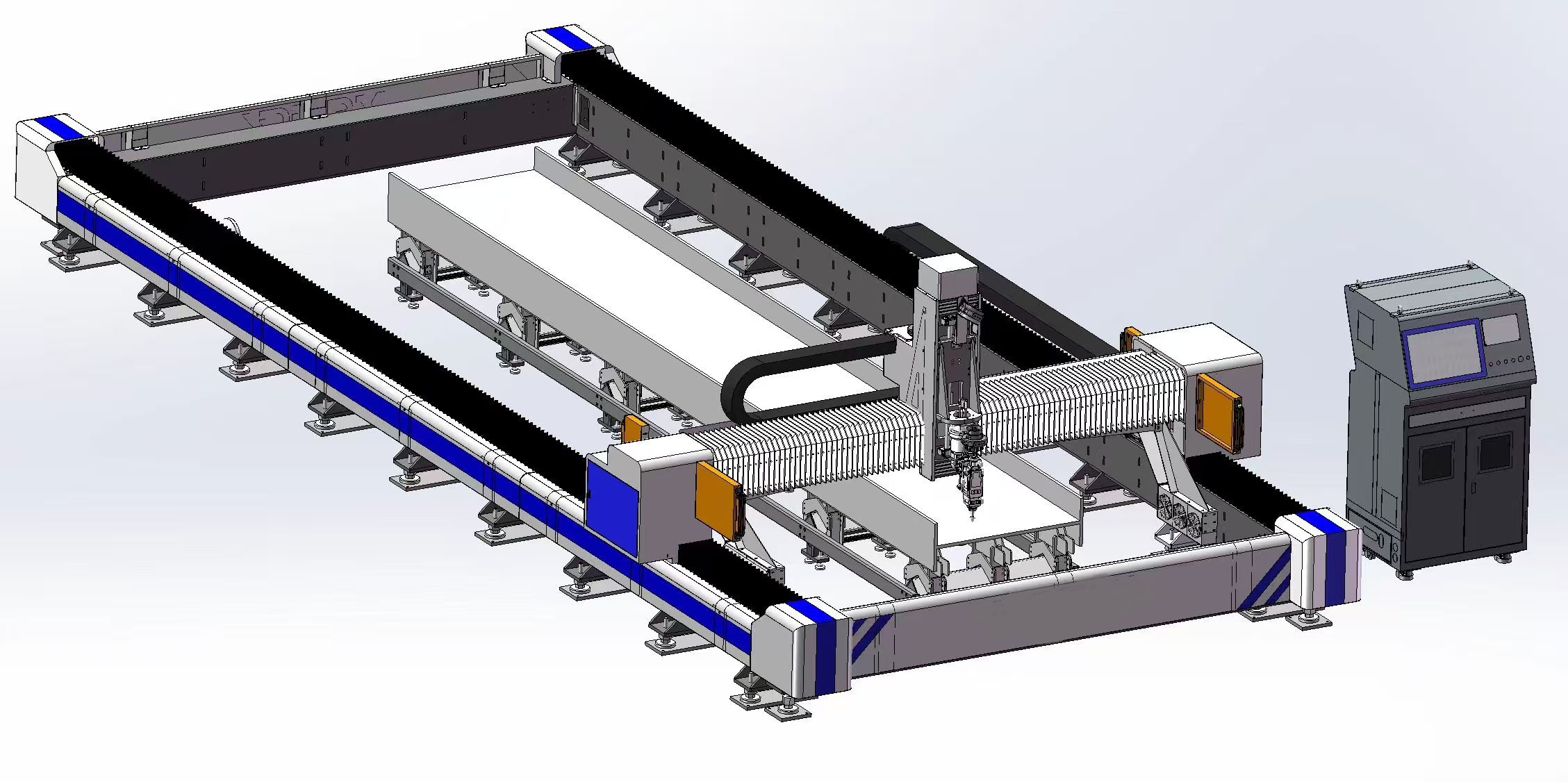
Industrial Application of H-Beam Plasma Cutter
The Role of IPG and Raycus Sources in Thermal Cutting Efficiency
While traditional plasma systems have been the industry standard for structural steel, the integration of high-power fiber laser sources from manufacturers such as IPG Photonics and Raycus has redefined performance benchmarks. These sources are increasingly utilized in specialized H-beam cutting applications where precision and speed on thinner-walled sections or complex hole patterns are paramount. The choice of power source directly impacts the duty cycle and the long-term operational costs of the machinery.
IPG Photonics sources are recognized for their high wall-plug efficiency and exceptional beam quality. In a B2B context, the selection of an IPG source is often driven by the reliability of the diode modules and the extensive global support network. For a fabricator in Concepción, this minimizes the risk of extended downtime. Raycus sources, conversely, offer a competitive performance-to-cost ratio, providing high power stability and robust back-reflection protection, which is essential when processing reflective materials or working in high-intensity industrial environments. Both sources contribute to a cleaner cut surface, reducing the need for secondary grinding operations and thereby lowering the total cost per part.
Quantifying Residual Value in High-End Fabrication Equipment
One of the primary considerations for industrial investors in Chile is the residual value of the asset at the end of a five- or ten-year lifecycle. Machinery equipped with Tier-1 components—specifically IPG or Raycus power units—retains a significantly higher percentage of its initial purchase price compared to systems using generic or proprietary low-tier sources. This high residual value is attributed to several technical factors:
1. Component Longevity: Fiber laser sources have an operational life often exceeding 100,000 hours. This longevity ensures that the core value of the machine remains intact even after years of heavy use in structural steel fabrication.
2. Modular Serviceability: The modular nature of IPG and Raycus units allows for the replacement of specific diode banks or fiber cables without necessitating the replacement of the entire power source. This serviceability is highly valued in the secondary market.
3. Software Compatibility: High-end sources are typically paired with industry-standard CNC controllers (such as Beckhoff or Fanuc) that support DSTV and STEP file formats from BIM software like Tekla Structures. This interoperability ensures the machine remains relevant as digital twin technology evolves.
Operational Impacts on the Biobío Industrial Supply Chain
The introduction of high-capacity H-beam cutting technology in Concepción has a localized economic effect on the supply chain. By increasing the throughput of fabricated steel, local firms can bid on larger international infrastructure projects that were previously outsourced to foreign fabricators. The ability to produce “ready-to-assemble” components with pre-cut weld preparations and bolt holes significantly accelerates on-site erection times.
Furthermore, the technical data suggests that the transition to automated fiber laser integration within the plasma cutting workflow reduces gas consumption and electricity usage per ton of steel processed. In a market where energy costs are a significant overhead, the efficiency of IPG and Raycus sources provides a measurable competitive advantage. The precision of these cuts also ensures that the structural members meet the stringent welding procedure specifications (WPS) required for high-fatigue applications in the mining and energy sectors.
Industry Insight: The Shift Toward Hybrid Thermal Processing
The global structural steel industry is moving toward a hybrid model of thermal processing. The distinction between “plasma” and “laser” is blurring as manufacturers develop multi-process heads capable of switching between high-definition plasma for thick-plate web sections and fiber laser for high-speed flange detailing. For fabricators in Concepción, the strategic acquisition of an H-Beam Plasma Cutter equipped with a high-tier source is no longer just about current production capacity; it is about future-proofing the facility against shifting technical requirements.
The high residual value of these machines is not merely a financial metric but a reflection of their sustained technical relevance. As global standards for building safety and material efficiency become more stringent, the ability to provide verifiable, mill-spec precision through automated cutting will be the baseline for market entry. Investors should prioritize systems that offer documented power source stability and open-architecture control systems to ensure the longest possible functional and economic lifespan for their capital investments.
Industrial Expertise & Support
Are you looking for high-performance H-Beam Plasma Cutter tailored for the Global market? Our engineering team provides comprehensive solutions for modern manufacturing.

