Precision Fabrication in the Biobío Region: The Rise of Advanced H-Beam Processing
Concepción, Chile, has solidified its position as a critical industrial nexus for South America, particularly within the sectors of naval engineering, large-scale mining infrastructure, and structural steel fabrication. As the demand for complex architectural geometries and heavy-duty industrial frameworks increases, the reliance on traditional manual cutting methods has become a bottleneck for local manufacturers. The introduction of the H-Beam Plasma Cutter into this market represents a significant leap in automation, specifically when addressing the historical challenges associated with processing non-ferrous, highly reflective metals.
While H-beam processing is traditionally associated with carbon steel, modern engineering requirements in the Biobío region often necessitate the integration of copper and aluminum components within structural assemblies. These materials present unique metallurgical challenges during thermal cutting. The implementation of anti-reflection technology within plasma systems has transformed these challenges into manageable variables, allowing for high-throughput production without the risk of equipment failure or material degradation.
The Technical Challenge of Reflective Alloys in Thermal Cutting
In the context of plasma cutting, copper and aluminum are classified as high-conductivity, high-reflectivity materials. Unlike carbon steel, which absorbs thermal energy efficiently, these metals tend to reflect a portion of the arc’s energy back toward the torch consumables. In a standard plasma environment, this back-reflection can lead to premature nozzle erosion, electrode damage, and inconsistent arc stability. Furthermore, the high thermal conductivity of these materials causes rapid heat dissipation, which often results in a wider heat-affected zone (HAZ) and excessive dross accumulation on the bottom edge of the H-beam flanges.
For industrial operators in Concepción, where precision is non-negotiable for maritime and mining applications, these inconsistencies lead to increased post-processing costs. The solution lies in the integration of Non-Ferrous Material Processing protocols that utilize specialized power supply modulations. These systems are designed to detect the impedance changes that occur when an arc strikes a reflective surface, adjusting the current output in real-time to maintain a stable plasma column while protecting the internal components of the torch head.
Anti-Reflection Technology and Secondary Inverter Circuitry
The core of modern anti-reflection capability in an H-Beam Plasma Cutter is the Secondary Inverter Circuitry. This hardware configuration allows for ultra-fast switching frequencies, which manage the power delivery to the arc with microsecond precision. When cutting through the thick webs or flanges of a copper-clad or aluminum structural member, the inverter compensates for the material’s high thermal conductivity by concentrating the plasma stream into a higher energy density. This minimizes the time the material stays at peak temperature, thereby narrowing the kerf and reducing the HAZ.
Furthermore, the anti-reflection mechanism involves a sophisticated gas management system. By utilizing specific shield gas mixtures—often incorporating argon, hydrogen, or nitrogen—the system creates a localized environment that suppresses the reflective properties of the molten pool. In Concepción’s heavy industrial shops, this technology ensures that the transition between cutting standard A36 structural steel and specialized aluminum alloys is seamless, requiring only a change in gas parameters rather than a complete overhaul of the machine calibration.
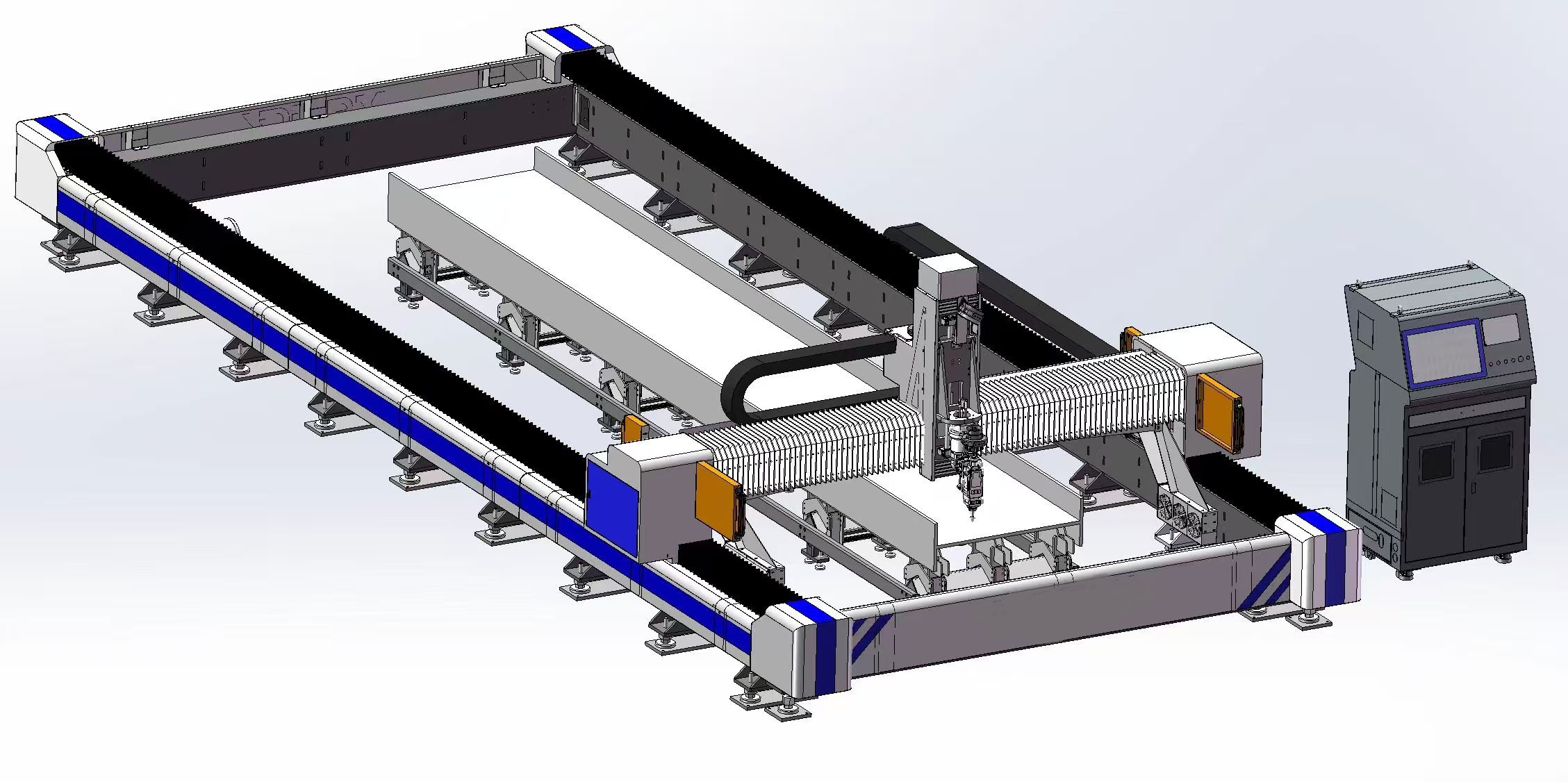
Industrial Application of H-Beam Plasma Cutter
Multi-Axis Robotic Integration for H-Beam Geometries
The structural complexity of an H-beam requires a cutting solution that can navigate the internal and external surfaces of the profile without losing arc tension. In the latest installations in the Biobío region, the plasma torch is typically mounted on a 6-axis robotic arm. This allows for the execution of complex miter cuts, coping, and bolt hole drilling in a single pass. When combined with anti-reflection sensors, the robot can adjust its travel speed dynamically as it moves from the web to the flange, where heat accumulation differs.
This robotic precision is essential for the Thermal Conductivity Optimization required in non-ferrous cutting. Because aluminum expands at a different rate than steel, the software controlling the H-beam cutter must implement real-time kerf compensation. This ensures that when the material cools, the dimensional tolerances remain within the strict limits required for structural bolting or high-pressure welding.
Operational Efficiency and Maintenance in the Chilean Market
From a B2B perspective, the primary driver for adopting anti-reflection plasma technology in Concepción is the reduction in Total Cost of Ownership (TCO). Traditional plasma systems frequently suffer from “double-arcing” when used on copper or aluminum, a phenomenon where the arc jumps from the electrode to the nozzle and then to the workpiece. This destroys consumables instantly. Anti-reflection tech eliminates this risk, extending the life of nozzles and electrodes by up to 300% compared to legacy systems.
Moreover, the integration of automated H-beam lines reduces the reliance on manual layout and cutting, which are prone to human error. In the competitive Chilean export market, the ability to deliver prefabricated structural members that require zero manual grinding or correction provides a significant edge. The high duty cycle of these machines ensures they can operate in the demanding multi-shift environments typical of the Talcahuano and San Pedro de la Paz industrial sectors.
Concluding Industry Insight: The Shift Toward Hybrid Material Infrastructure
The industrial landscape is moving toward a hybrid model where structural strength is combined with the specific functional properties of non-ferrous metals—such as the corrosion resistance of aluminum in coastal environments or the electrical conductivity of copper in large-scale power infrastructure. For fabricators in Concepción, the investment in an H-Beam Plasma Cutter equipped with anti-reflection technology is no longer an optional upgrade but a strategic necessity.
As global supply chains demand higher precision and faster turnaround times, the ability to process diverse materials on a single platform will define the leaders in the fabrication industry. The future of structural steel work lies in the convergence of robotic motion control and advanced power electronics, ensuring that even the most reflective and thermally conductive materials can be shaped with the same ease as carbon steel. This technological maturation will continue to drive the Biobío region’s reputation as a center of excellence for heavy industrial manufacturing on the global stage.
Industrial Expertise & Support
Are you looking for high-performance H-Beam Plasma Cutter tailored for the Global market? Our engineering team provides comprehensive solutions for modern manufacturing.