Introduction to Automated Structural Steel Fabrication in Southern Brazil
The industrial landscape of Caxias do Sul, Brazil, represents the second-largest metal-mechanic hub in the country. As global demand for infrastructure increases, the requirement for precision-engineered structural steel components has shifted from manual layout and mechanical drilling to fully automated thermal cutting solutions. The implementation of the H-Beam Plasma Cutter within this region addresses the critical need for high-throughput processing of heavy profiles, including I-beams, H-beams, channels, and angles. By integrating advanced CNC robotics with localized technical support, manufacturers in the Rio Grande do Sul region are optimizing their supply chains to meet international quality standards while minimizing operational latency.
Technical Specifications of the H-Beam Plasma Cutter
Modern structural steel fabrication requires the execution of complex geometries, including bolt holes, notches, copes, and weld preparations. The H-Beam Plasma Cutter utilizes a 6-axis robotic arm to achieve 3D movement around the workpiece. This allows for the processing of all four sides of a beam without the need for manual repositioning, which significantly reduces material handling time and improves dimensional accuracy.
The system typically incorporates a High-definition plasma power source capable of piercing thicknesses up to 50mm and edge-starting on even thicker sections. The integration of a laser sensing system allows the machine to compensate for material deviations, such as camber and sweep, which are common in hot-rolled steel profiles. By utilizing a closed-loop feedback system, the CNC controller adjusts the cutting path in real-time, ensuring that the finished part adheres to the strict tolerances required for bolted connections in steel structures.
Localized Spare Parts: Mitigation of Supply Chain Volatility
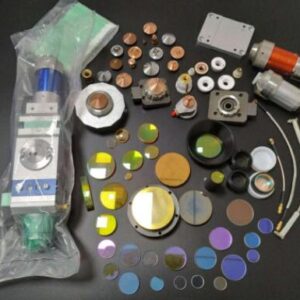
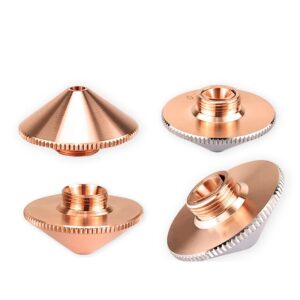
In the context of heavy industrial machinery, the availability of consumables and critical components is a primary determinant of overall equipment effectiveness (OEE). Establishing a localized spare parts inventory in Caxias do Sul serves to decouple Brazilian fabricators from the risks associated with international logistics and customs clearance delays. The inventory includes essential consumables such as electrodes, nozzles, swirl rings, and shields, as well as high-value components like encoders, servo motors, and fiber optic cables.
The technical advantage of a local warehouse lies in the reduction of Mean Time to Repair (MTTR). When a critical component fails, the proximity of the parts depot allows for same-day dispatch. This is particularly vital for the High-definition plasma power source, where specialized components like high-frequency ignition units or coolant pumps must be replaced with OEM-certified parts to maintain the integrity of the arc and the longevity of the torch head.
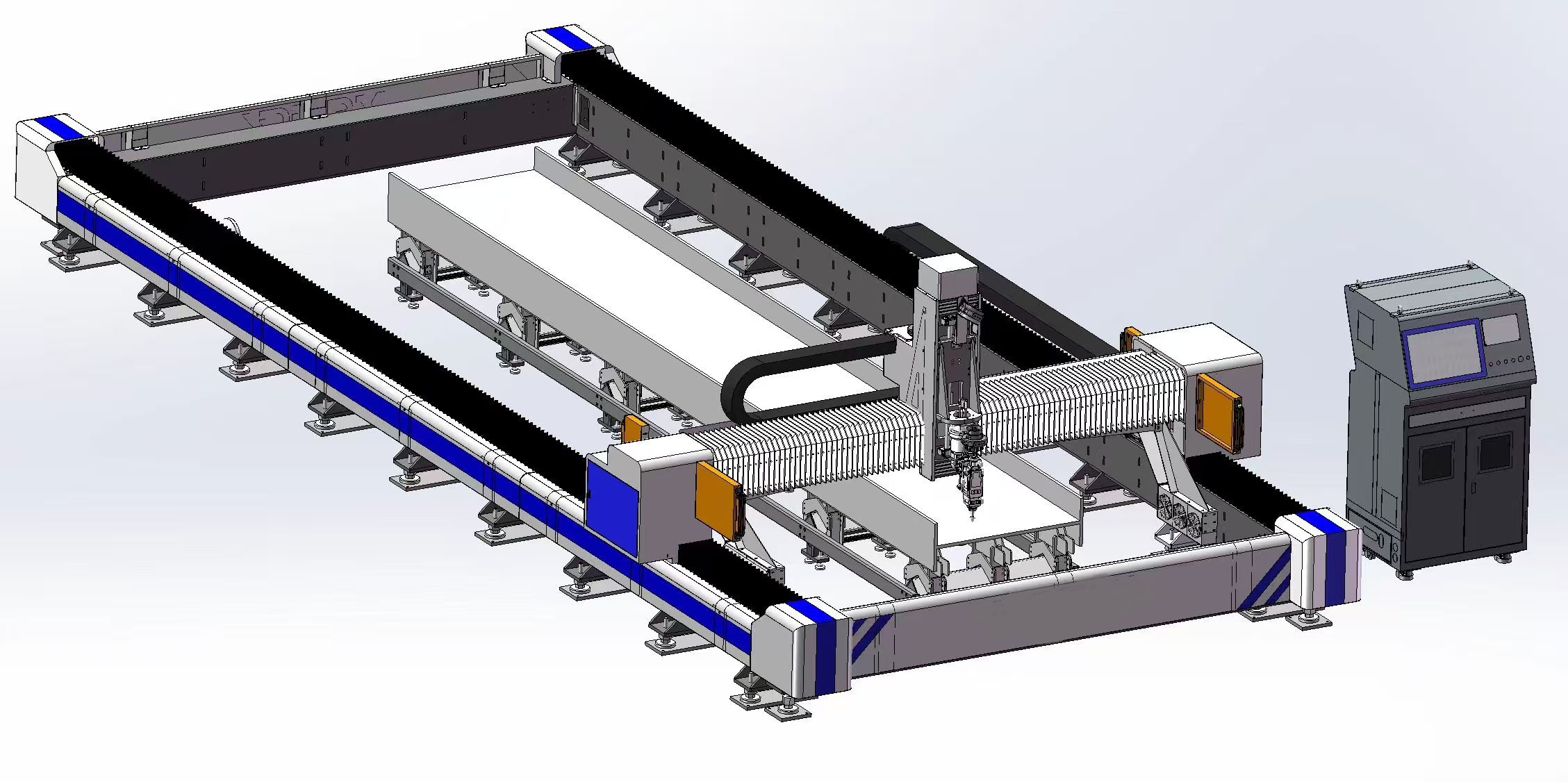
Industrial Application of H-Beam Plasma Cutter
24h Service Response: Engineering Support Protocols
Technical uptime is maintained through a structured 24-hour service response framework. This protocol is divided into three tiers of intervention:
- Tier 1: Remote Diagnostics. Utilizing secure VPN connections, field engineers can access the CNC interface to analyze error logs, verify PLC logic, and calibrate motion parameters without being physically present at the facility.
- Tier 2: Local Technical Deployment. If hardware failure is identified, a certified technician from the Caxias do Sul service center is dispatched within 24 hours. These engineers are trained in both the mechanical alignment of the 6-axis robotic arm and the electronic troubleshooting of the plasma inverter.
- Tier 3: Specialized Overhaul. For complex issues involving the structural integrity of the gantry or the primary rail system, local teams coordinate with global R&D centers to implement engineered solutions that restore the machine to factory specifications.
Operational Integration with BIM and CAD/CAM Software
The efficiency of the H-Beam Plasma Cutter is maximized through the direct ingestion of DSTV or STEP files generated by Building Information Modeling (BIM) software. The software interface in Caxias do Sul installations supports seamless translation of 3D models into machine code. This digital thread eliminates manual data entry errors and allows for the nesting of multiple parts on a single beam length to optimize material utilization.
Furthermore, the system supports Oxy-fuel cutting torches as an auxiliary option for processing extreme thicknesses that exceed the capacity of plasma. The ability to switch between plasma and oxy-fuel within the same robotic program provides fabricators with the versatility to handle diverse project requirements, from light commercial frames to heavy industrial bridge components.
Precision Metrics and Quality Control
In the global market, compliance with standards such as ISO 9013 (thermal cutting quality) and EN 1090 (execution of steel structures) is non-negotiable. The robotic plasma systems deployed in Brazil are calibrated to achieve Class 2 or Class 3 cut surfaces, characterized by minimal dross and low angularity deviation. The use of specialized gas mixing consoles, which precisely regulate the flow of Oxygen, Nitrogen, and H35 (Argon-Hydrogen), allows for the optimization of the heat-affected zone (HAZ). Minimizing the HAZ is critical for ensuring that the mechanical properties of the steel remain intact, particularly in seismic-rated connections.
Conclusion: The Strategic Shift Toward Localized Support Hubs
The evolution of the structural steel industry is increasingly defined by the marriage of high-end automation and robust local support ecosystems. The deployment of the H-Beam Plasma Cutter in Caxias do Sul is more than a hardware installation; it is a strategic infrastructure investment that addresses the specific logistical challenges of the South American market. By providing 24-hour service response and maintaining a comprehensive inventory of localized spare parts, manufacturers can guarantee high uptime and predictable production cycles.
The industry insight for the coming decade points toward a transition where the proximity of technical expertise becomes as valuable as the machine’s kilowatt rating. As fabrication facilities move toward Industry 4.0 integration, the ability to receive rapid, localized support for complex robotic systems will be the primary differentiator between profitable operations and those hindered by technical obsolescence. Caxias do Sul is positioned as a blueprint for how regional industrial centers can successfully integrate global technology with local reliability.
Industrial Expertise & Support
Are you looking for high-performance H-Beam Plasma Cutter tailored for the Global market? Our engineering team provides comprehensive solutions for modern manufacturing.