The Evolution of Structural Steel Fabrication in Caxias do Sul
Caxias do Sul, located in the state of Rio Grande do Sul, Brazil, has solidified its position as the second-largest metal-mechanic hub in the country. This industrial cluster, characterized by its high density of transport equipment manufacturers and structural steel fabricators, is currently undergoing a significant digital transformation. At the center of this shift is the implementation of the H-Beam Plasma Cutter, a multi-axis robotic system designed to automate the processing of structural profiles. Unlike traditional manual layouts or mechanical drilling lines, these systems integrate advanced thermal cutting with sophisticated digital workflows, bridging the gap between engineering design and shop floor execution.
The adoption of these technologies in the Brazilian market is not merely an upgrade in cutting speed; it represents a fundamental change in how data flows through a manufacturing facility. In the competitive global landscape, fabricators in Caxias do Sul are leveraging digital connectivity to link Enterprise Resource Planning (ERP) systems with specialized nesting software. This integration ensures that every H-beam, I-beam, and channel processed is tracked, optimized for material yield, and cut with a precision that meets international structural standards.
Technical Specifications and Robotic Integration
The modern H-Beam Plasma Cutter utilized in the Caxias do Sul industrial zone typically features a six-axis or eight-axis robotic arm. This degree of freedom allows the plasma torch to reach all four sides of a beam, including the interior flanges and the web, in a single pass. Technical data indicates that these systems can handle profiles up to 1200mm in width, providing a versatile solution for heavy industrial construction. The use of high-definition plasma power sources enables dross-free cutting and precise bolt-hole dimensions that comply with AISC and Eurocode requirements.
A critical component of this hardware is the sensor suite. Real-time probing and laser measurement systems compensate for common mill tolerances, such as beam camber or twist. In Caxias do Sul’s manufacturing plants, this automated compensation is vital. When the robot detects a deviation in the beam profile, the motion control software recalculates the cutting path in milliseconds, ensuring that the finished geometry remains accurate relative to the beam’s actual physical state rather than its theoretical CAD model.
The Digital Bridge: ERP and Nesting Software Synergy
The efficiency of a plasma cutting line is fundamentally limited by the quality of the data it receives. In high-output environments, manual data entry is a primary source of error and latency. Consequently, the integration of Computer-Aided Manufacturing (CAM) software with local and global ERP platforms has become a technical priority. The workflow begins in the engineering department, where 3D modeling software generates detailed structural files. These files are typically exported in the DSTV file processing format, which contains all the geometric data and metadata required for the beam’s fabrication.
Once the DSTV data is imported into the nesting software, the system performs a multi-part optimization. Nesting for H-beams differs significantly from plate nesting; it involves managing linear stock lengths and optimizing the sequence of cuts to minimize “drop” or scrap material. In Caxias do Sul, fabricators are using this software to synchronize with their ERP inventory modules. When a specific project is scheduled, the nesting software queries the ERP to verify the availability of raw material heats. If the required beam length is not in stock, the system can automatically generate a purchase requisition, ensuring that the production line never idles due to material shortages.
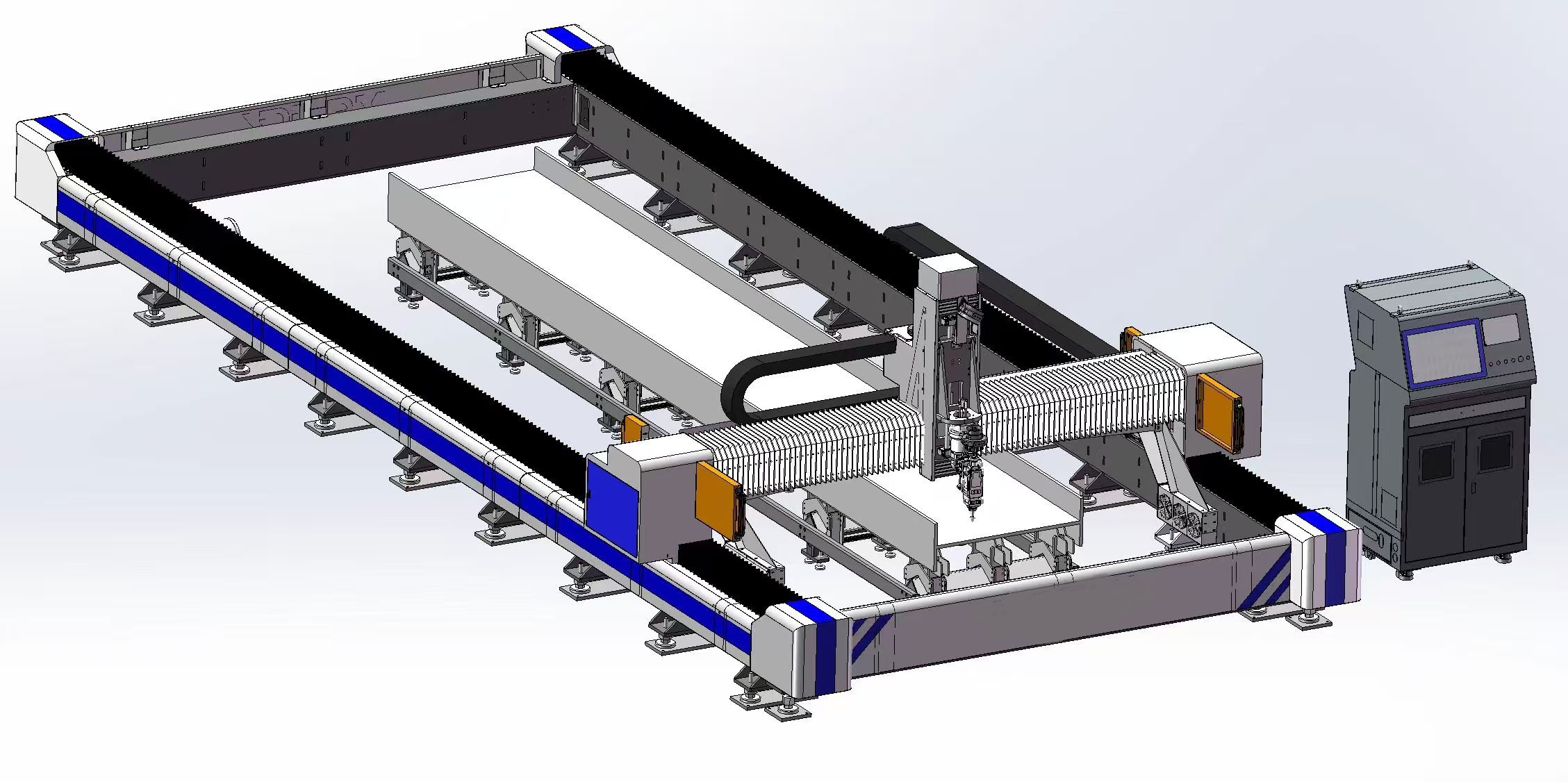
Industrial Application of H-Beam Plasma Cutter
Optimizing Material Utilization and Traceability
Material costs represent the largest variable expense in structural steel fabrication. Advanced nesting algorithms allow for “common line cutting” and the nesting of smaller parts within the scrap sections of larger profiles. By utilizing Industrial Internet of Things (IIoT) protocols, the plasma cutter sends real-time feedback to the nesting software regarding the exact amount of material consumed. This creates a closed-loop system where the “remnant” or leftover beam sections are automatically logged back into the ERP system with a unique barcode for future use.
Traceability is another critical technical requirement, especially for projects in the oil and gas or mining sectors which are prevalent in the Brazilian market. Every cut made by the H-Beam Plasma Cutter can be etched with a heat number, part ID, and project code using the plasma torch at a lower amperage. This digital marking ensures that every component can be traced back to its original mill certificate, a process that is fully automated through the software integration, eliminating the need for manual stamping or labeling.
Reduction of Man-Hours and Error Rates
The transition to a digitally connected plasma cutting system results in a drastic reduction in man-hours per ton of steel. Traditional methods require a layout technician to manually measure and mark hole locations and cope geometries. In the Caxias do Sul cluster, companies implementing integrated ERP-Nesting workflows report a reduction in layout time of up to 95 percent. Because the robot follows the exact coordinates provided by the 3D model, the risk of human error in measurement is virtually eliminated.
Furthermore, the connectivity between the shop floor and the management office allows for real-time production monitoring. Management can view dashboards showing the current status of the plasma cutter, including arc-on time, consumable life, and the number of beams processed per shift. This level of transparency enables data-driven decision-making, allowing plant managers to identify bottlenecks in the material handling stages before they impact the overall project timeline.
Technical Challenges in Connectivity
While the benefits are clear, the technical implementation of ERP and nesting connectivity requires a robust IT infrastructure. In Caxias do Sul, many older facilities face challenges with legacy ERP systems that lack modern API (Application Programming Interface) capabilities. Bridging these gaps often requires custom middleware to translate data between the SQL databases of the ERP and the proprietary formats used by nesting software. Additionally, the high electromagnetic interference (EMI) generated by plasma cutting systems necessitates shielded communication lines and industrial-grade networking hardware to ensure data integrity is maintained across the factory floor.
Concluding Industry Insight
The industrial landscape of Caxias do Sul serves as a microcosm for the global shift toward autonomous structural fabrication. The integration of the H-Beam Plasma Cutter with ERP and nesting software is no longer an optional advantage but a baseline requirement for participation in the international supply chain. As the structural steel industry moves toward “BIM (Building Information Modeling) to Fab” workflows, the ability to maintain a seamless digital thread from the initial design to the final cut will define the leaders in the sector. The future of the industry lies in the refinement of these data exchanges, where artificial intelligence will eventually predict nesting patterns and maintenance cycles before a single spark is struck. For the manufacturers in Southern Brazil, this digital connectivity is the key to maintaining their competitive edge in a market that increasingly values precision, speed, and total transparency in the manufacturing process.
Industrial Expertise & Support
Are you looking for high-performance H-Beam Plasma Cutter tailored for the Global market? Our engineering team provides comprehensive solutions for modern manufacturing.

