Technical Advancements in Structural Steel Fabrication: The H-Beam Plasma Cutter
The global structural steel industry is experiencing a transition toward high-precision automated processing to meet the rigorous demands of modern civil engineering and industrial construction. Central to this evolution is the deployment of the H-Beam Plasma Cutter, a specialized CNC system designed to execute complex geometries on heavy structural profiles. In the industrial corridors of Buenos Aires, Argentina, this technology is being leveraged to bridge the gap between raw material processing and high-integrity assembly. The primary focus of these operations is the execution of a precise 45-degree beveling process, which is a prerequisite for achieving seamless, full-penetration welds in heavy-duty structural frames.
The integration of multi-axis plasma systems allows for the simultaneous processing of the web and flanges of H-beams, eliminating the need for manual layout and traditional mechanical cutting methods. This technical shift is not merely a matter of speed; it is an optimization of the structural integrity of the joint. By utilizing high-definition plasma power sources, fabricators in the Buenos Aires region are providing components that meet international standards for weld preparation, significantly reducing the labor-intensive post-processing traditionally required in structural workshops.
The Physics of 45-Degree Beveling for Weld Preparation
In structural welding, the geometry of the joint determines the load-bearing capacity and fatigue resistance of the final structure. A 45-degree bevel is the industry standard for creating V-groove joints, which allow the welding electrode to access the root of the connection. Achieving this angle consistently across the entire profile of an H-beam requires a CNC plasma cutting technology capable of rotating the torch head across multiple planes.
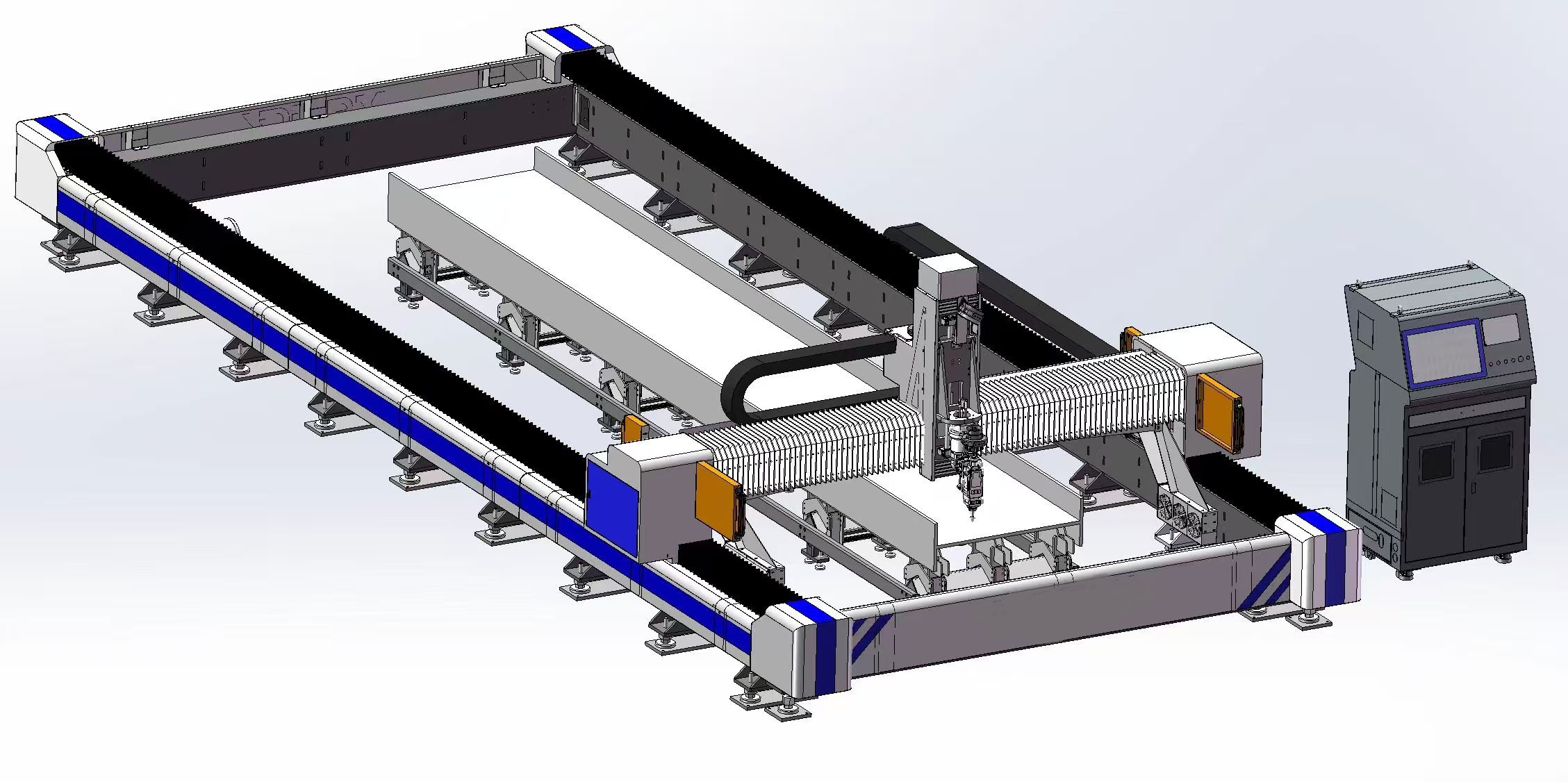
Industrial Application of H-Beam Plasma Cutter
When the H-Beam Plasma Cutter executes a bevel, it must compensate for the plasma arc’s natural taper. Advanced CNC controllers calculate the torch angle in real-time, adjusting the kerf compensation to ensure that the effective angle remains exactly 45 degrees relative to the beam’s surface. This precision is critical because even a deviation of two degrees can lead to insufficient penetration or excessive weld metal deposition, both of which compromise the structural calculations of the project. In the context of the high-seismic or high-wind load environments often encountered in global infrastructure projects, these tolerances are non-negotiable.
Infrastructure and Capacity in the Buenos Aires Industrial Sector
Buenos Aires serves as a strategic hub for steel fabrication in the Southern Cone, supported by a robust supply chain of raw materials and a workforce trained in advanced metallurgy. The adoption of H-Beam Plasma Cutter systems in this region is driven by the need to export pre-processed structural steel to global markets, including North America and Europe. The facilities in Buenos Aires are increasingly equipped with 6-axis robotic plasma cells that can handle beam lengths exceeding 12 meters and weights of several tons.
The technical advantage of sourcing beveled H-beams from this region lies in the integration of local metallurgical expertise with high-end automation. These systems utilize specialized gas mixtures—typically oxygen for carbon steel and nitrogen-hydrogen blends for stainless alloys—to minimize the Heat Affected Zone (HAZ). By controlling the thermal input during the 45-degree beveling process, fabricators ensure that the base metal’s crystalline structure remains stable, preventing brittleness at the fusion line during subsequent welding operations.
Seamless Welding Integration and Quality Control
The ultimate goal of automated beveling is “seamless welding,” a term that refers to a weld joint that requires zero manual grinding or fit-up adjustment on-site. When an H-beam is processed with a 45-degree bevel via plasma, the resulting surface finish is significantly smoother than that produced by oxy-fuel cutting. This reduces the risk of inclusions and porosity in the weld bead.
Furthermore, the CNC systems used in Buenos Aires utilize Torch Height Control (THC) to maintain a constant distance between the nozzle and the beam, even if the beam has slight mill-scale irregularities or surface warping. This ensures that the bevel depth is uniform across the entire flange width. For large-scale projects, such as bridge girders or skyscraper skeletons, this uniformity allows for the use of automated submerged arc welding (SAW) or robotic MIG/MAG welding, as the machine-processed joints provide a predictable and repeatable path for the welding tractor.
Software Synergy: From BIM to Plasma Execution
The efficiency of the H-Beam Plasma Cutter is heavily dependent on the software ecosystem. Modern fabrication workflows in Argentina utilize Building Information Modeling (BIM) data, typically exported in DSTV or STEP formats, directly into the cutting machine’s CAM software. This digital continuity ensures that the 45-degree bevels are placed exactly where the structural engineer specified them in the 3D model.
This integration eliminates human error in the transcription of blueprints. The software automatically nests the parts to minimize scrap and calculates the optimal lead-in and lead-out points for the plasma arc. By executing the beveling in the same sequence as the holes and copes, the machine maintains the dimensional reference points of the beam, ensuring that when the components arrive at a construction site anywhere in the world, the fit-up is precise to within a millimeter. This level of accuracy is what allows for the “seamless” nature of the assembly, drastically reducing construction timelines and overhead costs.
Concluding Industry Insight: The Future of Structural Automation
The transition toward automated H-beam processing in industrial centers like Buenos Aires represents a broader shift in the global B2B steel market. As labor costs rise and the demand for structural safety becomes more stringent, the reliance on manual beveling and mechanical sawing is becoming obsolete. The future of the industry lies in the “process-once” philosophy, where a single machine—the H-Beam Plasma Cutter—performs all necessary thermal operations in a single pass.
The strategic importance of 45-degree beveling will continue to grow as high-strength steel grades (such as S355 or A572) become more common. These materials require precise thermal management and specific joint geometries to maintain their mechanical properties. Fabricators who invest in high-precision plasma technology and maintain rigorous calibration standards for their 5-axis heads will remain the preferred partners for global infrastructure developers. In conclusion, the synergy between advanced CNC plasma technology and the industrial capacity of Buenos Aires is setting a benchmark for how structural steel is prepared, shipped, and welded on a global scale, ensuring that the structures of tomorrow are both safer and more efficient to construct.
Industrial Expertise & Support
Are you looking for high-performance H-Beam Plasma Cutter tailored for the Global market? Our engineering team provides comprehensive solutions for modern manufacturing.