Operational Efficiency and ROI: Transitioning to Fiber Laser Technology in Medellín’s Manufacturing Sector
The industrial landscape of Medellín, Colombia, has undergone a significant transformation over the last decade. Traditionally known for its textile and metal-mechanic prowess, the region is now pivoting toward high-precision engineering to meet global export standards. A critical component of this shift is the replacement of manual fabrication processes with automated systems. Specifically, the implementation of Precision Fiber Laser technology has emerged as a primary driver for operational cost reduction. By moving away from manual plasma cutting, mechanical sawing, and hand-finishing, local manufacturers are realizing documented savings exceeding $5,000 per month. This article examines the technical parameters and economic variables that facilitate such a substantial return on investment (ROI).
The Technical Limitations of Manual Fabrication
Manual metal fabrication relies heavily on the skill of the operator, which introduces inherent variability into the production line. In Medellín’s mid-sized workshops, the traditional workflow involves manual marking, followed by oxy-fuel or plasma cutting, and finally, extensive secondary processing such as grinding and deburring. The technical drawbacks of this sequence are three-fold: excessive kerf width, significant thermal distortion, and inconsistent dimensional accuracy.
Manual plasma cutting typically results in a wide Heat-Affected Zone (HAZ), which alters the metallurgical properties of the substrate. This zone often requires additional machining to remove hardened edges before welding or painting can occur. Furthermore, manual tolerances rarely exceed +/- 1.0 mm, which is insufficient for modern aerospace or automotive components. These inefficiencies represent “hidden” costs—labor hours spent correcting errors rather than generating output.
Precision Fiber Laser: Mechanics and Advantages
The transition to a Precision Fiber Laser system introduces a solid-state laser source, typically utilizing ytterbium-doped fibers. Unlike CO2 lasers, fiber lasers operate at a wavelength of approximately 1.06 microns, which is more readily absorbed by metals, particularly reflective materials like aluminum and brass. This absorption efficiency translates directly into higher cutting speeds and reduced power consumption.

Industrial Application of Precision Fiber Laser
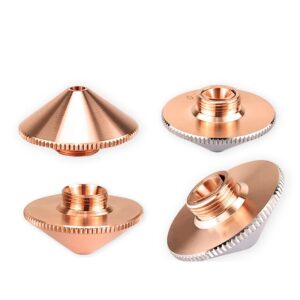
From a technical standpoint, the Precision Fiber Laser offers a Kerf Width as narrow as 0.1 mm, depending on material thickness and nozzle configuration. This allows for tight nesting of parts on a single sheet of material, significantly increasing sheet utilization rates. When controlled by advanced CNC (Computer Numerical Control) software, these machines maintain positioning accuracies of +/- 0.03 mm and repeatability of +/- 0.02 mm. Such precision eliminates the need for secondary grinding, as the “as-cut” edge quality meets the requirements for immediate assembly or finishing.
Quantifying the $5,000 Monthly Savings
The $5,000 monthly saving is not an abstract figure but a calculation based on four primary pillars of Operational Expenditure (OPEX) reduction: labor consolidation, material yield, consumables, and energy efficiency.
1. Labor Consolidation: In a typical Medellín metal-mechanic facility, a manual production line might require three skilled technicians to manage cutting, straightening, and deburring. With a fiber laser, a single operator can oversee the entire cutting process. By reallocating two staff members to higher-value assembly tasks or reducing overtime, a facility saves approximately $2,800 per month in direct wages and social contributions (based on local labor rates for skilled technicians).
2. Material Yield Optimization: Manual cutting often results in a 15-20% scrap rate due to human error and wide spacing between parts. CNC-driven fiber lasers utilize nesting algorithms that reduce scrap to below 5%. For a shop processing 5 tons of carbon steel per month at current market prices, this 10-15% efficiency gain equates to roughly $1,200 in saved material costs.
3. Elimination of Secondary Processing: Manual cuts require an average of 10 minutes of grinding per linear meter to reach a paint-ready state. A fiber laser produces a clean edge at high speeds. Eliminating the need for grinding discs, sandpaper, and the labor associated with finishing accounts for an additional $600 to $800 in monthly savings.
4. Consumables and Energy: While fiber lasers require nitrogen or oxygen as assist gases, the cost is offset by the Duty Cycle efficiency. Fiber lasers convert roughly 35-40% of electrical input into laser power, compared to 10% for CO2 lasers and the high-peak draws of industrial plasma units. This reduction in the electrical footprint contributes the remaining balance to the $5,000 total.
Integration into the Global Supply Chain
The adoption of this technology in Medellín has implications beyond local cost-saving. Global B2B buyers increasingly require ISO-certified quality and digital traceability. A Precision Fiber Laser integrated with CAD/CAM software provides a digital audit trail for every part produced. This compatibility allows Medellín-based manufacturers to compete for contracts in North America and Europe, where “just-in-time” (JIT) manufacturing demands parts that are identical and delivered without the delays associated with manual rework.
Furthermore, the high Duty Cycle of modern fiber units ensures that production can scale from 8-hour shifts to 24-hour “lights-out” manufacturing with minimal maintenance intervention. This scalability is vital for companies looking to move from prototype development to mass production without a linear increase in overhead costs.
Concluding Industry Insight
The case of Medellín serves as a microcosm for a broader global trend: the democratization of high-end manufacturing technology. As the capital cost of fiber laser oscillators continues to stabilize, the barrier to entry for developing industrial hubs is lowering. However, the true competitive advantage does not lie in the hardware alone, but in the shift from labor-intensive to capital-intensive production models. The $5,000 monthly saving identified here represents more than just a reduction in spending; it represents the transition toward a “Zero-Defect” manufacturing philosophy. In the coming five years, we expect to see a surge in “Micro-Factories” globally—highly automated, small-footprint facilities that utilize precision lasers to provide localized, high-spec manufacturing. For B2B stakeholders, the message is clear: the cost of manual labor is no longer just a wage; it is the opportunity cost of lost precision and wasted material.
Industrial Expertise & Support
Are you looking for high-performance Precision Fiber Laser tailored for the Global market? Our engineering team provides comprehensive solutions for modern manufacturing.