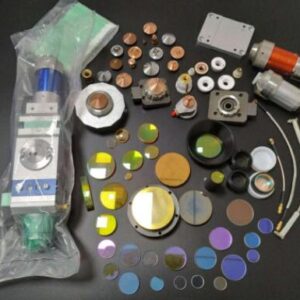
Precision Manufacturing in the Southern Cone: The Integration of Fiber Laser Systems
The industrial sector in Santiago, Chile, is currently undergoing a structural transition from traditional arc welding methodologies to high-density energy beam processes. As the primary logistical and manufacturing hub for the Andean region, Santiago’s metal fabrication facilities are facing increased pressure to optimize throughput while maintaining tight dimensional tolerances. The deployment of the Fiber Laser Welder has emerged as the primary solution to these requirements, particularly in industries servicing the mining, food processing, and renewable energy sectors. Unlike conventional Tungsten Inert Gas (TIG) or Metal Inert Gas (MIG) welding, fiber laser technology utilizes a high-intensity coherent light beam to achieve deep penetration with minimal thermal distortion.
The adoption rate in Chile is driven not only by the hardware’s performance but by the significant reduction in technical barriers to entry. Historically, achieving high-vacuum quality welds required years of manual dexterity training. However, the integration of Artificial Intelligence (AI) within the Human-Machine Interface (HMI) has compressed the operator proficiency timeline to a mere 48 hours. This technical analysis explores the convergence of fiber laser physics and AI-driven control systems within the specific context of the Santiago industrial corridor.
Technical Specifications and Beam Dynamics
A Fiber Laser Welder operates by generating a laser beam within an optical fiber doped with rare-earth elements, typically ytterbium. This beam is delivered through a flexible transport fiber to a processing head, where it is focused onto the workpiece. The power density of these systems often exceeds 10^6 W/cm2, allowing for the “keyhole” welding mode. In this mode, the laser vaporizes the metal, creating a narrow hole that is stabilized by vapor pressure, resulting in a high aspect ratio weld (deep and narrow).
In the high-altitude and variable humidity environments often found in the Santiago Metropolitan Region, beam stability is critical. Modern systems utilize Beam Modulation to oscillate the laser spot in various patterns, such as circles or figure-eights. This “wobble” technology compensates for fit-up inconsistencies and improves the structural integrity of the weld by refining the grain structure during solidification. For Chilean manufacturers working with stainless steel and aluminum alloys, this translates to a significant reduction in the Heat-Affected Zone (HAZ), preserving the base material’s mechanical properties and reducing post-weld finishing costs.
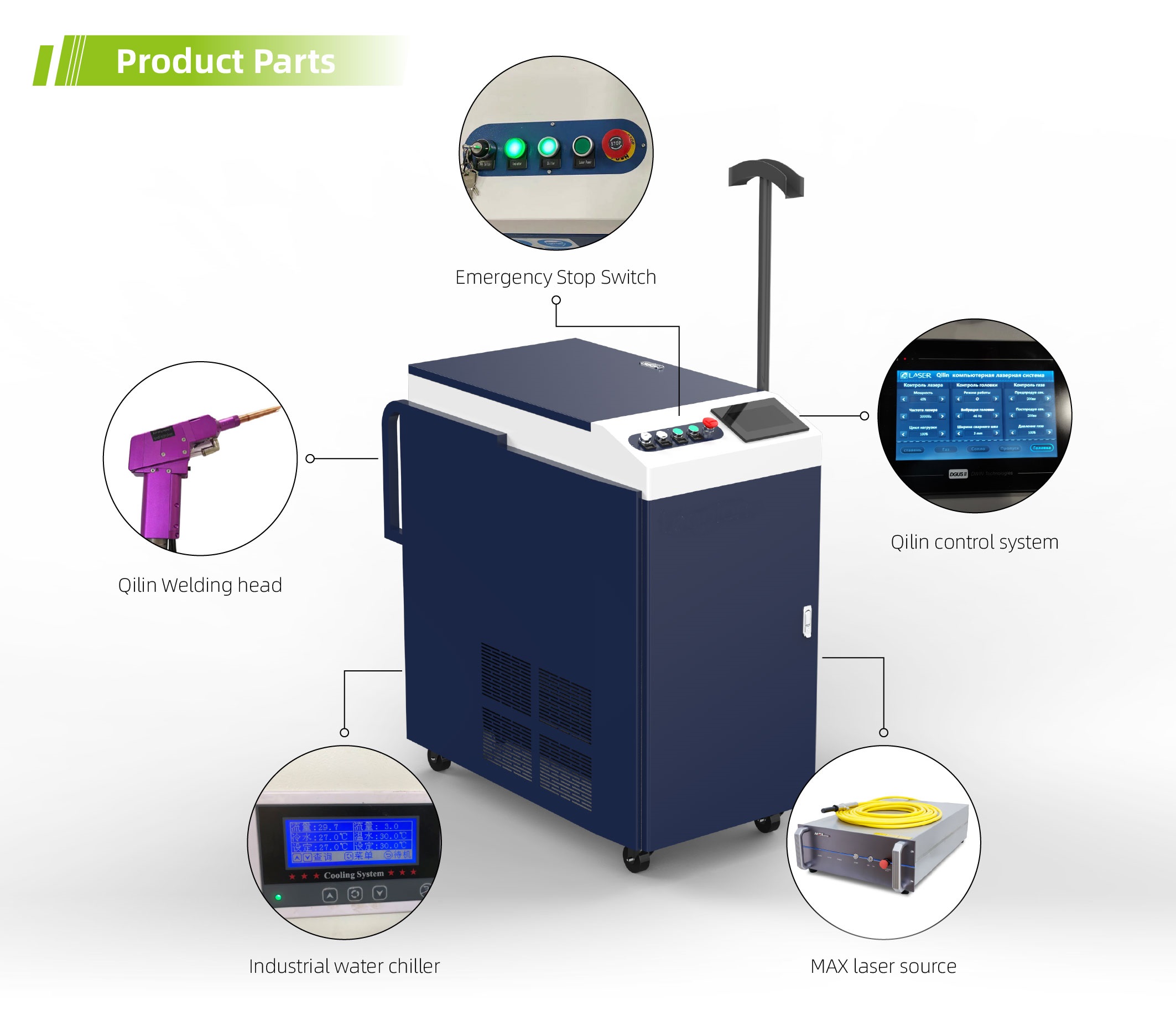
Industrial Application of Fiber Laser Welder
The AI HMI: Bridging the Skill Gap
The most significant advancement in recent iterations of fiber laser systems is the AI-enhanced Human-Machine Interface (HMI). Traditional welding requires the operator to manually balance voltage, wire feed speed, and travel speed based on visual feedback and experience. The AI HMI replaces this heuristic approach with a deterministic, data-driven model. The system utilizes a comprehensive database of material thermophysical properties to suggest optimal parameters.
When an operator in a Santiago workshop inputs the material type (e.g., 304 Stainless Steel) and thickness (e.g., 3.0mm), the AI algorithm calculates the necessary power output, pulse frequency, and duty cycle. Furthermore, real-time monitoring sensors provide feedback to the HMI, allowing the AI to adjust for fluctuations in material reflectivity or minor deviations in the focal point. This closed-loop control system ensures that the weld quality remains consistent regardless of the operator’s prior experience, effectively neutralizing the regional shortage of certified master welders.
The 2-Day Operator Learning Curve: A Quantitative Breakdown
The claim of a 2-day learning curve is substantiated by the shift from manual skill acquisition to system-guided operation. The training protocol implemented in Santiago facilities is divided into four distinct technical modules.
Day 1: System Architecture and Safety Protocols
The initial 8 hours focus on the physics of laser safety and hardware maintenance. Because fiber lasers operate at a wavelength of 1064nm—invisible to the human eye—understanding Class 4 laser safety is paramount. Operators learn to inspect the protective windows, manage the chillers for thermal regulation, and calibrate the gas delivery systems (Argon or Nitrogen). By the end of Day 1, the operator understands the relationship between focal length and energy density, moving from theoretical knowledge to basic machine setup.
Day 2: Parameter Optimization and Fault Diagnostics
The second day leverages the AI HMI to perform actual joining operations. Operators practice selecting presets for different joint geometries, such as butt welds, lap welds, and fillet welds. The AI provides real-time “guardrails,” preventing the operator from selecting parameters that would result in burn-through or lack of fusion. The final phase of training involves basic troubleshooting—interpreting HMI error codes and performing routine optic cleaning. By the conclusion of the 16th hour, an operator with no prior welding experience can produce repeatable, high-strength welds that meet ISO 13919-1 standards.
Economic and Industrial Impact in Chile
The implementation of this technology in Santiago has immediate economic implications. The Chilean manufacturing sector is characterized by a high volume of specialized, low-to-medium batch production. Traditional welding processes involve significant downtime for setup and post-weld grinding. Fiber laser systems increase welding speeds by a factor of 4 to 10 depending on the material thickness. When combined with the 2-day training period, companies can scale their production capacity almost instantly without the 6-month lead time usually required to recruit and train specialized staff.
Furthermore, the energy efficiency of fiber lasers—often exceeding 30% wall-plug efficiency—aligns with Chile’s national goals for industrial decarbonization. Compared to the 3-5% efficiency of CO2 lasers or the high idle power consumption of older transformer-based arc welders, fiber systems significantly lower the carbon footprint per linear meter of weld.
Concluding Industry Insight
The transition toward AI-augmented fiber laser welding in Santiago represents a broader global shift in industrial philosophy: the decoupling of high-quality output from manual labor intensity. As we look toward the next decade, the “democratization” of precision welding will likely lead to a localized manufacturing renaissance. Facilities that once outsourced complex assemblies due to a lack of skilled labor can now reshore those operations, utilizing AI HMIs to maintain global quality standards. The 2-day learning curve is not merely a convenience; it is a strategic response to the global volatility of the labor market. For the B2B sector, the primary takeaway is clear: the competitive advantage no longer resides in the mastery of the tool, but in the rapid integration of intelligent systems that automate the mastery itself. This evolution ensures that the manufacturing hubs of South America remain resilient and technologically synchronized with the global supply chain.
Industrial Expertise & Support
Are you looking for high-performance Fiber Laser Welder tailored for the Global market? Our engineering team provides comprehensive solutions for modern manufacturing.