Introduction to High-Precision Structural Fabrication in Rosario
The industrial landscape of Rosario, Argentina, situated along the Paraná River, serves as a critical hub for metallurgical engineering and heavy equipment manufacturing. As global demand for structural integrity in infrastructure increases, the adoption of advanced automation in steel processing has become a necessity. Central to this evolution is the deployment of the Heavy-Duty Beam Laser, a system engineered to handle large-scale profiles such as I-beams, H-beams, and channels with micron-level precision. This technology is specifically designed to address the complexities of structural steel fabrication, where traditional mechanical cutting and manual plasma methods often fail to meet the rigorous tolerances required for modern engineering projects. By integrating high-wattage fiber laser sources with multi-axis motion control, manufacturers in the Santa Fe province are achieving unprecedented throughput levels while maintaining the strict geometric accuracy required for automated assembly.
The Technical Architecture of the Heavy-Duty Beam Laser
A Heavy-Duty Beam Laser operates on a multi-axis gantry system, typically utilizing a 5-axis or 6-axis 3D cutting head. Unlike standard flatbed lasers, these systems are equipped with specialized chucking mechanisms and rotary units that allow the beam to traverse all four sides of a structural profile in a single pass. The fiber laser source, often ranging from 12kW to 30kW, provides the power density necessary to penetrate thick-walled carbon steel and stainless steel sections. The integration of advanced sensors allows for real-time compensation of material deviations, such as bowing or twisting, which are common in hot-rolled steel. This ensures that the focal point remains constant relative to the material surface, preventing inconsistencies in the kerf width or surface finish.
Precision 45-Degree Beveling for Weld Joint Preparation
One of the most critical functions of the beam laser in Rosario’s industrial applications is the execution of a 45-degree bevel. In heavy-duty welding, particularly for bridges, maritime structures, and high-pressure vessels, the quality of the Weld Joint Preparation determines the ultimate strength of the connection. A 45-degree bevel creates the necessary geometry for a partial or full penetration groove weld. When executed by a laser, the bevel angle is maintained with a tolerance of +/- 0.5 degrees, a feat nearly impossible to replicate consistently with manual grinding or oxy-fuel torches. This precision ensures that when two beams are fitted together, the root gap is uniform across the entire length of the joint, facilitating a “seamless” welding process.
Thermal Dynamics and the Heat-Affected Zone
The use of fiber laser technology significantly reduces the Heat-Affected Zone (HAZ) compared to plasma or oxy-fuel cutting. In the context of 45-degree beveling, a smaller HAZ is vital because it preserves the metallurgical properties of the base metal near the weld interface. Excessive heat input can lead to grain growth and localized hardening, which may result in brittle fractures under cyclic loading. The concentrated energy of the laser allows for high-speed cutting with minimal thermal diffusion into the surrounding material. This results in a cleaner edge that requires no secondary post-processing, such as deslagging or grinding, before the welding phase begins. For Rosario-based firms exporting components globally, this reduction in secondary labor is a significant competitive advantage.
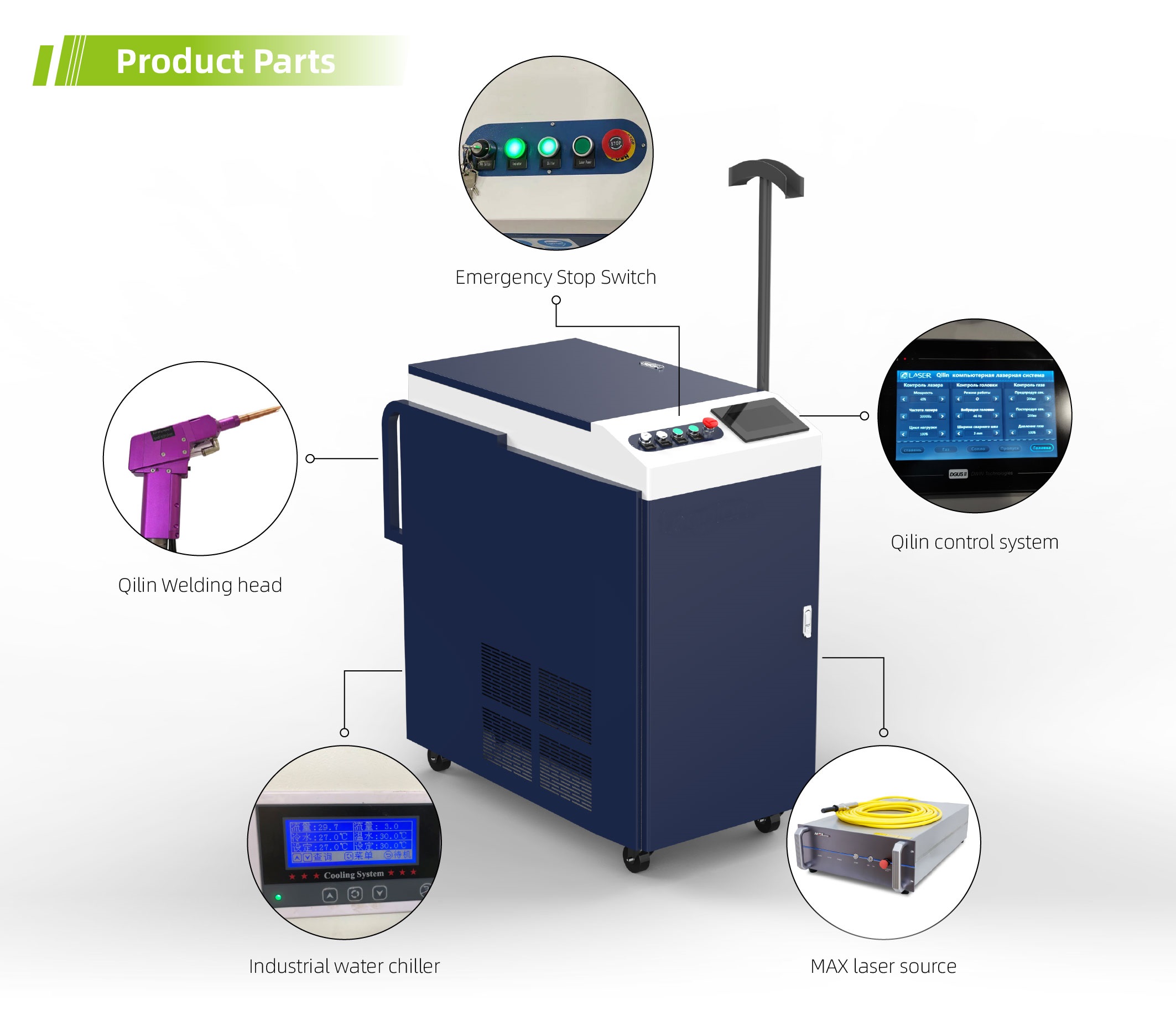
Industrial Application of Heavy-Duty Beam Laser
Enhancing Welding Efficiency through Geometric Accuracy
Seamless welding is not merely a descriptive term; it is a technical objective achieved through the elimination of fit-up errors. When a Heavy-Duty Beam Laser produces a 45-degree bevel, it can also incorporate complex features such as “J-grooves” or “V-grooves” with integrated tabs or slots for self-fixturing. This geometric accuracy means that components “lock” into place during assembly, reducing the reliance on heavy jigging and fixtures. Furthermore, the consistency of the laser-cut edge allows for the implementation of robotic welding cells. Automated welding systems require highly predictable joint geometries to maintain constant arc voltage and travel speeds. Variations in the bevel angle or root face—common in manual preparation—would lead to weld defects like undercut or lack of fusion. By providing a perfect 45-degree interface, the laser enables high-speed, automated welding cycles that maximize deposition rates.
Operational Throughput and Cost Reduction
Quantifying the impact of laser beveling involves analyzing the total cycle time from raw material to finished weldment. Traditional methods involve three distinct stages: cutting to length, mechanical beveling (via milling or grinding), and manual fit-up. A Heavy-Duty Beam Laser collapses these stages into a single automated process. Data from industrial implementations suggests a reduction in preparation time by as much as 70 percent. Additionally, the precision of the laser cut reduces the volume of filler metal required. When a bevel is inconsistent, welders often must “over-weld” to fill gaps, increasing consumable costs and the risk of thermal distortion in the final assembly. Laser-cut bevels ensure a minimum required volume of weld metal, optimizing both material usage and energy consumption during the welding process.
Software Integration and CAD/CAM Workflow
The efficiency of these systems is underpinned by sophisticated 5-axis beveling head control software. Engineers in Rosario utilize CAD/CAM platforms that directly translate 3D models into G-code for the laser. This digital thread ensures that the 45-degree bevels are perfectly aligned with the structural requirements of the design. The software can automatically nest parts to minimize scrap and calculate the optimal cutting path to avoid collisions with the beam’s flanges. This level of integration allows for rapid prototyping and the ability to handle small-batch, high-complexity orders that would be cost-prohibitive using traditional mechanical tooling.
Concluding Industry Insight: The Future of Distributed Manufacturing
The deployment of Heavy-Duty Beam Laser technology in Rosario, Argentina, represents a broader shift in the global supply chain toward localized, high-tech manufacturing centers. As logistics costs and lead times for heavy structural components fluctuate, the ability to produce high-precision, weld-ready profiles locally becomes a strategic asset. The industry is moving toward a “plug-and-play” model of fabrication, where the precision of the primary cut dictates the success of the entire assembly. We anticipate that the next phase of evolution will involve the integration of Artificial Intelligence (AI) to monitor nozzle wear and beam quality in real-time, further pushing the boundaries of autonomous fabrication. For the global B2B sector, the message is clear: the transition from mechanical to laser-based structural processing is no longer an optional upgrade but a fundamental requirement for participating in the next generation of infrastructure and industrial development.
Industrial Expertise & Support
Are you looking for high-performance Heavy-Duty Beam Laser tailored for the Global market? Our engineering team provides comprehensive solutions for modern manufacturing.