Integration of Fiber Laser Welder Technology in the Buenos Aires Industrial Sector
The industrial landscape of Buenos Aires, Argentina, is currently undergoing a structural transition toward high-precision manufacturing. As the region solidifies its position as a hub for automotive, aerospace, and medical device fabrication, the demand for advanced joining technologies has escalated. Central to this transition is the Fiber Laser Welder, a system that utilizes a solid-state gain medium to produce a high-intensity beam capable of achieving deep penetration welds with minimal thermal distortion. Beyond mere throughput advantages, the adoption of this technology in the Greater Buenos Aires area is increasingly driven by stringent Environment, Health, and Safety (EHS) protocols. Modern manufacturing facilities are prioritizing “dust-free” or low-emission operations to comply with international standards such as ISO 45001 and local Argentine labor safety regulations.
Technical Specifications and Beam Dynamics
The operational superiority of fiber laser systems over traditional Metal Inert Gas (MIG) or Tungsten Inert Gas (TIG) welding lies in the Beam Parameter Product (BPP). A lower BPP indicates a beam that can be focused to a smaller spot size, resulting in a significantly higher power density. In the context of the 1064nm wavelength typical of fiber lasers, the energy absorption rate in common industrial metals—such as stainless steel, aluminum, and carbon steel—is optimized for rapid phase transition. This localized energy delivery ensures that the material reaches its melting point almost instantaneously, creating a stable keyhole effect. Because the energy is concentrated, the surrounding material remains relatively unaffected, which is a critical factor in maintaining the structural integrity of precision components used in the Argentine automotive supply chain.
Achieving Dust-Free Operation through Minimal Vaporization
A primary concern in traditional welding environments is the generation of particulate matter and metallic fumes. Traditional arc welding processes rely on the consumption of filler wires and the ionization of shielding gases, which often leads to spatter and the release of hexavalent chromium or other hazardous aerosols. The Fiber Laser Welder facilitates a cleaner environment through several mechanisms:
First, the high Electro-Optical Conversion Efficiency of fiber lasers ensures that energy is used for melting rather than being wasted as heat that vaporizes the base metal and surrounding coatings. Second, the precision of the laser beam allows for autogenous welding (welding without filler material) in many applications, eliminating the primary source of metallic dust and smoke. When filler material is required, the controlled feed rate of a synchronized wire feeder minimizes turbulence in the weld pool, preventing the ejection of molten droplets that would otherwise solidify into airborne dust.
Impact on Heat Affected Zone (HAZ) and Material Integrity
In high-stakes manufacturing environments in Buenos Aires, such as those producing pressure vessels or specialized transport equipment, the Heat Affected Zone (HAZ) is a critical metric. Conventional welding methods create a broad HAZ where the metallurgical properties of the alloy are compromised, often leading to brittleness or reduced corrosion resistance. Fiber laser welding reduces the HAZ by up to 80 percent compared to traditional methods. This reduction is not only a quality control advantage but also an EHS benefit. By minimizing the volume of heated metal, the process reduces the off-gassing of surface contaminants and industrial oils, contributing to a cleaner atmospheric profile within the workshop.
EHS Compliance and Workplace Safety in Argentina
The Argentine Superintendencia de Riesgos del Trabajo (SRT) has established rigorous guidelines regarding air quality and worker exposure to metallic particulates. Facilities in industrial corridors like Pacheco or Pilar are increasingly audited for their emission profiles. Transitioning to fiber laser technology allows these firms to meet “cleanroom” or “near-cleanroom” standards. Modern fiber laser units are often integrated with high-efficiency particulate air (HEPA) filtration systems and localized extraction units. Because the laser welding process produces significantly less volume of fume, these filtration systems operate with longer maintenance cycles and higher effectiveness, ensuring that the breathable air remains within safe thresholds for the workforce.
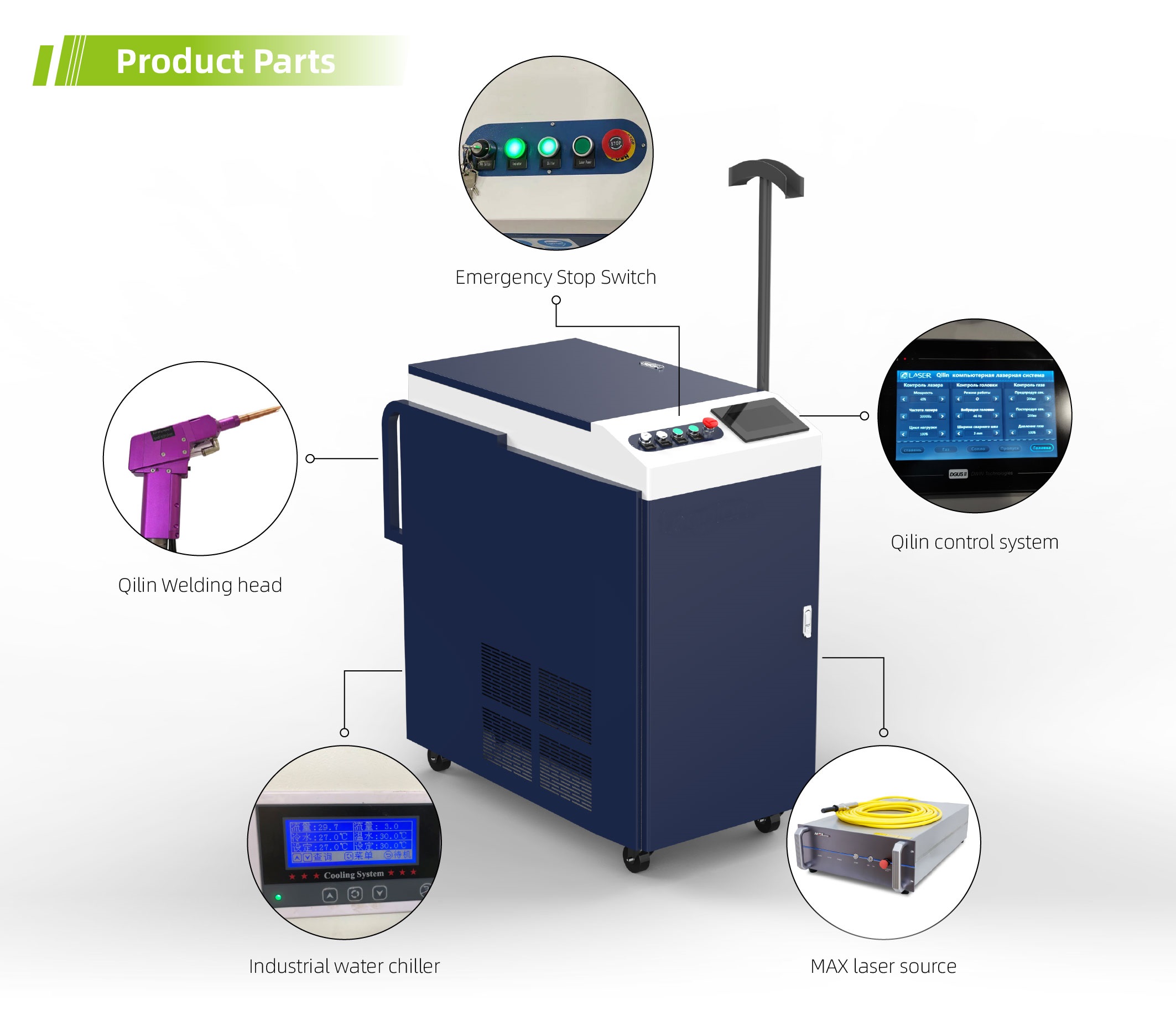
Industrial Application of Fiber Laser Welder
Operational Efficiency and Post-Processing Reduction
The economic justification for fiber laser adoption in Buenos Aires extends to the elimination of secondary operations. Traditional welding often leaves slag, spatter, and heavy oxidation that require grinding, sandblasting, or chemical cleaning. These post-processing steps are the largest contributors to industrial dust in a fabrication shop. By producing a clean, aesthetic weld bead that requires little to no finishing, the fiber laser process removes these dust-generating steps from the production cycle. This leads to a streamlined workflow where components move directly from the welding station to assembly or coating, further enhancing the overall cleanliness of the facility.
Comparative Energy Consumption and Sustainability
Sustainability is becoming a key performance indicator for global B2B partnerships. Fiber laser welders offer an energy-efficient alternative to legacy systems. With conversion efficiencies exceeding 30-40 percent, they consume significantly less power than CO2 lasers or high-amperage arc welders. In the context of Argentina’s fluctuating energy costs, this efficiency provides a predictable operational expenditure model. Furthermore, the longevity of the laser source—often rated for 100,000 hours of operation—reduces the environmental impact associated with the disposal and replacement of consumable-heavy traditional welding equipment.
Concluding Industry Insight: The Future of Clean Fabrication
The shift toward fiber laser welding in Buenos Aires is representative of a broader global trend where technical performance and environmental responsibility are no longer viewed as mutually exclusive. The transition to dust-free operation is not merely a matter of regulatory compliance; it is a strategic move toward “Smart Manufacturing.” As industry 4.0 principles continue to penetrate the South American market, the integration of fiber lasers with robotic automation will become the standard. This synergy will further isolate the thermal process from the operator, virtually eliminating workplace hazards associated with traditional metal joining. For global stakeholders looking to invest in or source from the Argentine market, the presence of fiber laser technology serves as a reliable proxy for a facility’s technical maturity and its commitment to modern EHS standards. The future of the region’s heavy and light industry lies in the precision, cleanliness, and efficiency afforded by these advanced photonic systems.
Industrial Expertise & Support
Are you looking for high-performance Fiber Laser Welder tailored for the Global market? Our engineering team provides comprehensive solutions for modern manufacturing.