Optimizing Industrial Throughput: Small Diameter Pipe Laser Solutions in the Santiago Hub
The industrial landscape of South America is currently undergoing a significant transition toward high-precision automated fabrication. Central to this evolution is the implementation of specialized fiber laser systems designed for specific geometry profiles. In particular, the deployment of the Small Diameter Pipe Laser in Santiago, Chile, represents a strategic move for manufacturers seeking to minimize kerf loss and maximize cycles per hour in the production of narrow-gauge tubing. This article examines the technical infrastructure supporting these machines, specifically the integration of localized spare parts and the engineering protocols required for a 24-hour service response.
Technical Specifications of Small Diameter Tube Processing
Processing pipes with diameters ranging from 10mm to 120mm requires a different mechanical approach than standard large-format tube cutters. The physics of small-diameter cutting involves lower material inertia, which allows for higher acceleration rates, often exceeding 1.2G. However, this speed necessitates a high-frequency Fiber Laser Resonator capable of maintaining beam stability at rapid feed rates.
The machinery utilized in the Santiago sector typically features high-speed pneumatic chucks. These components are engineered to provide consistent clamping force without deforming thin-walled pipes. When the wall thickness of a pipe is less than 1.0mm, traditional hydraulic clamping can cause structural distortion, leading to inaccuracies in the focal point. The specialized small-diameter systems utilize synchronized dual-chuck rotations to ensure that the longitudinal axis remains perfectly aligned with the laser nozzle, maintaining a tolerance of ±0.03mm over a 6000mm length.
The Strategic Importance of Localized Spare Parts Inventory
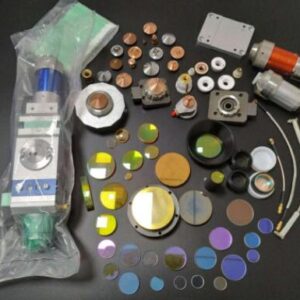
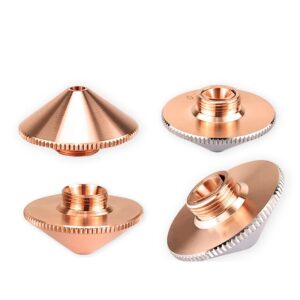
In the context of global supply chain volatility, the availability of a Localized Spare Parts Inventory in Santiago is a critical factor for operational continuity. For high-precision laser systems, certain components are classified as high-wear or critical-failure items. These include protective windows, ceramic rings, nozzles, and collimating lenses.
By maintaining a localized warehouse in the Santiago Metropolitan Region, manufacturers bypass the complexities of international customs and the lead times associated with transcontinental logistics. Technically, the inventory is managed through a real-time ERP system that tracks the lifecycle of components across the installed base. If a laser head sensor fails or a servo drive sustains an electrical surge, the proximity of the spare parts ensures that the Mean Time to Repair (MTTR) is kept to a minimum. This localized approach is particularly vital for industries such as automotive exhaust manufacturing and medical furniture production, where production halts can cost thousands of dollars per hour.

Industrial Application of Small Diameter Pipe Laser
Specific Components Stocked in Santiago
The Santiago service hub prioritizes the following technical assemblies:
- Fiber optic delivery cables and connectors.
- Laser cutting head assemblies (internal optics and capacitive sensors).
- Pneumatic solenoid valves and high-pressure gas regulators.
- CNC control boards and localized HMI units.
- Linear guide blocks and high-precision rack-and-pinion sets.
Engineering Protocols for 24h Service Response
A 24-hour service response is not merely a customer service metric; it is a technical commitment involving tiered diagnostic protocols. In Santiago, the service framework for Small Diameter Pipe Laser systems is divided into three distinct phases to ensure rapid resolution.
Phase 1: Remote Tele-Diagnostics
Upon the initiation of a service request, field engineers utilize secure VPN tunnels to access the machine’s CNC interface. By analyzing the error logs and PLC data, engineers can often identify whether the issue is software-based or requires physical intervention. Remote calibration of the Pneumatic Chuck Precision parameters can often resolve drift issues without on-site visits.
Phase 2: On-Site Technical Deployment
If the fault is mechanical or optical, a certified technician is dispatched from the Santiago center. The 24-hour window guarantees that the technician arrives with the necessary diagnostic tools—such as laser power meters and beam profilers—and the specific spare parts identified during Phase 1. This “first-time fix” approach is the cornerstone of industrial reliability in the region.
Phase 3: Validation and Recalibration
Following a repair, the system undergoes a standardized validation protocol. This includes a circularity test and a verticality check on the cut edge. For small diameter pipes, even a minor misalignment in the chuck center can result in significant scrap rates. The service response is only concluded once the machine meets its original factory commissioning specifications.
Material Versatility and Gas Dynamics
The small diameter laser systems in Chile are frequently used to process a variety of alloys, including SUS304 stainless steel, 6061 aluminum, and carbon steel. Each material requires specific gas dynamics. For instance, nitrogen cutting is preferred for stainless steel to prevent oxidation of the cut edge, requiring the machine’s gas manifold to handle pressures up to 25 bar. The localized technical team provides specific cutting parameter libraries tailored to the regional material grades found in the Chilean market, ensuring that the transition between different pipe batches is seamless.
Industry Insight: The Future of Distributed Technical Hubs
The concentration of technical expertise and hardware in Santiago reflects a broader shift in the global B2B manufacturing sector: the move toward “decentralized reliability.” As Small Diameter Pipe Laser technology becomes more accessible, the competitive advantage for manufacturers shifts from the machine’s initial cost to its long-term OEE (Overall Equipment Effectiveness).
The Santiago model demonstrates that for high-tech capital equipment, the product is no longer just the machine; it is the ecosystem of support surrounding it. In the coming decade, we expect to see an increase in “Smart Service” hubs where predictive maintenance algorithms, fed by IoT data from the factory floor, automatically trigger the dispatch of spare parts to the local hub before a failure even occurs. For South American manufacturers, this means that the geographical barrier to high-precision engineering is effectively removed, allowing local facilities to compete on a global scale with identical uptime statistics to their counterparts in Europe or Asia. The integration of localized logistics and rapid-response engineering is not just a convenience—it is the fundamental infrastructure of modern industrial resilience.
Industrial Expertise & Support
Are you looking for high-performance Small Diameter Pipe Laser tailored for the Global market? Our engineering team provides comprehensive solutions for modern manufacturing.