Precision Engineering in South American Manufacturing: The Rise of Small Diameter Pipe Laser Technology
The industrial landscape of Montevideo, Uruguay, has undergone a significant transformation in its metalworking sector, specifically concerning the production of high-end furniture components for the global market. As international demand for minimalist, high-strength steel and aluminum furniture increases, the technical requirements for component precision have tightened. Central to this evolution is the implementation of the Small Diameter Pipe Laser, a technology designed to handle the complexities of thin-walled, narrow-gauge tubing that traditional mechanical cutting methods fail to process efficiently.
For furniture exporters operating out of the Mercosur region, the transition from conventional saw cutting and manual deburring to automated laser processing is not merely an upgrade in speed; it is a fundamental shift in quality control. The technical demands of contemporary furniture design—characterized by tight tolerances and visible joinery—require a level of edge finish that eliminates secondary grinding processes. By utilizing localized laser processing in Montevideo, manufacturers are leveraging Uruguay’s logistical advantages while meeting the rigorous standards of European and North American importers.
Technical Specifications of Small Diameter Laser Processing
Processing pipes with diameters ranging from 10mm to 50mm presents unique engineering challenges. Unlike large-scale structural steel, small diameter tubing is susceptible to thermal deformation and mechanical vibration during high-speed rotation. To counteract these variables, the fiber laser systems deployed in Montevideo utilize high-speed pneumatic chucks and synchronized feeding mechanisms that maintain concentricity throughout the cutting cycle.
The core of this technology lies in the Fiber Laser Resonator. Operating at a wavelength of approximately 1.06 microns, the fiber laser provides a focused beam diameter significantly smaller than CO2 alternatives. This results in a concentrated energy density capable of vaporizing metal instantly. For furniture exporters, this means the Kerf Width Optimization is maintained at sub-millimeter levels, typically between 0.1mm and 0.2mm. Such precision is vital when cutting complex geometries, such as saddle cuts or interlocking joints, which must fit together with zero clearance for high-quality welding or aesthetic assembly.
Achieving Burr-Free Quality through Gas Dynamics
A critical metric for furniture exporters is the “burr-free” requirement. In traditional mechanical cutting, the displacement of metal creates a sharp ridge, or dross, at the exit point of the cut. Removing this dross manually is labor-intensive and introduces dimensional inconsistency. Small diameter pipe lasers solve this through high-pressure Nitrogen-Assisted Cutting.

Industrial Application of Small Diameter Pipe Laser
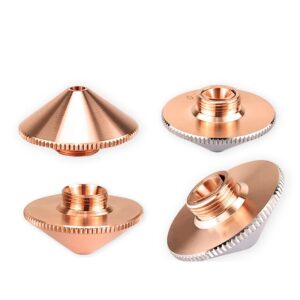
When the laser melts the material, a high-pressure stream of Nitrogen (often exceeding 15 bar) is delivered coaxially through the nozzle. This inert gas serves two functions: it mechanically expels the molten metal from the cut zone before it can solidify as dross, and it prevents oxidation of the cut edge. For stainless steel furniture components, this ensures that the edge remains as corrosion-resistant as the surface, eliminating the need for pickling or intensive polishing. The result is a clean, silver-bright edge that is ready for immediate assembly or powder coating.
Thermal Management and Material Integrity
One of the primary concerns in thin-walled pipe processing is the Heat-Affected Zone (HAZ). Excessive heat input can alter the metallurgical properties of the tube, leading to brittleness or warping. In the context of furniture manufacturing, where aesthetics and structural integrity are paramount, minimizing the HAZ is essential.
Modern laser systems in Montevideo employ pulsed laser modulation. By pulsing the beam at high frequencies rather than delivering a continuous wave, the system allows for micro-cooling intervals. This keeps the bulk temperature of the pipe low, preserving the factory-finish of the material. This is particularly important for pre-plated or pre-polished tubes, where any heat-induced discoloration would render the part scrap. The integration of sensitive height sensors also ensures that the focal point remains constant, even if the tube has slight longitudinal deviations, further stabilizing the thermal input.
Logistical Advantages for Global Furniture Exporters
Montevideo serves as a strategic hub for furniture exporters due to its Free Trade Zones and the Port of Montevideo’s deep-water capabilities. By integrating high-tech laser processing within this geographical framework, manufacturers can import raw materials, process them with Small Diameter Pipe Laser precision, and export finished components or “Ready-to-Assemble” (RTA) kits with minimal overhead.
The automation of the cutting process allows for “Just-in-Time” (JIT) manufacturing. Since the laser software can transition between different cut patterns and tube lengths via digital files (DXF or STEP), there is no downtime for tool changes. This flexibility is a significant advantage for furniture brands that offer diverse product lines with frequent design iterations. The ability to produce complex, burr-free parts in a single operation reduces the total manufacturing lead time, allowing Uruguayan exporters to compete with global suppliers on both quality and delivery speed.
Concluding Industry Insight: The Future of Automated Tubing
The shift toward small diameter laser technology in Montevideo reflects a broader global trend: the decoupling of high-quality manufacturing from traditional industrial centers. As the furniture industry moves toward more intricate, lightweight designs, the reliance on manual finishing will become a liability. The future of the sector lies in “Total Process Integration,” where the laser cutting stage also includes automated marking for assembly, flow-drilling for threaded inserts, and robotic offloading.
For the B2B buyer, the focus must remain on the technical consistency of the output. The elimination of the human element in deburring not only lowers costs but also standardizes the product. In an era where global supply chains are scrutinized for efficiency and material waste, the precision of fiber laser technology provides a sustainable path forward. Manufacturers in Uruguay who adopt these high-precision standards are positioning themselves not just as regional players, but as essential nodes in the global high-end furniture supply chain, where quality is measured in microns and “burr-free” is a non-negotiable standard.
Industrial Expertise & Support
Are you looking for high-performance Small Diameter Pipe Laser tailored for the Global market? Our engineering team provides comprehensive solutions for modern manufacturing.