Executive Summary: High-Output 20KW Fiber Laser Integration
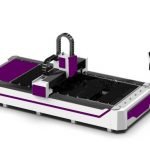
The LFH2040 Industrial High-Precision Fiber Laser Cutting Machine represents a strategic shift in heavy-duty metal fabrication. Engineered for 24/7 industrial cycles, the 20KW configuration transitions production capabilities from standard sheet metal work to heavy-plate processing, effectively competing with traditional plasma cutting while maintaining the superior edge quality and tolerances of laser technology.
By utilizing a 20,000W laser source (MAX, Raycus, or IPG), the LFH2040 achieves a critical threshold in power density. This allows for high-speed nitrogen cutting of stainless steel up to 50mm and oxygen-assisted cutting of carbon steel up to 60mm. For procurement managers, the ROI is driven by the reduction in secondary processing; the high-power beam minimizes the Heat Affected Zone (HAZ), eliminating the need for edge grinding before welding. For CNC engineers, the LFH2040 offers a 1.5G to 2.0G acceleration profile, supported by a reinforced 12,000kg machine bed designed to dampen the kinetic energy generated during high-speed directional changes.
Technical Specifications: LFH2040 – 20KW Series
The following parameters define the operational envelope of the LFH2040. These specifications are verified under standard industrial conditions and represent the baseline for the 20KW configuration.
| Parameter |
Specification Detail |
| Model |
LFH2040 (High-Power Series) |
| Laser Power |
20,000W (20KW) |
| Working Area (X x Y) |
2000mm x 4000mm |
| Z-Axis Travel |
300mm |
| Positioning Accuracy |
±0.03mm |
| Repositioning Accuracy |
±0.02mm |
| Max. Linkage Speed |
140m/min |
| Max. Acceleration |
1.5G – 2.0G |
| Laser Wavelength |
1080nm ± 5nm |
| Control System |
CypCut FSCUT8000 (EtherCAT Bus-based) |
| Laser Head |
Precitec ProCutter 2.0 / Boci High-Power Auto-Focus |
| Transmission System |
High-precision Rack and Pinion (YYC/Atlanta) |
| Cooling Method |
Dual-circuit Industrial Water Chiller (S&A/Hanli) |
| Electrical Cabinet Rating |
IP54 Dust-proof with Independent Air Conditioning |
| Machine Weight |
Approx. 12,500 kg |
| Power Requirements |
380V/50Hz/60Hz (3-Phase) |
Key Components Matrix
1. Reinforced Machine Bed and Gantry Structure
The LFH2040 utilizes a hollow-structure segmented welding bed. Unlike standard frames, this heavy-duty bed undergoes a T6 heat treatment process (stress relief annealing) to ensure that the internal stresses of the 12mm-16mm carbon steel plates are neutralized. This prevents structural deformation over a 10-year operational lifespan. The gantry is constructed from fifth-generation aviation aluminum alloy, providing the necessary stiffness-to-weight ratio to handle 1.5G acceleration without compromising the ±0.03mm positioning accuracy.
2. IP54 Independent Control Cabinet
Industrial environments are prone to conductive dust and humidity. The LFH2040 features an IP54-rated electrical cabinet. This enclosure is completely isolated from the cutting area and features a dedicated industrial-grade air conditioner. This ensures that the high-frequency drivers, PLC, and the laser source operate at a constant 25°C, significantly reducing the failure rate of sensitive electronic components and preventing “thermal drift” in the laser’s output stability.
3. Precision Transmission: Rack, Pinion, and Servos
To translate 20KW of power into precise movement, the LFH2040 employs Grade 5 high-precision helical racks (YYC/Atlanta) and high-inertia Yaskawa or Delta EtherCAT servo motors. The use of a bus-based control system (EtherCAT) allows for microsecond-level synchronization between the X, Y, and Z axes. This is critical for “Fly-Cutting” operations where the laser must pulse with millisecond precision while the head is moving at speeds exceeding 100m/min.
4. CypCut FSCUT8000 Control Logic
The 20KW model is equipped with the FSCUT8000 bus-based control system. This system is specifically optimized for high-power applications, offering features such as:
- Active Anti-Collision: Uses the laser head’s capacitance sensors to detect tilted parts in real-time, preventing head damage.
- Lightning Piercing: Reduces piercing time in thick plates by up to 80% compared to 12KW systems.
- Power Slope Control: Automatically adjusts laser power and gas pressure during cornering to prevent over-burning.
Material Thickness and Cutting Capacity
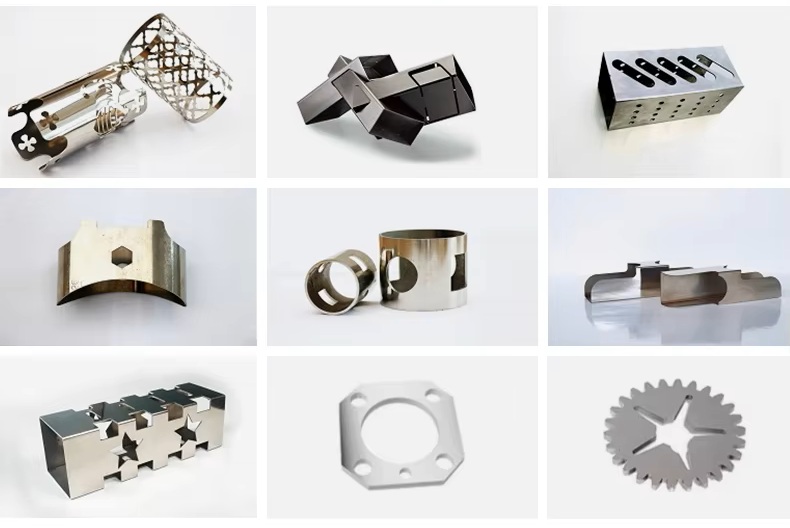
The 20KW laser source drastically shifts the “sweet spot” for production. While a 6KW machine struggles with 25mm carbon steel, the 20KW LFH2040 processes it at high speeds with a clean, dross-free finish.
| Material Type |
Max Cutting Thickness (mm) |
Optimal Production Thickness (mm) |
Assist Gas |
| Carbon Steel (CS) |
60mm |
25mm – 40mm |
O2 / Air |
| Stainless Steel (SS) |
50mm |
16mm – 35mm |
N2 / Air |
| Aluminum (Al) |
50mm |
12mm – 30mm |
N2 / Air |
| Brass/Copper |
20mm |
6mm – 12mm |
N2 |
Maintenance Protocols for High-Power Systems
Operating at 20KW requires rigorous adherence to maintenance schedules to protect the optical path and the mechanical integrity of the machine.
Daily Maintenance
Engineers must inspect the protective windows of the laser head every shift. At 20KW, even a microscopic dust particle on the lens can absorb enough thermal energy to shatter the quartz glass. Ensure the water chiller is at the set temperature (usually 25°C for the laser source and 28-30°C for the cutting head) before initiating the beam.
Weekly Maintenance
Clean the X, Y, and Z-axis guide rails and racks. Remove any accumulated metal dust or slag. Check the automatic lubrication system reservoir and ensure the lubricant grade matches the manufacturer’s specification (typically ISO VG 32 or 68). Inspect the dust extraction ducts to ensure maximum airflow, as 20KW cutting generates significant particulate matter.
Monthly Maintenance
Check the gas circuit for leaks, particularly the high-pressure nitrogen lines. Inspect the electrical connections in the IP54 cabinet for any signs of loosening due to machine vibration. Calibrate the capacitive height sensor to ensure the nozzle-to-plate distance remains constant across the entire 2000mm x 4000mm bed.
Frequently Asked Questions (FAQ)
1. What is the advantage of 20KW over 12KW for 12mm stainless steel?
While both can cut 12mm stainless steel, the 20KW machine increases the cutting speed by approximately 150-200%. Furthermore, the 20KW source allows for Air Cutting at this thickness, which significantly reduces the cost per part by eliminating the need for high-purity Nitrogen.
2. How does the LFH2040 handle reflective materials like copper?
The 20KW laser source is equipped with an anti-reflection isolator. This protects the laser modules from back-reflections common when cutting polished brass, copper, or aluminum. The high power density also allows the beam to “couple” with the material faster, initiating the cut before reflection can occur.
3. What gas purity is required for the 20KW system?
For optimal results, Nitrogen should be 99.99% pure. Oxygen should be at least 99.5% pure. Using lower purity gases at 20KW will result in rapid oxidation of the cutting edge and increased dross, negating the precision benefits of the machine.
4. Is specialized flooring required for the LFH2040?
Yes. Due to the 12,500kg weight and the dynamic forces of 1.5G acceleration, a reinforced concrete foundation (minimum 200mm thickness with rebar) is required to maintain the machine’s leveling and long-term accuracy.