Executive Summary: Industrial Throughput and Precision with 12KW Fiber Technology
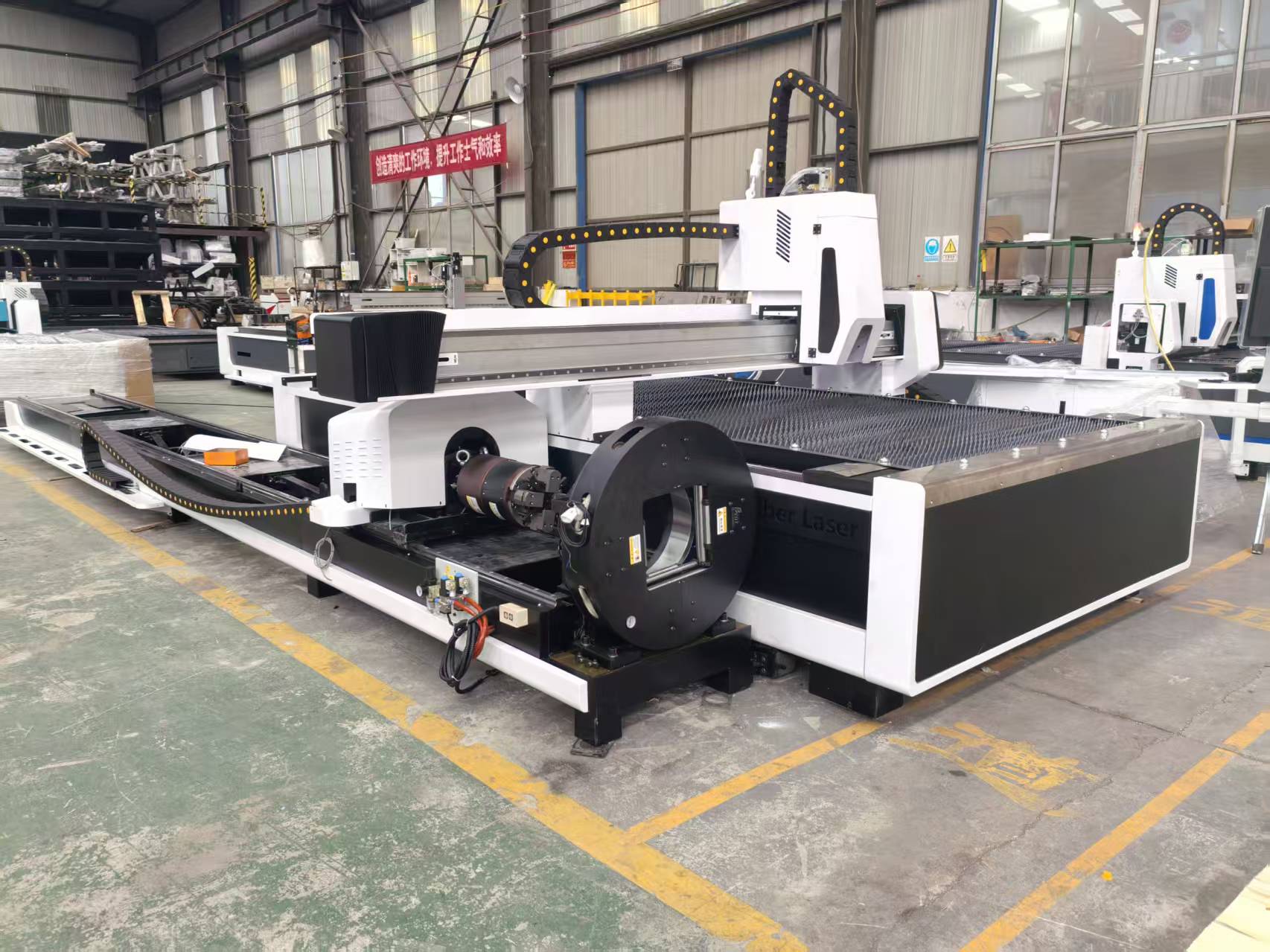
The LFH2040 12KW Fiber Laser Cutting Machine represents a strategic shift for high-volume metal fabrication facilities. Engineered for continuous 24/7 operation, the 12KW configuration bridges the gap between traditional plasma cutting and high-speed laser processing. By utilizing a high-density photon stream, the LFH2040 achieves significant gains in piercing speed and edge quality on medium-to-thick plates. For procurement managers, the primary ROI is driven by the reduction in gas consumption per meter and the elimination of secondary finishing processes. For CNC engineers, the LFH2040 offers a rigid, heat-treated bed structure capable of sustaining 1.5G acceleration, ensuring that the high-power output is matched by mechanical positioning accuracy.
Technical Specifications: LFH2040 12KW Series
The following parameters define the operational envelope of the LFH2040. These specifications are verified under standard factory conditions using calibrated laser power meters and interferometer positioning tests.
| Parameter |
Specification Detail |
| Model Number |
LFH2040-12KW |
| Working Area (X x Y) |
2000mm x 4000mm |
| Laser Source Type |
Fiber Laser (MAX / Raycus / IPG Optional) |
| Rated Output Power |
12,000 Watts (12KW) |
| Laser Wavelength |
1070nm ± 10nm |
| X/Y Axis Positioning Accuracy |
±0.03mm / 1000mm |
| X/Y Axis Repositioning Accuracy |
±0.02mm |
| Maximum Linkage Speed |
120m/min |
| Maximum Acceleration |
1.5G – 2.0G |
| Control System |
Cypcut FSCUT8000 / HypCut EtherCAT |
| Drive System |
High-Torque Yaskawa/Delta Servo Motors |
| Transmission System |
YYC/Atlanta Precision Rack and Pinion |
| Cooling Method |
Dual-circuit Industrial Water Chiller (S&A/Hanli) |
| Electrical Cabinet Rating |
IP54 Dust-proof and Heat-isolated |
| Total Power Consumption |
< 75KW (Including Chiller and Exhaust) |
| Machine Weight |
Approx. 12,500 kg |
Key Component Matrix and Engineering Architecture
1. Heavy-Duty Plate-Welded Bed Structure
The LFH2040 utilizes a high-tensile strength plate-welded bed. Unlike tube-welded frames, this structure undergoes a rigorous stress-relief process, including 600°C annealing and 24-hour furnace cooling. This ensures long-term structural stability and prevents deformation during high-G acceleration maneuvers. The internal honeycomb structure provides superior vibration damping, which is critical when maintaining a ±0.03mm accuracy at high speeds.
2. IP54 Independent Electrical Cabinet
To protect sensitive electronic components from the conductive dust prevalent in metal fabrication environments, the LFH2040 features an IP54-rated electrical cabinet. This enclosure is fully sealed and equipped with an industrial-grade air conditioner. By maintaining a constant internal temperature and preventing the ingress of metallic particles, the lifespan of the laser source, servo drives, and PLC is significantly extended, reducing the Mean Time Between Failures (MTBF).
3. Motion and Transmission System
The motion system is built on a foundation of precision-ground helical racks and pinions. The X and Y axes utilize high-torque servo motors synchronized via EtherCAT communication protocols. This allows for real-time feedback loops, compensating for mechanical backlash and ensuring that the 12KW laser head can navigate complex geometries without overshooting corners. The Z-axis is equipped with a high-response capacitive sensor for real-time height tracking, maintaining a constant focal distance even on warped material.
4. Laser Head: Auto-Focus and Cooling
The 12KW configuration requires specialized optics to handle high thermal loads. The LFH2040 uses an intelligent auto-focus cutting head (typically Precitec ProCutter or Raytools). It features integrated temperature sensors for the collimation and focusing lenses. If the lens temperature exceeds the safety threshold, the system triggers an automatic shutdown to prevent catastrophic optical failure. The internal water-cooling circuit covers the entire optical path, ensuring stable beam quality during prolonged heavy-gauge cutting.
Material Thickness and Cutting Performance
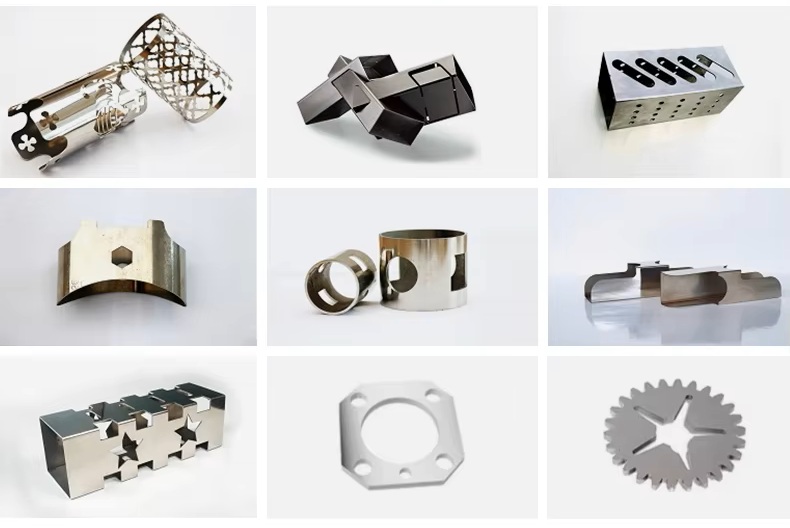
The 12KW laser source provides a significant advantage in “clean-cut” thickness and maximum piercing capacity. The following table outlines the performance metrics using Oxygen (O2), Nitrogen (N2), or Compressed Air.
| Material Type |
Max Cutting Thickness (mm) |
Optimal Production Thickness (mm) |
Assist Gas |
| Carbon Steel (CS) |
50mm |
40mm |
O2 (Oxygen) |
| Stainless Steel (SS) |
45mm |
35mm |
N2 (Nitrogen) / Air |
| Aluminum (Al) |
40mm |
30mm |
N2 (Nitrogen) / Air |
| Brass / Copper |
16mm |
12mm |
N2 / O2 |
Note: Maximum thickness refers to the separation cut capacity. Optimal production thickness refers to the range where edge quality and speed meet industrial standards for minimal post-processing.
Control System: Cypcut FSCUT8000
The LFH2040 is powered by the Cypcut FSCUT8000 bus-based control system. This system is specifically designed for ultra-high power fiber lasers. Key features include:
- Active Obstacle Avoidance: The Z-axis automatically lifts to avoid tipped parts, reducing the risk of head collisions.
- Lightning Piercing: Reduces piercing time by up to 70% in thick plates through multi-stage frequency and power modulation.
- Frog-Leap Motion: Optimizes the path between cuts, minimizing non-productive head movement.
- Real-time Monitoring: Integrated diagnostics for gas pressure, laser power stability, and temperature.
Maintenance Protocols for High-Power Systems
To maintain the precision of the LFH2040, a structured maintenance schedule is required. High-power 12KW systems generate significant thermal energy and particulate matter.
Daily Maintenance: Inspect the protective lens for dust or burn spots. Clean with optical-grade isopropyl alcohol and lint-free swabs. Check the water level and temperature in the chiller. Empty the dust collection bins.
Weekly Maintenance: Lubricate the linear guides and rack-and-pinion system using the automatic lubrication system. Inspect the gas lines for leaks, particularly the high-pressure Nitrogen lines. Clean the sensor cone of the cutting head.
Monthly/Quarterly Maintenance: Check the alignment of the laser beam. Inspect the electrical cabinet filters and clean the air conditioner condenser. Verify the tension of the drive belts and the tightness of all mechanical fasteners.
Frequently Asked Questions (FAQ)
What is the advantage of 12KW over 6KW for 10mm Stainless Steel?
While a 6KW laser can cut 10mm SS, a 12KW laser increases the cutting speed by approximately 200-250%. Furthermore, the 12KW source allows for Nitrogen cutting at higher speeds, resulting in a bright, oxide-free edge that requires no secondary grinding before welding.
How does the IP54 cabinet affect the machine’s longevity?
In industrial environments, fine metal dust is conductive. If this dust enters the servo drives or the laser source power supply, it can cause short circuits. The IP54 cabinet, combined with active refrigeration, isolates these components from the environment, typically extending the electronic component lifespan by 30-50%.
What gas pressure is required for 12KW operation?
For high-speed Nitrogen cutting of stainless steel, the system requires a stable input pressure of 2.0 MPa to 2.5 MPa. For Oxygen cutting of thick carbon steel, the pressure is lower (0.05 MPa to 0.5 MPa) but requires high purity (99.95% or higher) for optimal edge quality.
Can the LFH2040 handle reflective materials like Copper?
Yes. The 12KW laser sources (MAX/Raycus/IPG) are equipped with back-reflection protection. When combined with the high power density of a 12KW beam, the material is phased into a molten state faster than the reflection can damage the fiber delivery system.