Advanced Industrial Integration: Precision Fiber Laser Beveling in Montevideo
The industrial landscape of the Southern Cone is currently undergoing a significant technological shift, with Montevideo, Uruguay, emerging as a primary hub for high-specification metal fabrication. As global supply chains demand tighter tolerances and more efficient assembly cycles, the adoption of the Precision Fiber Laser has become a critical factor for regional manufacturers. Specifically, the implementation of 45-degree beveling capabilities represents a departure from traditional mechanical edge preparation, offering a streamlined path toward seamless welding in heavy-duty structural and maritime applications.
For B2B stakeholders operating in the infrastructure, energy, and transport sectors, the ability to source precision-beveled components from Montevideo reduces the logistical burden of secondary processing. By integrating multi-axis cutting heads with high-kilowatt fiber sources, local service centers are now capable of delivering weld-ready plates that meet international ISO and AWS standards. This article examines the technical parameters of 45-degree laser beveling and its impact on modern welding efficiency.
The Technical Dynamics of 45-Degree Beveling
Traditional beveling methods, such as plasma cutting or mechanical milling, often introduce variables that complicate the welding process. Plasma cutting, while fast, can result in a wider kerf and a significant dross layer, necessitating manual grinding. Mechanical milling, though precise, is labor-intensive and slow. The Precision Fiber Laser solves these discrepancies by utilizing a concentrated beam of light—typically in the 1.07-micron wavelength—to sublimate the metal with extreme accuracy.
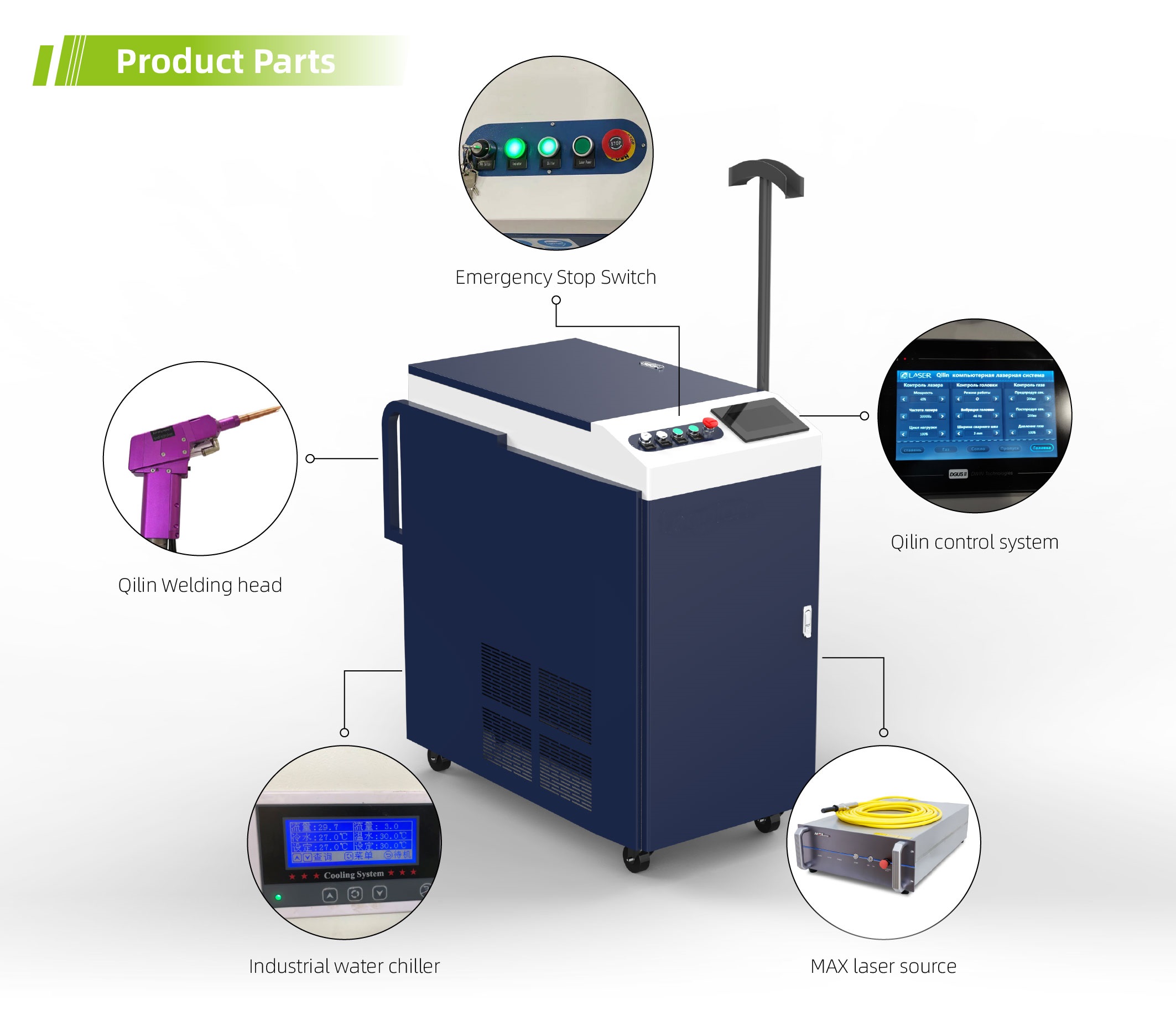
Industrial Application of Precision Fiber Laser
A 45-degree bevel is the industry standard for V-butt joints, which are essential for achieving full-penetration welds in plates ranging from 6mm to 25mm in thickness. When a fiber laser is equipped with a 3D or 5-axis cutting head, the beam can tilt dynamically during the cutting path. This allows for the creation of complex geometries, including V, X, K, and Y-type joints, in a single pass. The consistency of the 45-degree angle ensures that when two plates are mated, the root gap remains uniform across the entire length of the seam, which is a prerequisite for automated welding systems.
Minimizing the Heat-Affected Zone (HAZ)
One of the most critical technical advantages of using fiber laser technology for beveling is the reduction of the Heat-Affected Zone (HAZ). In high-strength steels and specialized alloys used in Montevideo’s shipbuilding and wind energy sectors, excessive heat input can alter the metallurgical properties of the base metal, leading to grain growth and reduced tensile strength at the joint.
Because the fiber laser delivers high power density to a very small focal point, the energy is absorbed rapidly, and the cut is completed before significant heat can conduct into the surrounding material. A minimized Heat-Affected Zone (HAZ) ensures that the chemical integrity of the steel remains intact, preventing hydrogen-induced cracking and ensuring that the subsequent weld maintains the design specifications of the original material. This is particularly vital for projects requiring rigorous non-destructive testing (NDT).
Role of 5-axis CNC Motion Control in Beveling Accuracy
Achieving a seamless weld requires more than just a sharp beam; it requires sophisticated 5-axis CNC Motion Control. In the fabrication facilities of Montevideo, the integration of high-speed controllers allows for real-time compensation of the beam’s focal position as the head tilts to 45 degrees. When the laser head tilts, the distance the beam must travel through the material increases (the geometric hypotenuse of the plate thickness). The CNC system must automatically adjust the cutting speed and gas pressure to maintain a clean, slag-free edge.
Furthermore, these systems utilize advanced nesting software that accounts for the “tilt-and-rotate” clearances required for beveling. This ensures maximum material utilization—a key economic factor for global B2B operations. By utilizing 5-axis CNC Motion Control, manufacturers can produce parts that require zero post-cut processing, moving directly from the laser bed to the welding station. This “just-in-time” edge preparation is a significant value-add for the Uruguayan export market.
Achieving V-groove Preparation for Seamless Welding
The ultimate goal of 45-degree beveling is V-groove Preparation. In heavy engineering, the quality of the groove determines the quality of the weld. A laser-cut 45-degree bevel provides a superior surface finish (Ra values often below 12.5 microns) compared to oxy-fuel or plasma. This smooth surface promotes better wetting of the weld pool and reduces the risk of inclusions or porosity.
When two laser-beveled plates are aligned, the fit-up is virtually airtight. This precision is essential for Gas Metal Arc Welding (GMAW) and Submerged Arc Welding (SAW). In Montevideo, where industrial contractors often work on large-scale pressure vessels and structural frames, the precision of the V-groove Preparation translates to a reduction in weld volume. Because the angles are exact, less filler metal is required to fill the joint, and the welding time is reduced by up to 30 percent. This creates a cumulative cost saving that makes regional fabrication highly competitive on a global scale.
Montevideo: A Strategic Node for Precision Fabrication
The geographic and economic positioning of Montevideo facilitates its role as a technical center. With the Port of Montevideo serving as a major maritime gateway, the ability to process raw steel into high-precision components locally reduces lead times for international projects. The city’s industrial zones have seen increased investment in high-kilowatt fiber laser systems (ranging from 12kW to 30kW), which are necessary to handle the thicknesses required for 45-degree beveling in structural steel.
The transition to fiber laser technology also aligns with global sustainability trends. Fiber lasers are significantly more energy-efficient than CO2 lasers or mechanical milling centers. For B2B partners looking to optimize their Scope 3 emissions, sourcing components from facilities that utilize energy-efficient Precision Fiber Laser technology provides a measurable advantage in environmental reporting.
Industry Insight: The Future of Automated Edge Preparation
The move toward 45-degree laser beveling in Montevideo is indicative of a broader global trend: the convergence of cutting and joining technologies. As the industry moves toward Industry 4.0, the distinction between “cutting” and “welding preparation” is disappearing. We are entering an era where the laser cutting system acts as the primary quality-control gate for the entire fabrication process.
The data-driven nature of fiber laser systems allows for digital twinning, where the exact geometry of the beveled edge is fed into robotic welding cells. This ensures that the robot can adjust its path based on the actual cut geometry, rather than a theoretical CAD model. For Montevideo, continuing to invest in this level of technical precision will solidify its position as a specialized manufacturing hub in South America. The future of seamless welding lies not in the skill of the welder alone, but in the mathematical precision of the initial cut. As fiber laser power continues to scale and control systems become more intuitive, the 45-degree bevel will remain the gold standard for high-integrity structural assembly.
Industrial Expertise & Support
Are you looking for high-performance Precision Fiber Laser tailored for the Global market? Our engineering team provides comprehensive solutions for modern manufacturing.

