Introduction: The Industrial Evolution of Valparaíso
Valparaíso, Chile, serves as a critical maritime and industrial gateway for South America. As the region experiences a surge in infrastructure development and shipbuilding requirements, the demand for precision structural steel fabrication has escalated. Modern fabrication facilities in the region are increasingly transitioning from manual layout and mechanical sawing to advanced automated systems. Central to this transition is the implementation of the H-Beam Plasma Cutter, a multi-axis robotic system designed to handle complex geometries with high repeatability. However, the integration of high-energy thermal cutting processes brings significant Environmental, Health, and Safety (EHS) challenges, specifically regarding airborne particulate matter. In the context of Valparaíso’s tightening environmental regulations and the global push for sustainable manufacturing, the adoption of dust-free operation technology is no longer an elective upgrade but a fundamental requirement for industrial compliance and operational longevity.
Technical Specifications of Modern H-Beam Plasma Cutting
The H-Beam Plasma Cutter utilizes a high-definition plasma power source integrated with a 6-axis or 8-axis robotic arm. This configuration allows for the processing of H-beams, I-beams, channels, and angles in a single pass. Unlike traditional methods that require separate stations for measuring, marking, drilling, and sawing, these automated systems execute coping, miter cuts, bolt holes, and weld preparations simultaneously. The precision of these systems is measured in sub-millimeter tolerances, which is essential for the structural integrity required in Chile’s seismic-prone construction environment. The thermal cutting process involves an ionized gas stream reaching temperatures upwards of 20,000 degrees Celsius, which vaporizes the steel to create the kerf. This vaporization process is the primary source of metallic dust and fumes, necessitating a sophisticated mitigation strategy to maintain air quality within the facility.
Mechanisms of Dust-Free Operation
Achieving a dust-free environment during the operation of an H-Beam Plasma Cutter requires a multi-tiered Fume Extraction System. In Valparaíso’s industrial zones, where humidity and salt air can affect air density and filtration efficiency, these systems must be engineered for high-volume throughput. The primary mechanism involves a localized extraction hood or a traveling suction carriage that moves in synchronization with the plasma torch. By capturing the fumes at the point of generation, the system prevents the dispersion of fine particulate matter (PM2.5 and PM10) into the broader shop floor. The extracted air is then routed through a pulse-jet cartridge filter house. These filters utilize nanofiber media to achieve a filtration efficiency of 99.9 percent for particles as small as 0.5 microns. The “dust-free” designation refers to the containment and filtration of these bypass gases, ensuring that the air returned to the facility or exhausted to the atmosphere meets the stringent EHS standards established by the Chilean Ministry of Health and international bodies like OSHA.
Integrating CNC Robotic Profiling with EHS Standards
The synchronization between CNC Robotic Profiling software and environmental control systems is a hallmark of modern structural steel fabrication. In a professional B2B environment, efficiency is measured by the uptime of the equipment. A dust-free system reduces the accumulation of metallic dust on sensitive electronic components, linear guides, and optical sensors of the robot. In Valparaíso’s competitive landscape, reducing maintenance overhead is critical. When the plasma torch is engaged, the CNC controller automatically activates the variable frequency drive (VFD) of the extraction fan. This ensures that the suction force is optimized based on the thickness of the material and the intensity of the plasma arc. Furthermore, the use of automated spark arrestors prevents incandescent particles from reaching the filter media, significantly reducing fire risks and ensuring continuous operation without emergency shutdowns. This level of technical integration supports EHS goals while simultaneously protecting the capital investment in the robotic hardware.
Regional Advantages for the Valparaíso Maritime Sector
The maritime and port-related industries in Valparaíso require steel components that can withstand corrosive environments and high mechanical loads. The H-Beam Plasma Cutter facilitates the production of complex structural frames for port cranes, ship repair components, and offshore structures. By utilizing Thermal Cutting Dust Mitigation technology, local fabricators can operate in closer proximity to other sensitive port operations without the risk of cross-contamination. Traditional heavy industry often faced zoning restrictions due to air quality concerns; however, dust-free plasma technology allows for “cleaner” heavy manufacturing. This is particularly relevant for the Valparaíso region, where industrial zones are often adjacent to urban and commercial areas. The ability to demonstrate a low environmental footprint through advanced filtration provides a competitive advantage when bidding on international contracts that prioritize ESG (Environmental, Social, and Governance) criteria.
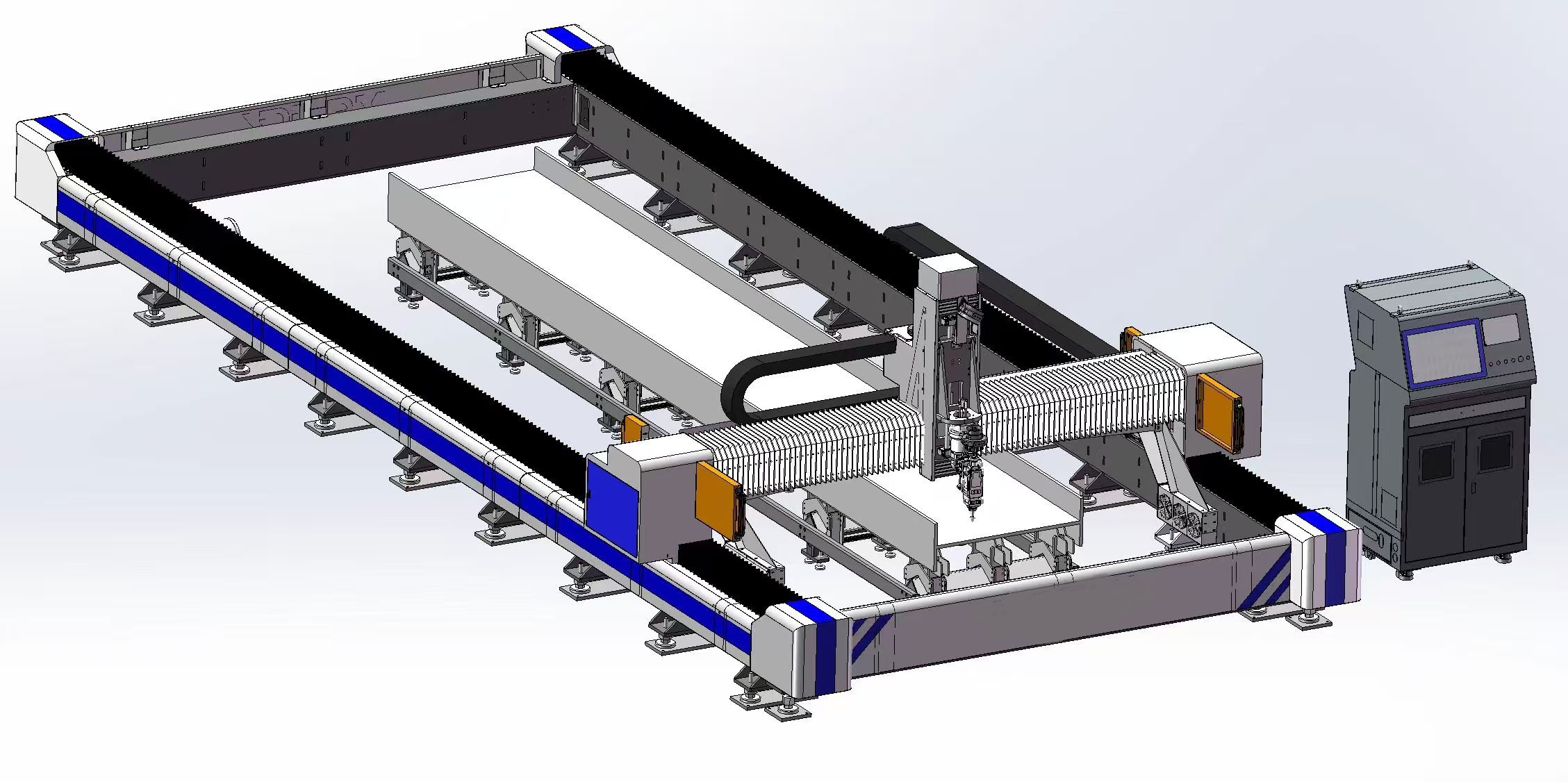
Industrial Application of H-Beam Plasma Cutter
Economic Impact and ROI of Dust-Free Systems
From a B2B perspective, the initial capital expenditure for a dust-free H-Beam Plasma Cutter is offset by several long-term economic factors. First, the reduction in manual cleaning and maintenance labor hours provides a direct boost to the bottom line. Second, the improvement in worker health leads to lower absenteeism and reduced insurance premiums, a critical factor under Chile’s labor regulations. Third, the high-precision output of the CNC system eliminates the need for secondary grinding or finishing, as the dust-free extraction prevents the dross and particulate from re-settling on the workpiece. This results in a “ready-to-weld” surface immediately after cutting. In the global structural steel market, where lead times are increasingly compressed, the ability to move a beam from the cutting bed directly to the assembly area without intermediate cleaning steps represents a significant throughput advantage.
Conclusion: Industry Insight on Future Structural Steel Trends
The industrial landscape in Valparaíso is a microcosm of a global shift toward automated, clean, and high-precision manufacturing. The integration of the H-Beam Plasma Cutter with advanced dust-free technology represents the convergence of mechanical efficiency and environmental responsibility. As we look toward the next decade of structural steel fabrication, the industry is moving away from isolated machinery toward integrated ecosystems where EHS compliance is built into the software and hardware architecture. Facilities that adopt these standards early will find themselves better positioned to navigate the complexities of global supply chains and increasingly stringent environmental mandates. The future of steel fabrication lies in the ability to balance the raw power of thermal cutting with the surgical precision of robotic control and the invisible safety of advanced filtration. In the port of Valparaíso, this technological evolution is not just about cutting steel; it is about building a sustainable foundation for modern infrastructure.
Industrial Expertise & Support
Are you looking for high-performance H-Beam Plasma Cutter tailored for the Global market? Our engineering team provides comprehensive solutions for modern manufacturing.

