The Industrial Evolution of Structural Steel Fabrication in São Paulo
São Paulo stands as the primary industrial engine of South America, hosting a high concentration of automotive, infrastructure, and heavy machinery manufacturing facilities. As the region aligns itself with global manufacturing protocols, the transition from conventional mechanical sawing to advanced thermal cutting processes has become a necessity. Central to this transition is the H-Beam Plasma Cutter, a multi-axis robotic system designed to automate the profiling, coping, and hole-cutting of structural steel members. However, the adoption of high-speed plasma technology introduces significant environmental challenges, specifically regarding the generation of fine metallic dust and ozone. For Tier 1 fabricators in the São Paulo industrial corridor, the implementation of dust-free operation is no longer an optional upgrade but a core requirement for meeting modern Environmental, Health, and Safety (EHS) standards.
Technical Specifications of Modern H-Beam Plasma Systems
The H-Beam Plasma Cutter utilizes a 6-axis or 7-axis robotic arm to navigate the complex geometry of structural sections, including H-beams, I-beams, and channels. These systems are typically powered by high-definition plasma power sources ranging from 130A to 400A. The precision of these machines allows for a tolerance of +/- 0.5mm, which is essential for bolt-hole alignment and weld preparation in large-scale steel structures. In the context of São Paulo’s heavy industry, these machines must operate within high-duty cycles, often exceeding 16 hours of daily operation. This continuous thermal load necessitates a robust approach to managing the byproduct of the ionized gas stream: the kerf material and the resulting airborne particulates.
Mechanism of Particulate Generation in Plasma Cutting
During the plasma cutting process, a high-velocity jet of ionized gas melts the steel, while a secondary shielding gas blows the molten metal through the kerf. This process generates a high concentration of sub-micron particles, ranging from 0.1 to 10 micrometers. These particles consist of iron oxides, manganese, and hexavalent chromium (in the case of stainless steel alloys). Without localized containment, these particulates remain suspended in the shop atmosphere, posing significant respiratory risks to operators and contaminating sensitive CNC electronics. In São Paulo, where industrial density often limits natural ventilation in large-scale workshops, the integration of advanced Fume Extraction Systems is critical to maintaining air quality index (AQI) levels within permissible limits.
Engineering Dust-Free Operation for EHS Compliance
To achieve a dust-free environment, modern CNC Structural Steel Processing units employ a three-tier containment strategy. The first tier involves a high-vacuum extraction hood that tracks the robotic torch in real-time. By capturing the fumes at the point of origin, the system prevents the thermal plume from expanding into the facility’s upper atmosphere. The second tier involves a downdraft table or a specialized beam-enclosure system that pulls heavier particulates downward through a series of internal baffles.
The third and most critical tier is the filtration unit. For industrial operations in Brazil, these units must utilize PTFE-coated filter cartridges capable of 99.9 percent efficiency for 0.5-micron particles. These systems are often equipped with pulse-jet cleaning mechanisms that automatically clear the filters using compressed air, ensuring consistent static pressure and extraction velocity throughout the production shift. This technical configuration ensures that the air recirculated into the São Paulo facility meets or exceeds the air quality standards mandated by international EHS frameworks.
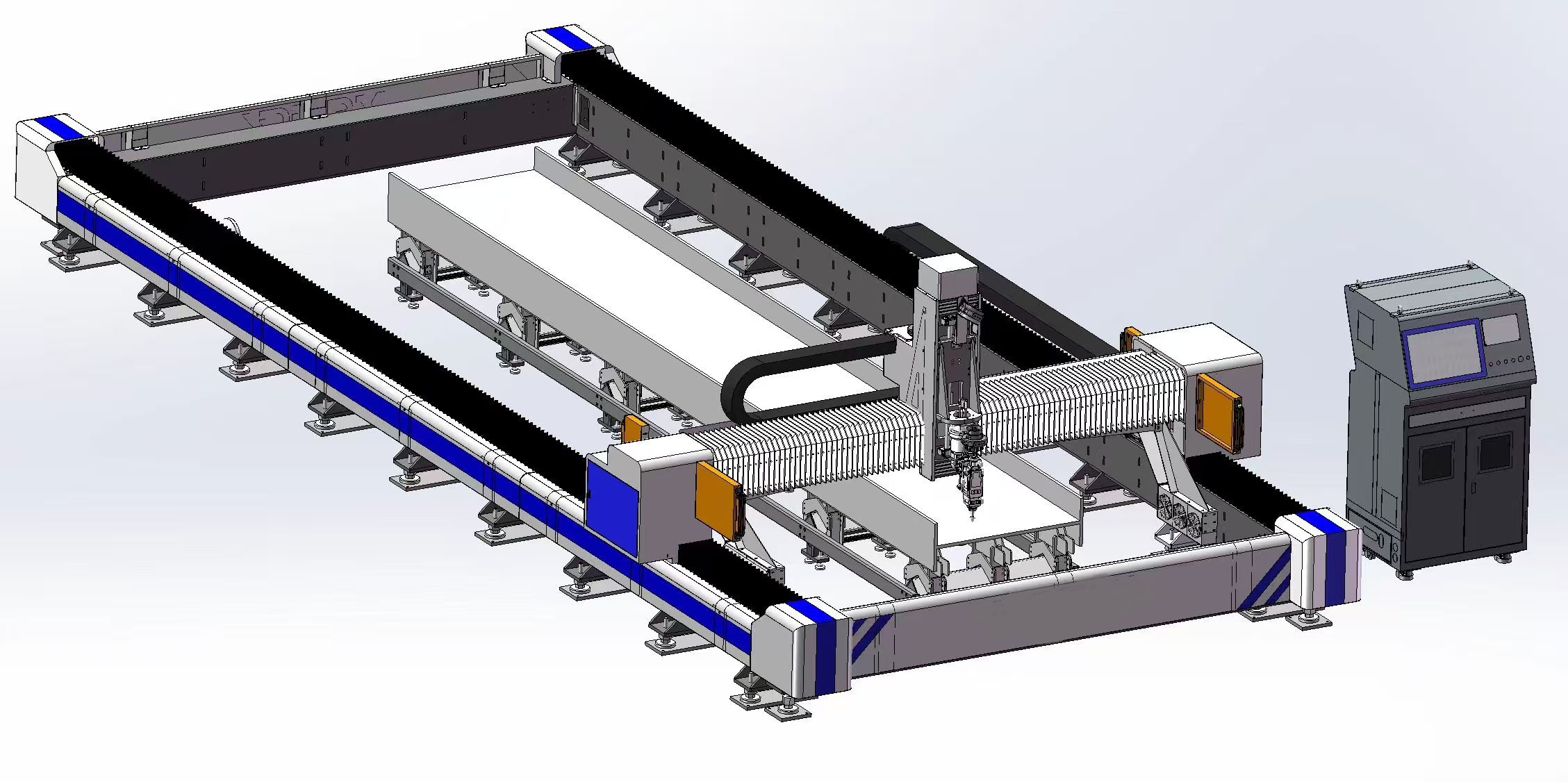
Industrial Application of H-Beam Plasma Cutter
Adherence to Brazilian Regulatory Norms (NR-12 and NR-15)
Operating an H-Beam Plasma Cutter in Brazil requires strict adherence to the Ministério do Trabalho e Emprego (MTE) regulatory norms. NR-12 (Safety in Machinery and Equipment) dictates the physical safeguarding of the robotic cell, but NR-15 (Unhealthy Activities and Operations) specifically addresses the chemical and physical hazards associated with welding and cutting fumes. Dust-free operation is the primary engineering control used to keep worker exposure below the Threshold Limit Values (TLVs) for manganese and iron oxide. By integrating Sub-micron Particulate Filtration directly into the H-beam processing line, São Paulo-based firms mitigate the legal risks associated with occupational health claims and ensure a safer workplace that facilitates ISO 45001 certification.
Operational Efficiency and Equipment Longevity
Beyond health and safety, dust-free operation has a direct impact on the Total Cost of Ownership (TCO) for plasma cutting equipment. Metallic dust is highly conductive and abrasive. In a high-dust environment, these particles accumulate on linear guides, rack-and-pinion drives, and within the internal cooling fans of the plasma power source. This accumulation leads to increased friction, premature wear of mechanical components, and potential short circuits in the control cabinets. By maintaining a clean operating environment, São Paulo fabricators can extend the mean time between failures (MTBF) for their robotic systems by as much as 30 percent. This reduction in unscheduled downtime is critical for maintaining the lean manufacturing schedules required in modern structural steel supply chains.
Economic Viability in the Global Market
The global structural steel market increasingly demands transparency regarding the environmental impact of the fabrication process. International clients frequently audit their supply chain partners for EHS compliance and sustainable practices. For a fabricator in São Paulo, investing in a dust-free H-Beam Plasma Cutter provides a competitive advantage during the bidding process for multinational infrastructure projects. The ability to demonstrate a clean, high-tech production environment reflects a commitment to quality and operational excellence that resonates with global stakeholders. Furthermore, the recovery of metallic dust through centralized filtration systems allows for more efficient waste management and potential recycling of raw material fines, aligning with circular economy principles.
Concluding Industry Insight: The Shift Toward Green Steel Fabrication
The convergence of robotic automation and advanced environmental controls marks a definitive shift in the structural steel industry. As São Paulo continues to modernize its industrial base, the focus is moving beyond mere throughput to include the quality of the manufacturing environment. The transition to dust-free operation in H-beam processing represents the intersection of mechanical engineering and environmental science. In the coming decade, we anticipate that “Green Steel Fabrication” will become the standard, where the efficiency of the H-Beam Plasma Cutter is measured not just by the speed of the cut, but by the cleanliness of the process. Fabricators who proactively adopt these integrated EHS technologies will find themselves at the forefront of a more sustainable and profitable global industrial landscape, characterized by high-precision output and zero-harm workplace environments.
Industrial Expertise & Support
Are you looking for high-performance H-Beam Plasma Cutter tailored for the Global market? Our engineering team provides comprehensive solutions for modern manufacturing.