Industrial Context: Structural Fabrication in the Paraná River Basin
Rosario, Argentina, serves as a primary industrial and logistical hub, strategically positioned along the Paraná River. For the structural steel industry, this location presents a dual-edged reality: proximity to major shipping lanes and a microclimate characterized by high relative humidity, often exceeding 80% throughout the year. In such environments, the deployment of high-precision CNC equipment requires more than standard operational specifications. The integration of an H-Beam Plasma Cutter in this region necessitates a specialized approach to climate adaptation, specifically focusing on the protection of sensitive electronic components and the stabilization of the plasma arc against atmospheric moisture interference.
The transition from manual layout and sawing to automated plasma processing represents a significant leap in throughput for Argentinian fabricators. However, without specific engineering modifications for high-humidity zones, the Mean Time Between Failure (MTBF) for standard CNC machinery can drop significantly due to localized oxidation and electrical tracking within the power source. This article examines the technical requirements for IP54+ rated machinery and the specific adaptations required to maintain structural tolerances in the Rosario industrial sector.
The Technical Necessity of Ingress Protection (IP54+)
Standard industrial equipment often carries an IP20 or IP21 rating, which is sufficient for climate-controlled facilities but inadequate for the semi-open fabrication yards common in South American steel processing. An Ingress Protection (IP54) rating signifies that the equipment is protected against dust ingress that could interfere with operation and is shielded against splashing water from any direction. In the context of Rosario’s humidity, this rating is a baseline for protecting the internal logic controllers and high-voltage components.
The challenge in high-humidity zones is not merely liquid water but the condensation cycle. As temperatures fluctuate between the humid daytime and cooler nights, moisture precipitates on internal surfaces. By utilizing an IP54-rated enclosure, the H-Beam Plasma Cutter utilizes a sealed cabinet environment. This allows for the implementation of internal heat exchangers rather than simple intake fans. This closed-loop cooling system prevents the continuous intake of moist, salt-laden air into the electrical cabinets, thereby mitigating the risk of short-circuits on the PCB (Printed Circuit Board) surfaces.
Optimizing the Plasma Arc in High-Moisture Environments
The physics of plasma cutting relies on the ionization of gas to create a high-temperature arc. Atmospheric moisture introduced through the air supply or surrounding the torch head can destabilize this arc. In Rosario’s climate, the presence of water vapor in the compressed air line is the primary cause of premature consumable failure and dross accumulation. To counter this, technical specifications for the H-Beam Plasma Cutter must include a multi-stage air treatment protocol.
A standard refrigerated dryer is often insufficient. High-humidity adaptation requires a combination of a high-capacity refrigerated dryer, a sub-micronic filter, and a desiccant drying towers. These systems ensure that the air reaching the plasma torch has a pressure dew point significantly lower than the ambient temperature. This prevents the formation of “green rot” on the copper electrodes and ensures that the Non-High Frequency Pilot Arc remains stable during the piercing and cutting of heavy-gauge H-beams.
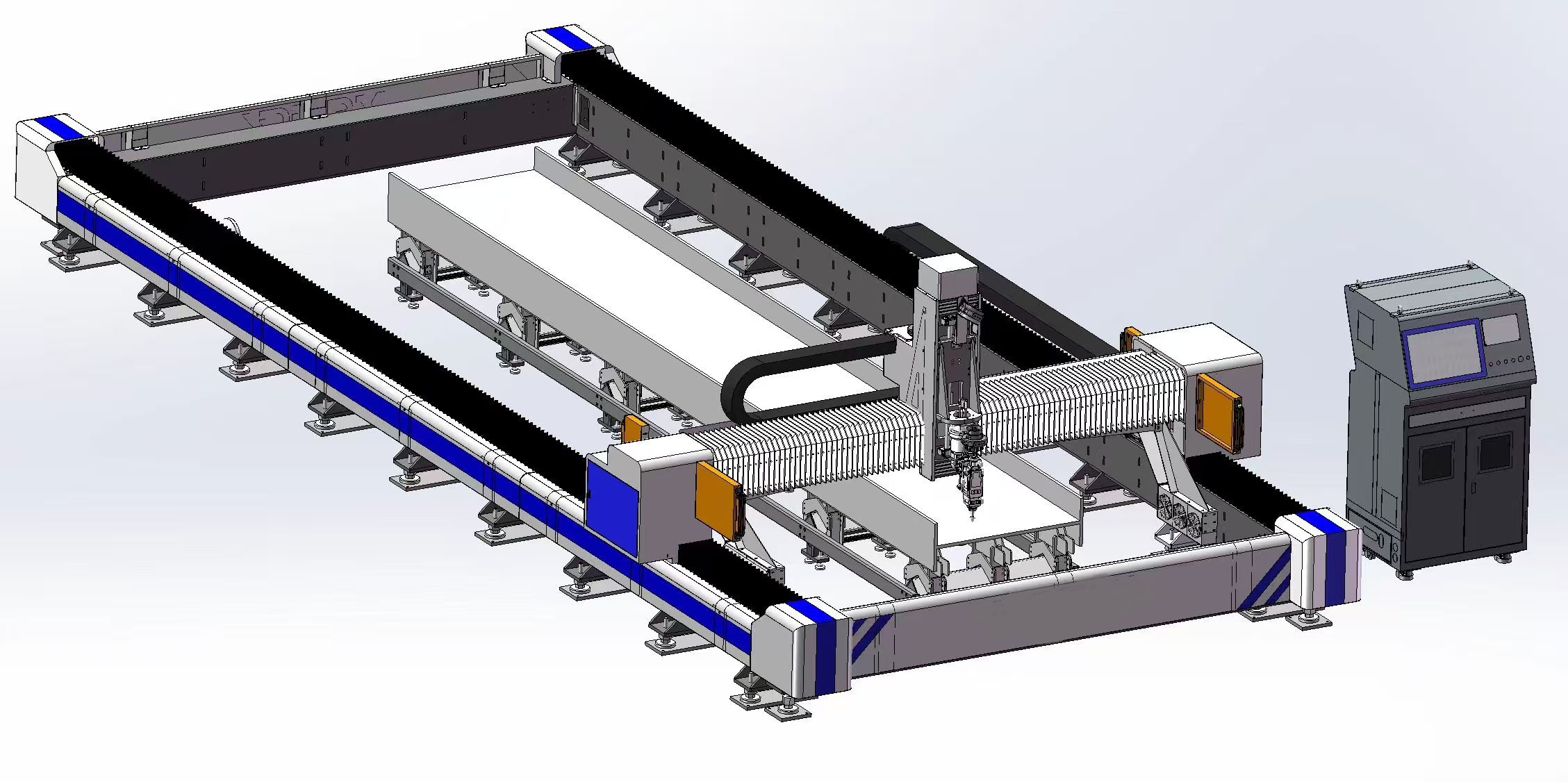
Industrial Application of H-Beam Plasma Cutter
Mechanical Adaptations for Corrosion Resistance
The mechanical structure of an H-beam processing line involves long-travel rails, rack-and-pinion drives, and multi-axis robotic heads. In the high-humidity environment of the Santa Fe province, carbon steel components are susceptible to rapid surface oxidation, which increases friction and degrades positioning accuracy. Technical adaptation involves the use of hardened, chrome-plated linear guides and the application of specialized anti-corrosion coatings on the gantry frame.
Furthermore, the lubrication systems must be upgraded from manual application to automated, pressurized lubrication units. These systems maintain a constant film of synthetic lubricant on the gear racks, effectively displacing moisture and preventing the adhesion of metallic dust generated during the cutting process. This is critical for maintaining the +/- 0.5mm tolerance required for complex bolt-hole patterns and cope cuts on structural profiles.
Thermal Management and IGBT Protection
The heart of the plasma system is the power supply, typically utilizing IGBT Inverter Modules for high-efficiency power conversion. These modules are highly sensitive to thermal stress and moisture. In a high-humidity zone, standard air-cooling can lead to “tracking,” where moisture creates a conductive path across the insulator, leading to catastrophic module failure.
To adapt to Rosario’s climate, the power source must feature conformal coating on all electronic assemblies. This thin polymer film conforms to the circuit board topologies, providing a barrier against moisture and conductive dust. Additionally, the thermal management system should employ oversized heat sinks and variable-speed fans that maintain a consistent internal temperature, preventing the dew point from being reached within the power source chassis during idle periods.
Data Integrity and CNC Control Stability
High humidity can also affect the reliability of data transmission between the CNC controller and the drive motors. Signal noise and impedance changes in communication cables are more prevalent in damp environments. The technical solution involves the use of double-shielded, twisted-pair cabling and gold-plated connectors to prevent oxidation at contact points. The control interface itself should be housed in a console with a minimum of IP65 protection, featuring a membrane or high-durability touchscreen that remains functional even when operated with damp industrial gloves.
Concluding Industry Insight: The Shift Toward Climate-Resilient Infrastructure
The industrial landscape in Argentina is currently undergoing a shift toward higher precision and greater efficiency to meet international structural standards (such as AISC or Eurocode). As Rosario continues to expand its capacity as a steel processing center, the reliance on generic machinery is no longer viable. The environmental challenges posed by the Paraná Basin demand a shift in procurement strategy: from a focus on initial capital expenditure to a focus on Total Cost of Ownership (TCO).
Engineering an H-Beam Plasma Cutter with IP54+ climate adaptation is not merely an optional upgrade; it is a foundational requirement for operational continuity. Future developments in this sector will likely see the integration of IoT-based humidity sensors within the machine’s internal architecture, allowing for real-time adjustments to cooling cycles and air filtration alerts. For the global market, the Rosario case study serves as a blueprint for deploying high-tech fabrication solutions in challenging humid climates, ensuring that precision does not falter in the face of environmental variables. Fabricators who prioritize these technical adaptations will secure a competitive advantage through reduced downtime and extended equipment longevity in the demanding South American industrial corridor.
Industrial Expertise & Support
Are you looking for high-performance H-Beam Plasma Cutter tailored for the Global market? Our engineering team provides comprehensive solutions for modern manufacturing.

