The industrial landscape of Lima, Peru, is currently undergoing a significant transformation driven by massive infrastructure projects and the expansion of maritime logistics hubs, most notably the Chancay Port development. This shift has placed unprecedented pressure on local structural steel fabricators to increase output while maintaining rigorous international quality standards. Central to this evolution is the adoption of the H-Beam Plasma Cutter, a specialized automated system designed to handle the complexities of structural steel profiles. In the industrial parks of Lurín, Huachipa, and Callao, the transition from manual layout and mechanical drilling to automated plasma profiling is no longer a luxury but a technical necessity for maintaining regional competitiveness.
Technical Architecture and Operational Mechanics
The modern H-Beam Plasma Cutter utilizes a multi-axis robotic configuration, typically involving a 6-Axis Robotic Arm or an 8-axis system, to navigate the three-dimensional geometry of structural profiles. Unlike traditional plate cutters, these systems must account for the flanges and webs of H-beams, I-beams, and channels. The integration of high-definition plasma power sources allows for precise thermal cutting with minimal Heat-Affected Zone (HAZ), ensuring that the metallurgical properties of the ASTM A36 or A572 grade steel commonly used in Peruvian construction remain intact.
The system operates through sophisticated Computer Numerical Control (CNC) interfaces that interpret Building Information Modeling (BIM) data directly from software such as Tekla or Revit. This digital-to-physical workflow eliminates manual marking and measurement errors. The plasma torch executes complex geometries, including cope cuts, bolt holes, miter cuts, and weld preparations (bevels), in a single continuous pass. This multi-process capability is the primary driver of the high throughput observed in Lima’s specialized industrial zones.
Comparative Efficiency: Manual vs. Automated Processing
To quantify the Return on Investment (ROI) for industrial parks in Lima, one must analyze the cycle time reduction. Traditional fabrication involves several discrete stages: material handling to a saw line, manual layout for hole locations, mechanical drilling, and manual oxy-fuel torching for notches or copes. Each stage introduces potential for dimensional variance and increases labor hours per ton of steel.
In contrast, an automated H-beam line consolidates these four steps into one. Data from local fabrication facilities indicates that a standard 12-meter H-beam requiring multiple bolt holes and end-copes can be processed in under 8 minutes using plasma automation, compared to approximately 45 to 60 minutes using manual methods. This represents a greater than 80% reduction in processing time. When calculated across a monthly output of 500 tons, the labor cost savings alone often cover the equipment’s financing costs within the first 18 months of operation.
Material Utilization and Kerf Width Optimization
The economic viability of plasma cutting in the Peruvian market is also tied to material conservation. With the volatility of global steel prices, reducing scrap is a priority for fabricators in Lurín. Advanced nesting algorithms integrated into the CNC software allow for Kerf Width Optimization, ensuring that beam segments are cut with minimal waste. Furthermore, the precision of plasma cutting—often within tolerances of +/- 0.5mm—reduces the need for secondary grinding or fit-up corrections during site assembly. This precision is critical for the seismic-resistant structures required by Peruvian building codes, where bolt-hole alignment and weld prep accuracy are non-negotiable.
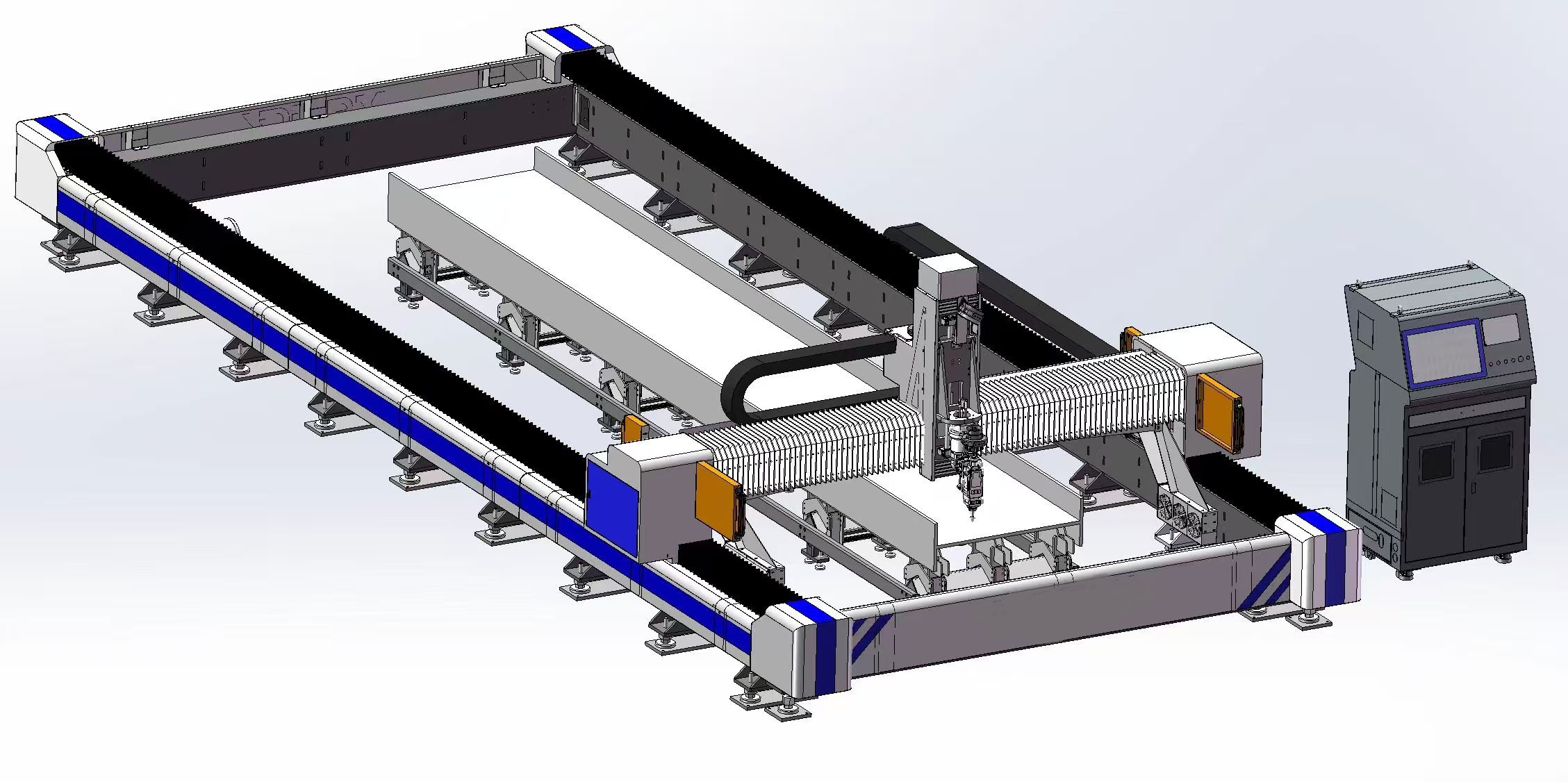
Industrial Application of H-Beam Plasma Cutter
The Impact of Lima’s Infrastructure Expansion on ROI
The ROI of an H-Beam Plasma Cutter in Lima is uniquely influenced by the local economic environment. The Peruvian government’s investment in transport corridors and the expansion of mining infrastructure in the Andes requires massive quantities of structural steel. Local industrial parks are increasingly serving as the primary supply chain nodes for these projects. By implementing robotic plasma cutting, local firms can bid on larger contracts that were previously outsourced to international fabricators due to capacity constraints.
Furthermore, the reduction in floor space requirements contributes to a higher ROI. In the densely packed industrial zones of Callao, where real estate is at a premium, replacing multiple manual stations with a single automated plasma line allows for higher density production. The consolidation of the fabrication footprint reduces the overhead costs associated with facility expansion.
Maintenance and Technical Support in the Regional Context
A critical factor in the ROI equation is uptime. In Lima, the availability of technical support and consumable parts for plasma systems has improved significantly. High-definition plasma systems are designed with modular components, allowing for rapid troubleshooting. The use of long-life consumables and automated gas consoles minimizes the downtime associated with setup and calibration. When integrated into a preventative maintenance schedule, these machines maintain a high duty cycle, which is essential for meeting the aggressive deadlines characteristic of Peruvian infrastructure tenders.
Labor Force Evolution and Skill Migration
The introduction of high-tech machinery into Lima’s industrial parks necessitates a shift in the labor force. While the number of manual laborers decreases, the demand for skilled CNC technicians and robotic programmers increases. This transition results in a more stable and higher-value workforce. For the business owner, this means lower turnover and a reduction in costs associated with workplace injuries, as the robotic system handles the hazardous aspects of thermal cutting and heavy material manipulation.
Concluding Industry Insight
The industrial sector in Lima stands at a crossroads where traditional manufacturing methods are no longer sufficient to meet the demands of a globalized economy. The proven ROI of the H-Beam Plasma Cutter extends beyond simple cost-per-cut metrics; it facilitates a fundamental shift toward “Just-In-Time” fabrication and total quality management. As the Chancay-Callao logistics axis matures, the ability to process structural steel with high precision and high velocity will be the defining characteristic of successful industrial enterprises in the region. The data suggests that for industrial parks in Peru, the adoption of robotic plasma technology is the most effective strategy for mitigating rising material costs and labor shortages, ultimately securing a dominant position in the South American construction and mining supply chain.
Industrial Expertise & Support
Are you looking for high-performance H-Beam Plasma Cutter tailored for the Global market? Our engineering team provides comprehensive solutions for modern manufacturing.

