Introduction: The Industrial Shift in Caracas Structural Fabrication
In the industrial corridors of Caracas, Venezuela, the demand for high-integrity structural steel components is driven by the petrochemical, civil infrastructure, and heavy manufacturing sectors. As projects require increasingly complex geometries and higher load-bearing capacities, traditional manual cutting and grinding methods have become bottlenecks. The integration of the H-Beam Plasma Cutter into the local fabrication workflow represents a significant transition toward automated precision. This technology is not merely a tool for separation but a specialized system designed for multi-axis profiling, specifically engineered to handle the unique challenges of H-beam and I-beam structural sections. By implementing automated 45-degree beveling, Caracas-based fabricators are achieving the tolerances necessary for seamless welding, ensuring that structural joints meet international safety and durability standards.
The Mechanics of 5-Axis Robotic Profiling
The core of an advanced H-beam plasma system lies in its ability to navigate the complex topography of structural steel. Unlike flat-plate plasma tables, an H-beam system utilizes a robotic arm or a multi-axis gantry to reach the web and flanges of the beam simultaneously. For a 45-degree bevel, the torch must maintain a constant standoff distance while compensating for the thickness of the material and the angle of the arc. This process, known as 5-axis robotic profiling, allows the system to execute compound cuts that would be mathematically and physically difficult for a human operator.
In the context of Caracas’s industrial environment, where material consistency can vary, these machines utilize high-definition plasma power sources. These sources stabilize the plasma arc, minimizing dross and reducing the Heat Affected Zone (HAZ). By controlling the gas flow and current density, the machine ensures that the metallurgical properties of the steel remain intact, which is critical for structural applications where brittle zones could lead to catastrophic failure under stress.
Precision 45-Degree Beveling for Full Penetration Welds
The 45-degree bevel is the industry standard for preparing H-beams for full penetration V-butt welds. In high-rise construction and refinery frameworks, the integrity of the weld is paramount. A H-Beam Plasma Cutter programmed for 45-degree beveling produces a uniform “V” groove when two beams are joined. This uniformity is essential for automated welding systems or skilled manual welders to achieve a consistent root pass and subsequent fill passes.
Technical data suggests that automated beveling reduces weld volume requirements by up to 15% compared to inconsistent manual torch cuts. When the bevel angle is precise, the fit-up is tighter, reducing the amount of filler metal needed and decreasing the total heat input into the joint. In Caracas, where labor costs and material efficiency are key drivers of project profitability, this precision translates directly into reduced man-hours and lower consumable consumption. The 45-degree angle ensures that the weld penetrates the full thickness of the flange, creating a monolithic structure capable of withstanding seismic loads and high-pressure environments.
Integration with BIM and Tekla Structures
The modern fabrication landscape in Venezuela is increasingly reliant on Building Information Modeling (BIM). The software interface of an H-beam plasma system allows for the direct import of DSTV or XML files from detailing software like Tekla Structures. This digital-to-physical workflow eliminates manual measurement errors. The machine reads the exact dimensions of the H-beam, identifies the locations for bolt holes, copes, and bevels, and executes the program with sub-millimeter accuracy.
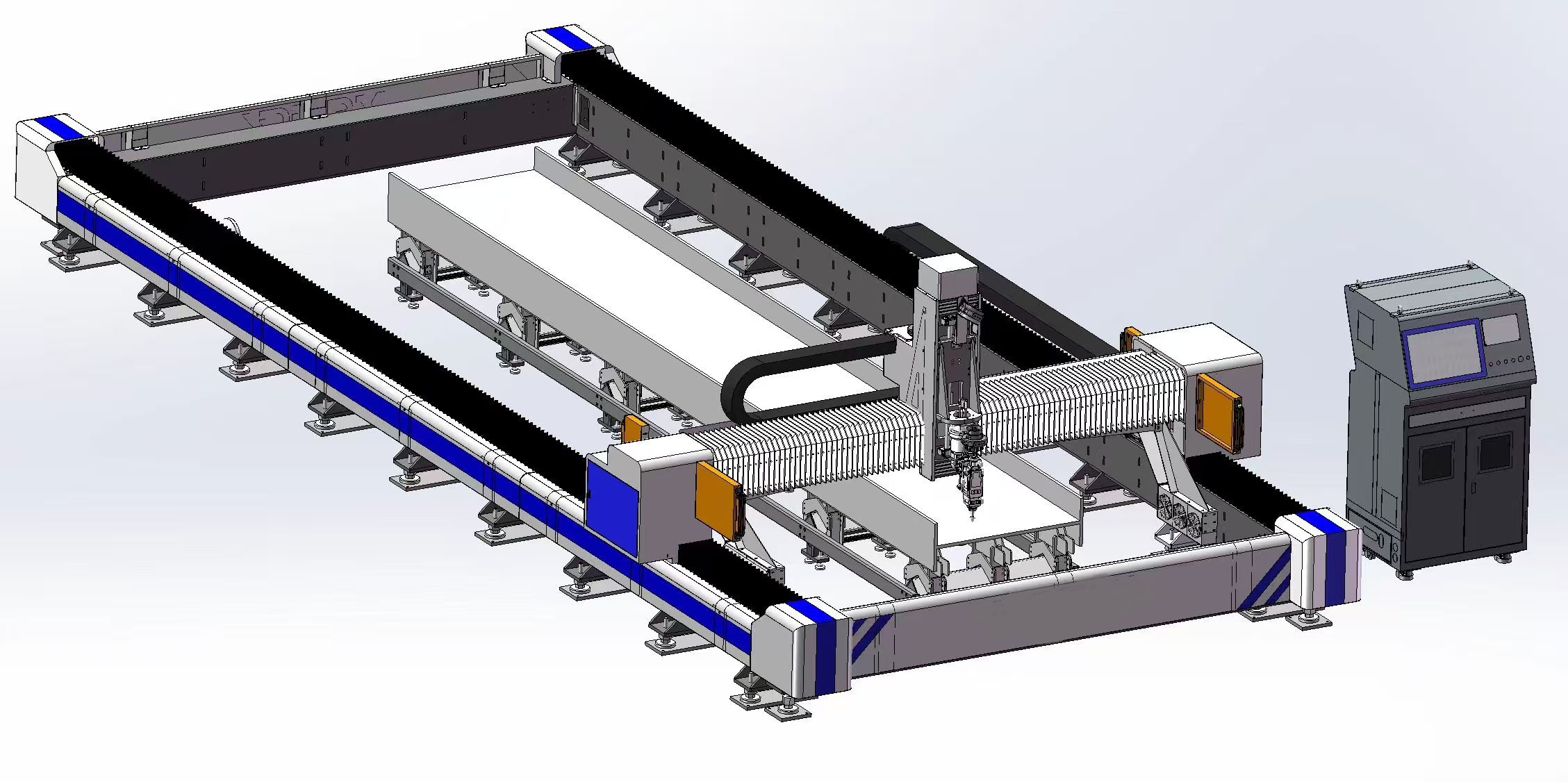
Industrial Application of H-Beam Plasma Cutter
For Caracas engineers, this means that the “as-designed” model matches the “as-built” component. The software compensates for beam camber and sweep—common irregularities in structural steel—by using mechanical probes or laser sensors to map the beam’s actual position before the first arc is struck. This real-time adjustment is critical for maintaining a true 45-degree bevel across the entire width of the flange, regardless of slight deviations in the raw material’s straightness.
Optimizing Gas Selection and Plasma Dynamics
Achieving a seamless weld requires a cut surface that is free of oxidation and nitriding. The choice of plasma gas is a technical variable that Caracas fabricators must optimize based on the grade of steel being processed. For standard carbon steel H-beams, an oxygen-plasma configuration is typically utilized to achieve the fastest cutting speeds and the cleanest edges. However, for specialized stainless steel or high-alloy beams used in the Venezuelan oil industry, a mixture of H35 (hydrogen/argon) or F5 (nitrogen/hydrogen) may be used to prevent oxidation.
The Heat Affected Zone (HAZ) is a critical metric here. Excessive heat during the beveling process can alter the grain structure of the steel, making it susceptible to cracking. Modern high-definition plasma systems use constricted arc technology to narrow the plasma stream, concentrating the energy and allowing for higher travel speeds. This limits the duration of heat exposure, resulting in a narrow HAZ and a bevel face that requires little to no post-cut grinding before welding begins.
Economic and Operational Impact in the Venezuelan Market
The transition to automated H-beam cutting in Caracas offers a clear return on investment (ROI) through the consolidation of processes. Historically, a beam would move from a marking station to a saw, then to a drill line, and finally to a manual beveling station. A CNC plasma system combines these four steps into a single workstation. This reduction in material handling not only saves time but also minimizes the risk of workplace accidents associated with moving heavy structural members.
Furthermore, the precision of the 45-degree bevel facilitates Full Penetration Welding with significantly lower rejection rates during non-destructive testing (NDT). In the strict regulatory environment of petrochemical construction, where X-ray or ultrasonic testing of welds is mandatory, the cost of repairing a failed weld can be five times the cost of the initial weld. By ensuring a perfect fit-up through automated plasma cutting, fabricators drastically reduce the likelihood of inclusions, porosity, or lack of fusion at the root.
Concluding Industry Insight: The Future of Venezuelan Infrastructure
The industrial sector in Caracas is at a technological crossroads. As the global market moves toward “Industry 4.0” standards, the adoption of specialized CNC equipment like the H-beam plasma system is no longer optional for firms seeking to compete internationally. The move toward 45-degree automated beveling indicates a sophisticated understanding of the relationship between preparation and performance. We anticipate that the next phase of development in the Venezuelan market will involve the integration of artificial intelligence in plasma diagnostics, where sensors will predict consumable wear and adjust cutting parameters in real-time to maintain bevel consistency. For fabricators in Caracas, investing in high-precision thermal cutting today is the prerequisite for participating in the large-scale, high-integrity infrastructure projects of tomorrow. The ability to deliver seamless, weld-ready components will remain the primary differentiator in a market that increasingly values structural reliability and lean manufacturing efficiency.
Industrial Expertise & Support
Are you looking for high-performance H-Beam Plasma Cutter tailored for the Global market? Our engineering team provides comprehensive solutions for modern manufacturing.