Technical Integration of H-Beam Plasma Cutting Systems in Cali, Colombia: Meeting CE and NR-12 Regulatory Frameworks
The industrial landscape of Cali, Colombia, has transitioned into a critical hub for structural steel fabrication and heavy machinery manufacturing. As the region expands its export capabilities to North American and European markets, the adoption of high-precision thermal cutting technology has become a prerequisite for competitiveness. Central to this evolution is the implementation of the H-Beam Plasma Cutter, a multi-axis robotic system designed to automate the processing of structural profiles. However, the acquisition of such hardware is no longer purely a matter of throughput; it is governed by rigorous international safety standards, specifically the CE (Conformité Européenne) and the NR-12 (Norma Regulamentadora 12) protocols.
The Architecture of Robotic H-Beam Processing
The modern H-Beam Plasma Cutter utilized in Colombian industrial zones incorporates a 6-axis or 7-axis robotic arm integrated with a high-definition plasma power source. Unlike traditional stationary saws or manual torches, these systems utilize CNC robotic trajectory control to execute complex geometries, including bolt holes, coping, notches, and weld preparations on all four sides of a beam without manual repositioning. The integration of laser scanning technology allows the system to detect structural deviations in the raw material, such as camber or sweep, and adjust the cutting path in real-time to maintain dimensional tolerances within +/- 0.5mm.
The power density of the plasma arc is a critical variable. High-definition plasma systems employed in these machines utilize oxygen or nitrogen as the plasma gas to achieve a narrow kerf and a minimal thermally affected zone (HAZ). This ensures that the metallurgical properties of the ASTM A36 or A572 steel commonly used in Cali’s fabrication shops remain intact, preventing brittleness at the cut edges and ensuring compliance with structural welding codes.
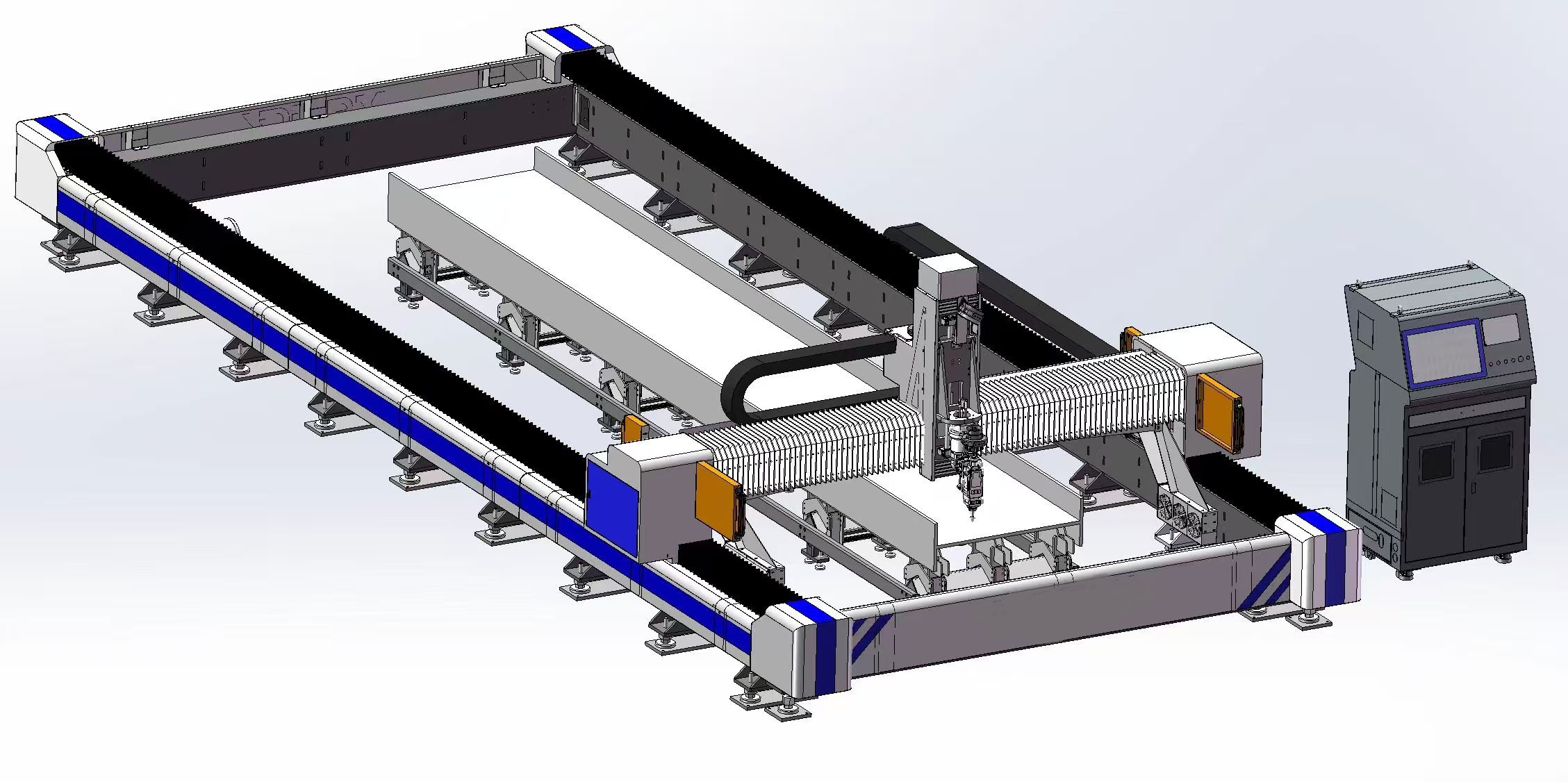
Industrial Application of H-Beam Plasma Cutter
CE Certification: Engineering for Global Interoperability
For manufacturers in Cali looking to participate in international infrastructure projects, CE certification is mandatory. This designation confirms that the machinery complies with European Union health, safety, and environmental protection standards. In the context of an H-Beam Plasma Cutter, CE compliance involves several technical directives:
- Machinery Directive (2006/42/EC): This covers the fundamental design and construction of the machine to ensure operator safety during installation, use, and maintenance.
- Electromagnetic Compatibility (EMC) Directive: High-frequency plasma ignition systems generate significant electromagnetic interference. CE-compliant machines must incorporate shielding and filtering to prevent disruption of other electronic equipment within the facility.
- Low Voltage Directive: Ensures that the electrical components, particularly the high-voltage plasma power supply, are insulated and grounded to prevent accidental discharge.
NR-12 Compliance: The Safety Standard for Latin American Operations
While CE is a global benchmark, NR-12 is a specific Brazilian regulatory standard that has become a de facto safety requirement for industrial machinery across Latin America, including Colombia. NR-12 is significantly more prescriptive than many international standards regarding mechanical safeguarding and electrical interlocking. For an H-Beam Plasma Cutter to be NR-12 compliant in a Cali-based facility, it must feature:
Physical and Optoelectronic Barriers
The cutting zone must be enclosed with physical fencing that prevents unauthorized access. Furthermore, light curtains or laser scanners must be integrated into the safety circuit. If an operator breaks the light beam during the robotic cycle, the system must execute a Category 0 stop, immediately removing power from all motion actuators and the plasma source.
Redundancy in Control Systems
NR-12 requires safety functions to be monitored by dedicated safety PLCs (Programmable Logic Controllers) with redundant circuits. This ensures that a single component failure, such as a welded contactor or a short circuit, does not lead to the loss of the safety function. Every emergency stop button must be monitored and require a manual reset at the control console before the machine can resume operation.
Technical Documentation and Risk Assessment
Compliance is not merely physical; it requires a comprehensive technical file. This includes a detailed risk analysis, an instruction manual in the local language (Spanish), and a schematic of the safety circuits. For Colombian firms, adhering to NR-12 reduces insurance premiums and minimizes the risk of legal liability in the event of workplace accidents.
Operational Efficiency through Automated Beveling
One of the primary technical advantages of deploying these systems is automated bevel cutting. In structural steel, preparing beams for CJP (Complete Joint Penetration) welds is a labor-intensive process. The robotic plasma head can execute V, X, Y, and K-style bevels with precision. By integrating plasma arc voltage sensing, the system maintains a constant torch-to-workpiece distance even if the beam surface is uneven. This consistency is vital for maintaining the correct bevel angle, which directly impacts the volume of weld metal required and the overall structural integrity of the assembly.
Environmental and Fume Extraction Requirements
Thermal cutting of structural steel generates significant particulate matter and ozone. To meet both safety standards and environmental regulations in Cali, these machines are equipped with high-capacity downdraft tables or localized extraction hoods. The filtration systems utilize PTFE-coated cartridge filters to capture 99.9% of sub-micron dust particles. Integration with the CNC allows the extraction system to activate only when the arc is struck, optimizing energy consumption and reducing the noise floor of the fabrication facility.
Concluding Industry Insight
The convergence of robotic automation and stringent safety compliance marks a maturity phase for the Colombian metal-mechanic sector. As Cali continues to position itself as a strategic node for Pacific trade, the reliance on manual layout and cutting is becoming an obsolete model. The transition to CE and NR-12 compliant H-Beam processing is not merely a regulatory hurdle but a strategic investment in operational resilience. By eliminating the variability of manual labor and ensuring a fail-safe working environment, manufacturers can achieve the high-duty cycles required for large-scale infrastructure projects. The future of the industry lies in “Safety by Design,” where the precision of the cut is matched by the integrity of the safety systems, ensuring that productivity never comes at the expense of personnel security.
Industrial Expertise & Support
Are you looking for high-performance H-Beam Plasma Cutter tailored for the Global market? Our engineering team provides comprehensive solutions for modern manufacturing.

