Industrial Evolution in Barranquilla: The Requirement for Advanced Structural Steel Processing
Barranquilla, Colombia, has emerged as a critical nexus for maritime logistics and heavy industrial manufacturing in the Andean region. As the city expands its port infrastructure and shipbuilding capabilities, the demand for precision structural steel fabrication has shifted from manual thermal cutting to automated systems. The integration of the H-Beam Plasma Cutter into local fabrication workflows addresses the necessity for high-speed, high-accuracy processing of structural profiles including H-beams, I-beams, and channels. However, the transition to high-definition plasma technology in this geographical sector introduces specific electrical challenges. Industrial zones in rapidly developing coastal hubs often face inconsistencies in power delivery, characterized by transient voltage surges and frequency deviations. To maintain the integrity of the plasma arc and protect sensitive control electronics, built-in voltage regulation has become a non-negotiable specification for equipment deployed in the region.
The Technical Impact of Grid Instability on Plasma Arc Consistently
Plasma cutting relies on the ionization of gas to create a high-temperature plasma stream. This process requires a constant and precise delivery of electrical current. In Barranquilla’s industrial corridors, the proximity to heavy port machinery and large-scale induction motors often results in “dirty” power. Without internal stabilization, voltage fluctuations directly impact the duty cycle and the quality of the kerf. When the input voltage drops, the power source struggles to maintain the arc voltage, leading to dross accumulation and incomplete penetration of thick-walled H-beams. Conversely, voltage spikes can lead to catastrophic failure of the IGBT Inverter Technology modules, which are responsible for high-frequency switching and current regulation. Modern H-beam processing units designed for this market utilize multi-stage filtering and active power factor correction to ensure that the internal DC bus remains stable regardless of external grid volatility.
Integrated Automatic Voltage Regulation (AVR) Architecture
The core of a resilient H-Beam Plasma Cutter is its Automatic Voltage Regulation (AVR) system. This system functions as a buffer between the municipal grid and the machine’s internal components. The architecture typically involves a series of high-capacity capacitors and magnetic induction regulators that normalize input variances within a range of +/- 15%. In the context of Barranquilla’s 60Hz grid, the AVR ensures that the 3-phase power supplied to the plasma generator remains within the tight tolerances required for high-definition (HD) cutting. This stabilization is critical for the synchronization of the 6-axis robotic arms or gantry systems used to maneuver the torch around the beam’s flanges and web. If the voltage fluctuates during a complex bevel cut, the CNC Motion Control system may lose synchronization with the arc voltage height control (AVHC), resulting in mechanical collisions or inconsistent bevel angles.
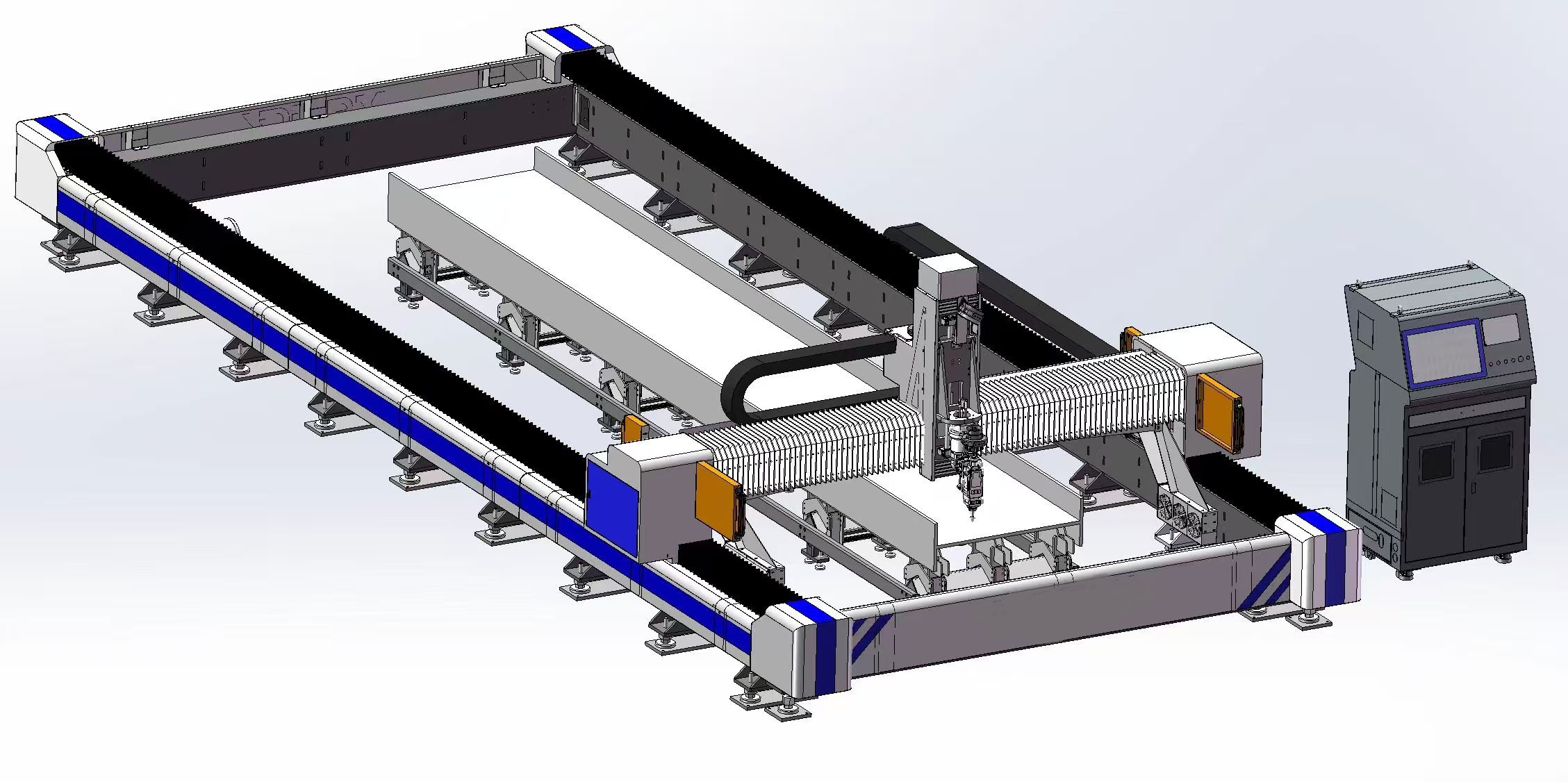
Industrial Application of H-Beam Plasma Cutter
Optimization of Consumable Life and Operational Efficiency
From a B2B operational perspective, the primary cost drivers in plasma cutting are consumable wear and electricity consumption. Voltage instability accelerates the erosion of electrodes and nozzles. When the arc is forced to compensate for fluctuating power, the thermal load on the nozzle increases, leading to orifice deformation. In Barranquilla’s high-humidity coastal environment, this thermal stress is compounded by ambient conditions. Systems equipped with built-in regulation mitigate this by providing a “soft-start” mechanism and maintaining a constant current density. This results in a measurable increase in the number of pierces per set of consumables. Furthermore, by optimizing the power factor, these machines reduce reactive power waste, lowering the overall kVA demand on the facility’s electrical infrastructure—a significant advantage for local manufacturers facing rising energy tariffs.
Structural Integrity and Compliance with International Standards
The structural steel processed in Colombia must often meet international standards such as ASTM or Eurocode, especially for projects involving international investment in the oil and gas or renewable energy sectors. The precision offered by an H-Beam Plasma Cutter with stabilized power ensures that the Heat Affected Zone (HAZ) is minimized. Excessive heat input, often caused by an unstable, slow-moving arc during a low-voltage event, can alter the metallurgical properties of the steel, leading to brittleness in the flange-to-web transitions. By maintaining a constant cutting speed and arc intensity, the integrated regulation systems ensure that the mechanical properties of the H-beam remain within design specifications, facilitating easier welding and assembly in subsequent production phases.
Thermal Management in Tropical Industrial Environments
Barranquilla’s climate presents an additional layer of technical requirements for heavy machinery. High ambient temperatures and salinity require robust cooling systems for the voltage regulation components themselves. Technical-grade H-beam cutters utilize closed-loop liquid cooling for the power supplies and pressurized cabinets for the electronics to prevent the ingress of corrosive salt air. The voltage regulation modules are often heat-sinked to the main cooling manifold, ensuring that even under 100% duty cycle operations in 35°C+ weather, the internal components remain within their optimal thermal operating window. This synergy between electrical regulation and thermal management is what defines industrial-grade equipment versus standard commercial units.
Industry Insight: The Future of Distributed Manufacturing and Grid Resilience
As global supply chains shift toward “near-shoring” and regional manufacturing hubs, the reliance on sophisticated industrial hardware in areas with developing infrastructure will increase. The case of Barranquilla demonstrates a broader industry trend: the decoupling of machine performance from grid quality. In the coming decade, we expect to see a surge in “grid-agnostic” industrial equipment. The integration of built-in voltage regulation is merely the first step. The next evolution involves the incorporation of short-term energy storage (supercapacitors) within the H-Beam Plasma Cutter framework to bridge momentary power interruptions. For B2B stakeholders, the investment priority is shifting from raw cutting speed to operational continuity. In volatile energy markets, the ability to maintain precision fabrication during grid fluctuations is a significant competitive advantage, reducing scrap rates and ensuring that delivery timelines for critical infrastructure projects are met without compromise.
Industrial Expertise & Support
Are you looking for high-performance H-Beam Plasma Cutter tailored for the Global market? Our engineering team provides comprehensive solutions for modern manufacturing.

