Precision Engineering and Air Quality Management in Asunción’s Industrial Sector
The industrial landscape of Asunción, Paraguay, is undergoing a rigorous technical transition. As the region positions itself as a hub for structural steel fabrication and infrastructure development, the adoption of high-precision automated machinery has become mandatory. Central to this evolution is the deployment of the H-Beam Plasma Cutter, a system designed to handle the complex geometries of structural steel while adhering to stringent international safety protocols. In modern manufacturing, the focus has shifted from mere throughput to the integration of Environmental Health and Safety (EHS) standards, specifically regarding the mitigation of airborne metallic particulates produced during thermal cutting processes.
For global stakeholders looking at the South American market, the implementation of dust-free plasma technology in Asunción represents a benchmark for operational excellence. The intersection of high-speed thermal cutting and advanced filtration systems ensures that structural integrity is maintained without compromising the respiratory health of the workforce or the operational longevity of the facility’s electronic components.
Technical Architecture of the H-Beam Plasma Cutter
The H-Beam Plasma Cutter utilized in heavy industry is typically characterized by a 6-axis robotic kinematics system. Unlike standard 2D plate cutters, these machines must navigate the flanges and webs of H-beams, I-beams, and channels. This requires a sophisticated motion control interface capable of calculating real-time torch positioning to maintain a constant standoff distance, ensuring a uniform heat-affected zone (HAZ).
The cutting process involves an accelerated jet of hot plasma that melts the metal, while a high-velocity gas stream blows the molten material away. In an unmitigated environment, this results in the release of fine metallic oxides and hexavalent chromium (in the case of stainless alloys), which pose significant health risks. To achieve a dust-free operation, these units are integrated with high-capacity extraction systems that capture pollutants at the point of generation.
Integration of Advanced Particulate Extraction Systems
The transition to dust-free operation in Asunción’s fabrication shops is driven by the integration of a specialized particulate extraction system. These systems utilize a combination of high-vacuum suction and multi-stage filtration. The technical components of these systems include:
1. Source Capture Hoods: The plasma torch is often fitted with a localized extraction shroud that moves in tandem with the 6-axis head. This ensures that the plume of smoke and dust is captured immediately as the arc strikes the metal.
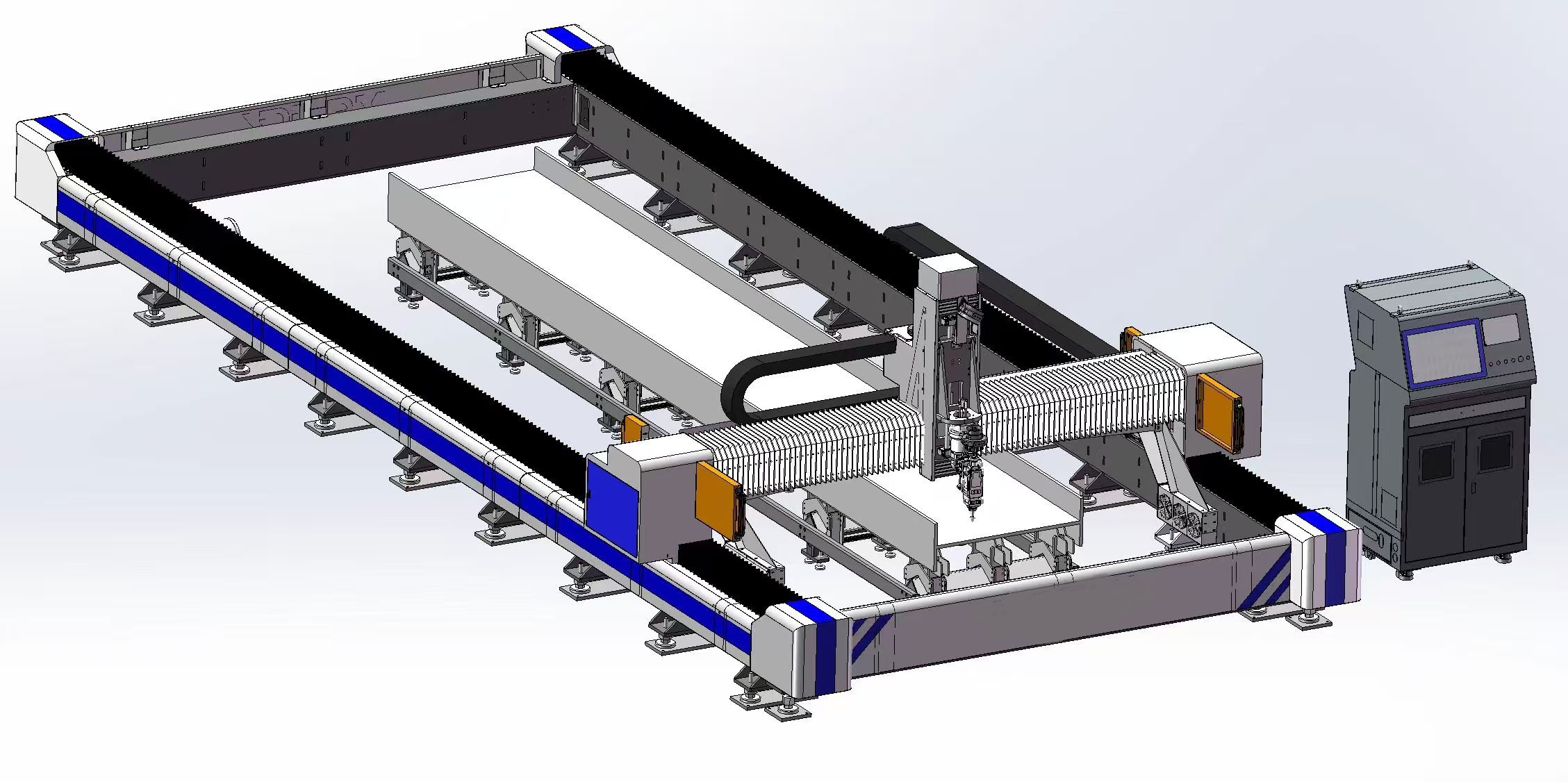
Industrial Application of H-Beam Plasma Cutter
2. Downdraft and Side-Draft Tables: For H-beam processing, where the geometry often blocks vertical airflow, side-draft extraction modules are positioned along the cutting bed. These modules create a high-velocity laminar flow that pulls particulates away from the operator’s breathing zone.
3. Pulse-Jet Cartridge Filters: The extracted air is passed through flame-retardant polyester filters. A compressed air “pulse” is periodically triggered to knock the accumulated dust into a collection bin, maintaining a constant pressure drop across the filter media and ensuring continuous extraction efficiency.
Meeting Modern Environmental Health and Safety (EHS) Standards
Adhering to Environmental Health and Safety (EHS) compliance is no longer optional for firms operating in Paraguay that wish to compete on a global scale. Dust-free operation addresses three primary EHS concerns:
First, it mitigates the risk of long-term respiratory illnesses among technicians. Metallic dust particles, often smaller than 2.5 microns, can penetrate deep into lung tissue. By maintaining air quality levels below the Permissible Exposure Limits (PEL) set by international bodies like OSHA or ISO, facilities in Asunción protect their human capital.
Second, the reduction of ambient dust prevents the accumulation of conductive metallic particles on sensitive electronic components. Modern fabrication facilities rely on PLC (Programmable Logic Controller) systems and CNC interfaces that are susceptible to short-circuiting if exposed to metallic dust. Therefore, dust-free operation is a prerequisite for equipment reliability and reduced downtime.
Third, it minimizes the fire hazard associated with accumulated combustible dust. Fine metallic powders, particularly from aluminum or certain carbon steels, can become explosive under specific atmospheric concentrations. Integrated extraction systems eliminate this risk at the source.
Operational Efficiency and Economic Impact in Paraguay
The economic logic for deploying dust-free H-beam plasma technology in Asunción extends beyond safety. There is a direct correlation between air quality management and secondary processing efficiency. In a traditional “dirty” shop, secondary cleaning of the steel beams is required to remove settled dust and dross before welding or painting can occur. In a dust-free environment, the beams emerge from the cutting cell significantly cleaner, reducing the man-hours required for surface preparation.
Furthermore, the high precision of the 6-axis plasma system reduces material waste. By utilizing nesting software specifically designed for structural shapes, fabricators in Paraguay can optimize the use of imported steel, which is a critical factor in maintaining project margins for large-scale infrastructure developments such as bridges, high-rise frameworks, and port facilities along the Paraguay River.
Comparative Analysis: Plasma vs. Mechanical Cutting
While mechanical sawing and drilling have been the historical standard in Asunción, they lack the versatility of the plasma process. A mechanical saw cannot execute complex cope cuts, miter cuts, or bolt-hole perforations in a single pass. The H-beam plasma system consolidates multiple workstations into one. When this consolidation is paired with dust-free technology, the footprint of the fabrication line is reduced, allowing for higher output per square meter of factory floor space. This intensification of production is a key driver for the industrial modernization currently seen in the region.
Industry Insight: The Future of Automated Fabrication in South America
The industrial trajectory of Asunción suggests a broader trend within the South American Southern Cone: the decoupling of industrial growth from environmental degradation. The adoption of dust-free H-beam plasma cutting technology indicates that regional players are no longer prioritizing low-cost, high-pollution methods. Instead, they are investing in capital-intensive, high-efficiency systems that align with global ESG (Environmental, Social, and Governance) criteria.
As international investment continues to flow into Paraguayan infrastructure, the demand for “Green Steel” fabrication—processes that minimize waste and protect the environment—will escalate. The H-beam plasma cutter, equipped with advanced filtration, is not merely a tool for shaping metal; it is a critical component in a sustainable industrial ecosystem. The future of the industry lies in the seamless integration of robotic precision and proactive environmental management, ensuring that the heavy industry of tomorrow is both productive and biologically inert for its operators.
Industrial Expertise & Support
Are you looking for high-performance H-Beam Plasma Cutter tailored for the Global market? Our engineering team provides comprehensive solutions for modern manufacturing.

