Integration of Automated Structural Steel Processing in the Antofagasta Mining Hub
Antofagasta, Chile, serves as the primary logistical and industrial gateway for the global copper mining industry. The region’s infrastructure demands require high-volume structural steel fabrication, specifically for heavy-duty processing plants, conveyor galleries, and support frameworks. Traditionally, the fabrication of structural profiles such as I-beams, H-beams, and channels involved labor-intensive mechanical processes, including manual layout, drilling, and sawing. However, the transition toward automated thermal cutting has become a technical necessity to meet the rigorous production schedules and safety mandates of the Atacama region.
The implementation of the H-Beam Plasma Cutter in this sector represents a significant shift in manufacturing philosophy. By integrating multi-axis robotics with advanced thermal power sources, fabricators can execute complex geometries—including bolt holes, coping, notches, and weld preparations—within a single controlled environment. As the industrial sector in Northern Chile aligns with international Environment, Health, and Safety (EHS) standards, the focus has moved beyond mere throughput to include the mitigation of airborne particulates and metallic oxides generated during the plasma ionization process.
Technical Architecture of the Robotic H-Beam Plasma Cutter
Modern structural steel processors utilize a 6-axis or 7-axis robotic arm configuration to provide the necessary degrees of freedom for 3D profiling. Unlike traditional flat-bed plasma systems, an H-Beam Plasma Cutter must navigate the complex surfaces of a structural profile, maintaining a constant torch-to-workpiece distance and a precise angle of attack. This is achieved through sophisticated laser sensing and mechanical probing systems that compensate for material deviations such as flange warpage or web eccentricity.
The core of the system is the High-Definition Plasma Power Source. These units utilize a constricted arc technology that focuses the plasma stream, resulting in a higher energy density. This precision minimizes the heat-affected zone (HAZ) and produces dross-free cuts that often require no secondary grinding. In the context of Antofagasta’s heavy industry, where structural integrity is paramount for seismic-resistant mining infrastructure, the ability to maintain the metallurgical properties of the steel while achieving high-speed cuts is a critical technical advantage.
Engineering Dust-Free Operations through Advanced Extraction
Thermal cutting of carbon steel generates significant quantities of sub-micron particulate matter, primarily consisting of iron oxide. In an enclosed or semi-enclosed fabrication facility, these particulates pose severe respiratory risks and can degrade the precision of electronic components and linear motion systems. To achieve dust-free operation, the H-Beam Plasma Cutter must be paired with a high-capacity Pulse-Jet Filtration System.
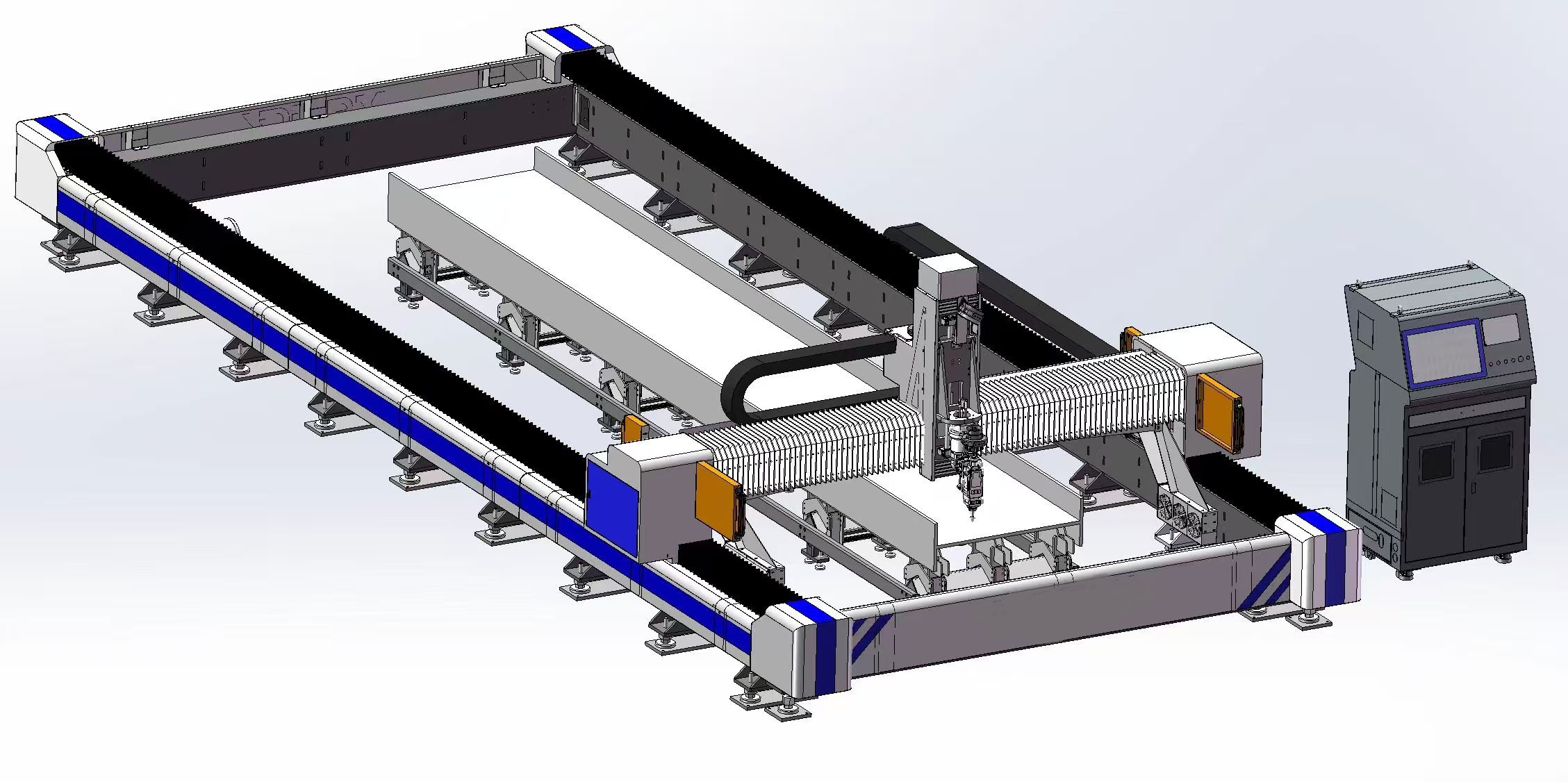
Industrial Application of H-Beam Plasma Cutter
The extraction process begins at the point of ignition. High-velocity downdraft or side-draft extraction hoods are integrated into the cutting zone. The system calculates the required volumetric flow rate (measured in m³/h) based on the maximum thickness of the material and the amperage of the plasma arc. The captured fumes are then channeled through heavy-duty ducting to a central dust collector. These collectors utilize flame-retardant cartridge filters with high MERV (Minimum Efficiency Reporting Value) ratings, ensuring that the air exhausted back into the facility or the atmosphere meets or exceeds local environmental regulations, such as those overseen by the Chilean Ministry of Health.
EHS Standards and Regulatory Compliance in Northern Chile
In the Chilean mining and industrial sector, compliance with Decree 594—which regulates basic sanitary and environmental conditions in the workplace—is mandatory. This decree sets strict limits on the concentration of chemical agents and suspended dust in the air. For fabricators in Antofagasta, adopting a CNC Robotic Profiling system with integrated dust suppression is not merely an operational preference but a regulatory requirement to avoid significant penalties and operational shutdowns.
Beyond air quality, EHS standards also encompass noise mitigation and ergonomic safety. Automated H-beam processing reduces the need for manual handling of heavy steel sections, thereby decreasing the risk of musculoskeletal injuries. Furthermore, the acoustic enclosures often provided with robotic plasma cells help attenuate the high-frequency noise generated by the plasma arc, contributing to a safer decibel level within the fabrication shop. This holistic approach to EHS ensures that the facility can operate 24/7 without compromising the health of the workforce or the surrounding environment.
Operational Efficiency and Maintenance of Filtration Components
The longevity of a plasma cutting system in a desert environment like Antofagasta is heavily dependent on its ability to manage dust. Abrasive dust particles, if not properly extracted, can settle on the precision rack-and-pinion drives and linear guides of the robot, leading to premature wear and loss of accuracy. A dust-free operation ensures that the mechanical tolerances of the H-Beam Plasma Cutter remain within the specified microns over years of service.
Maintenance protocols for the filtration system are streamlined through automated pressure differential monitoring. When the filter elements reach a specific saturation point, a pulse of compressed air is triggered to dislodge the dust cake into a collection hopper. This “online” cleaning allows for continuous operation without stopping the production line. For the fabricator, this translates to higher uptime and a lower total cost of ownership (TCO), as the frequency of manual cleaning and component replacement is drastically reduced.
Concluding Industry Insight: The Future of Automated Fabrication
The industrial landscape in Antofagasta is a microcosm of the global shift toward “Smart Fabrication.” As mining projects become more complex and the demand for rapid infrastructure deployment increases, the reliance on manual labor for structural steel processing will continue to diminish. The integration of H-Beam Plasma Cutter technology represents the first phase of this evolution. The next phase will likely involve the deeper integration of Building Information Modeling (BIM) data directly with robotic controllers, allowing for a seamless transition from architectural design to finished steel component.
From an industry perspective, the commitment to dust-free, EHS-compliant operation is becoming a competitive differentiator. Tenders for major mining and energy projects now frequently include clauses regarding the environmental footprint of the manufacturing process. Fabricators who invest in high-efficiency extraction and automated thermal cutting are not only optimizing their internal production metrics but are also positioning themselves as preferred partners in a global economy that increasingly values sustainability and worker safety. The success of these systems in the demanding climate of Northern Chile serves as a technical benchmark for structural steel fabrication worldwide.
Industrial Expertise & Support
Are you looking for high-performance H-Beam Plasma Cutter tailored for the Global market? Our engineering team provides comprehensive solutions for modern manufacturing.

