Integration of Advanced Automated Fabrication in Joinville’s Industrial Corridor
Joinville, recognized as the primary industrial hub of Santa Catarina, Brazil, has become a focal point for high-precision metal fabrication. The region’s concentration of metallurgical and automotive enterprises necessitates a shift toward high-throughput processing of structural steel. Central to this evolution is the deployment of the H-Beam Plasma Cutter, a system designed to automate the complex geometries required in modern construction and heavy machinery manufacturing. However, the geographical scale of Brazil presents a logistical challenge for technical support and maintenance. To address this, the implementation of remote cloud diagnostics has transitioned from a peripheral feature to a core operational requirement for maintaining uptime in vast industrial landscapes.
The structural steel industry in Latin America is currently undergoing a digital transformation. For facilities located in Joinville, the ability to process H-beams, I-beams, and channels with minimal manual intervention is critical for remaining competitive in a global export market. The integration of robotic plasma cutting systems allows for the execution of bolt holes, copes, slots, and miter cuts in a single pass. Yet, the complexity of these 6-axis robotic systems requires specialized oversight that is not always available on-site. This is where cloud-based telemetry and diagnostic protocols provide a necessary bridge between the manufacturer and the end-user.
Technical Specifications of the H-Beam Plasma Cutter System
The modern H-Beam Plasma Cutter utilizes a multi-axis robotic arm equipped with a high-definition plasma torch. These systems are engineered to handle heavy structural profiles with weights exceeding several tons and lengths reaching up to 15 meters. The precision of these machines is governed by sophisticated CNC (Computer Numerical Control) algorithms that translate BIM (Building Information Modeling) data directly into cutting paths. By eliminating the manual layout process, fabricators reduce the margin of error to sub-millimeter tolerances.
The plasma power sources integrated into these units typically range from 130 to 400 amps, enabling the piercing of thick-walled structural steel. The use of oxygen or nitrogen as plasma gases, depending on the material composition, ensures clean edges that require little to no secondary grinding. In Joinville’s fabrication shops, where throughput is measured by tons per hour, the reliability of the plasma arc and the accuracy of the robotic movement are the primary drivers of Overall Equipment Effectiveness (OEE).
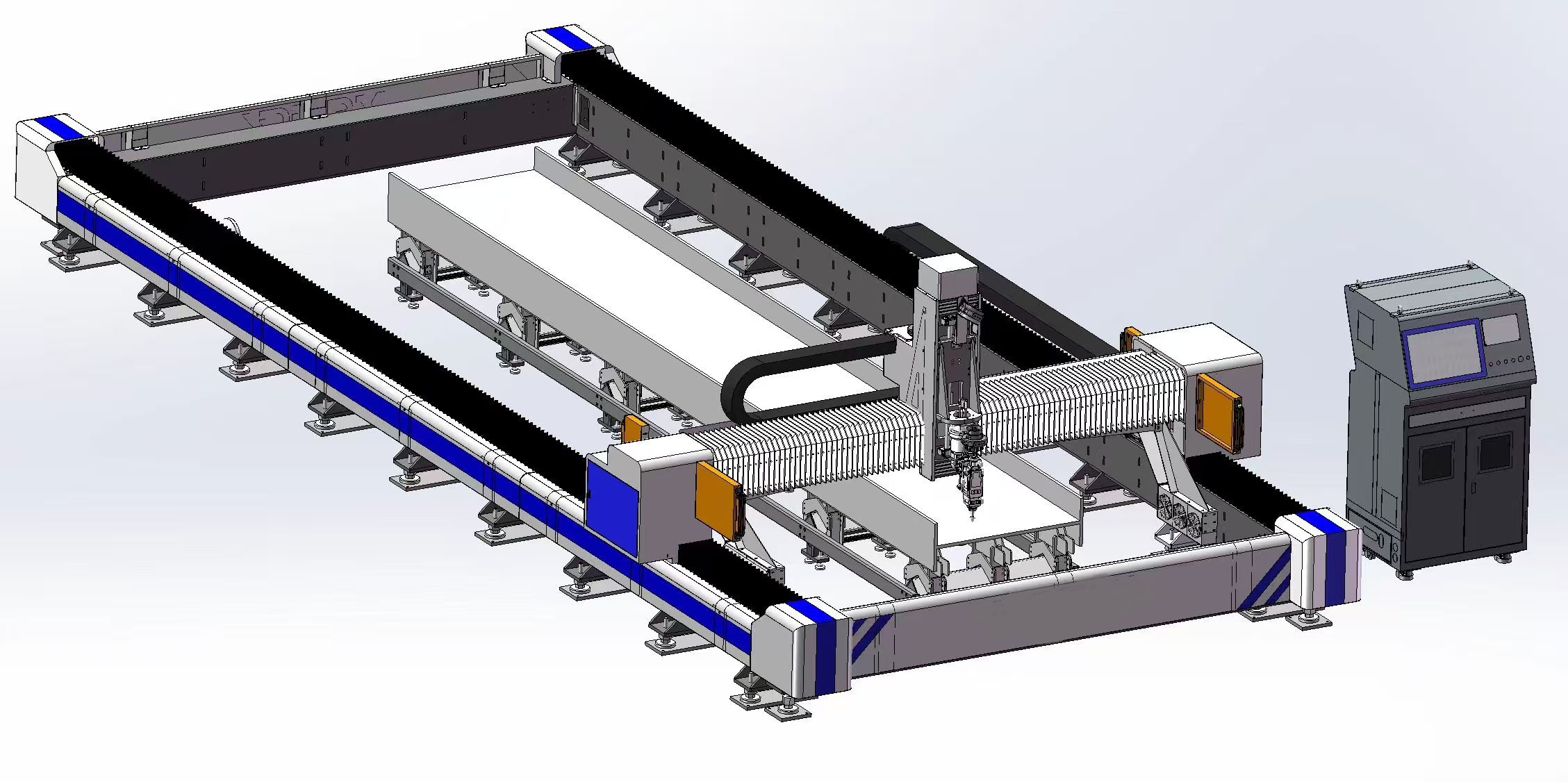
Industrial Application of H-Beam Plasma Cutter
The Role of Industrial Internet of Things (IIoT) in Remote Diagnostics
In the context of Brazil’s vast territory, a service technician may be located thousands of kilometers away from the production site. To mitigate the risk of prolonged downtime, manufacturers have integrated Industrial Internet of Things (IIoT) frameworks into their plasma cutting platforms. This connectivity allows for the continuous streaming of machine data to a secure cloud environment. Operational parameters, such as gas pressure, arc voltage, motor torque, and temperature fluctuations, are monitored in real-time.
When a deviation from the standard operating envelope occurs, the system generates an automated alert. Remote engineers can access the machine’s internal logic controller via an encrypted gateway to perform a root-cause analysis. This capability is particularly vital for the Joinville sector, which serves as a distribution node for projects across the Amazonian interior and the southern cone. By utilizing cloud diagnostics, a significant percentage of software-related issues or calibration errors can be resolved without the physical presence of a technician, effectively neutralizing the geographical barriers of the region.
Real-time Telemetry and Predictive Maintenance Protocols
The transition from reactive to Predictive Maintenance is facilitated by the aggregation of historical performance data. By analyzing the wear patterns of consumables—such as nozzles and electrodes—the diagnostic system can predict the remaining useful life of components. In a high-volume environment like Joinville, unplanned stops for consumable failure can disrupt the entire supply chain. Cloud diagnostics provide the facility manager with a data-driven schedule for component replacement, ensuring that the H-Beam Plasma Cutter operates at peak efficiency during scheduled shifts.
Furthermore, Real-time Telemetry allows for the optimization of cutting parameters based on the specific batch of steel being processed. Factors such as material hardness and surface oxidation can affect the quality of the plasma cut. Through remote monitoring, application engineers can fine-tune the feed rates and arc current settings remotely to compensate for material variability, ensuring consistent output quality across different production runs.
Cybersecurity and Data Integrity in Cloud-Based Support
As industrial hardware becomes increasingly connected, the security of the data transmission becomes a technical priority. The diagnostic systems employed in Brazilian fabrication hubs utilize end-to-end encryption and multi-factor authentication to prevent unauthorized access to the machine’s control system. Data sovereignty is also a consideration; the cloud architecture must comply with local regulations while allowing for global technical support. The separation of the machine’s operational network from the facility’s corporate network ensures that diagnostic activities do not compromise the broader IT infrastructure.
Economic Impact on the Brazilian Structural Steel Market
The economic justification for high-end plasma cutting systems in Joinville is rooted in the reduction of labor costs and the acceleration of project timelines. Traditional H-beam processing involves multiple stations for sawing, drilling, and marking. A robotic plasma system consolidates these functions into a single work cell. When coupled with remote diagnostics, the Return on Investment (ROI) is protected against the volatility of local technical labor markets. The ability to maintain high machine availability regardless of the facility’s proximity to a service center allows Brazilian fabricators to bid on international infrastructure projects with confidence in their delivery schedules.
Industry Insight: The Future of Distributed Manufacturing Support
The case of Joinville serves as a blueprint for the future of global manufacturing. As heavy industry moves toward decentralized production sites to be closer to raw materials or specific project locations, the reliance on centralized technical expertise becomes a bottleneck. The evolution of the H-Beam Plasma Cutter from a standalone tool to a connected node in a global network represents a fundamental shift in industrial maintenance.
We anticipate that the next phase of this development will involve the integration of Augmented Reality (AR) with cloud diagnostics. On-site operators in remote regions will be able to wear AR headsets that overlay digital instructions provided by remote experts, guided by the real-time data streaming from the machine. This synergy of hardware and remote intelligence is essential for sustaining growth in vast, industrially emerging regions. For the structural steel sector, the competitive advantage will no longer be defined solely by the power of the plasma torch, but by the speed and accuracy of the data loop that supports it.
Industrial Expertise & Support
Are you looking for high-performance H-Beam Plasma Cutter tailored for the Global market? Our engineering team provides comprehensive solutions for modern manufacturing.

