The Integration of Advanced H-Beam Plasma Systems in Bogotá’s Industrial Sector
Bogotá, Colombia, has emerged as a primary industrial hub for the Andean region, particularly in the sectors of structural engineering and heavy machinery fabrication. As the demand for complex infrastructure increases, local fabricators are transitioning from traditional mechanical sawing and drilling to automated thermal cutting solutions. The implementation of the H-Beam Plasma Cutter represents a significant shift in how structural steel and non-ferrous profiles are processed. This transition is driven by the need for higher throughput and the ability to handle various material geometries with a single machine setup. By automating the coping, slotting, and hole-cutting processes, Bogotá’s fabrication facilities are reducing labor costs while increasing dimensional accuracy in large-scale projects.
Material Challenges: The Physics of Copper and Aluminum
While structural steel remains the backbone of the construction industry, the demand for non-ferrous metals like copper and aluminum is rising in Bogotá’s electrical and aerospace sub-sectors. However, these materials present unique challenges for plasma cutting systems. Both copper and aluminum possess high thermal conductivity and high reflectivity. In standard plasma systems, the energy from the arc can be reflected back into the torch head, leading to premature consumable failure or catastrophic damage to the plasma power supply. Furthermore, the high thermal diffusivity of these metals causes the heat-affected zone (HAZ) to expand rapidly, potentially compromising the structural integrity of the H-beam or profile.
Anti-Reflection Tech: Engineering Solutions for Reflective Alloys
To address the risks associated with processing non-ferrous profiles, modern systems now incorporate Back-Reflection Attenuation technology. This technical advancement involves a multi-layered approach to protecting the hardware and ensuring cut quality. First, the power supply utilizes high-frequency sensing to detect fluctuations in the arc voltage that indicate a reflection event. If the system detects a spike in reflected energy, it modulates the current within microseconds to stabilize the arc.
Second, the torch geometry itself is engineered to dissipate reflected thermal energy. In Bogotá’s high-altitude environment—approximately 2,640 meters above sea level—the atmospheric pressure affects plasma arc density. Anti-reflection technology must account for these variations. By utilizing specialized gas mixtures, such as Argon-Hydrogen (H35) or Nitrogen, the H-Beam Plasma Cutter can maintain a constricted, high-energy arc that penetrates the reflective surface of aluminum or copper more efficiently, reducing the window for back-reflection to occur.
Multi-Axis Robotic Kinematics in H-Beam Processing
The processing of H-beams requires more than just a standard flat-bed cutting motion. To handle the flanges and webs of a structural beam, the system employs a 6-axis robotic arm or a specialized 5-axis gantry. This allows the plasma torch to maintain a perpendicular orientation to the material surface at all times, which is critical when dealing with the bevels required for weld preparation. In the context of High-Frequency Pulsed Plasma, the robotic movement must be perfectly synchronized with the power supply’s output. Any lag in motion during a turn or a flange-to-web transition could lead to excessive dross accumulation or “top edge rounding” on aluminum profiles. The integration of sophisticated CAD/CAM software allows Bogotá-based engineers to import BIM (Building Information Modeling) files directly into the cutter’s interface, ensuring that every notch and bolt hole aligns with the global project specifications.
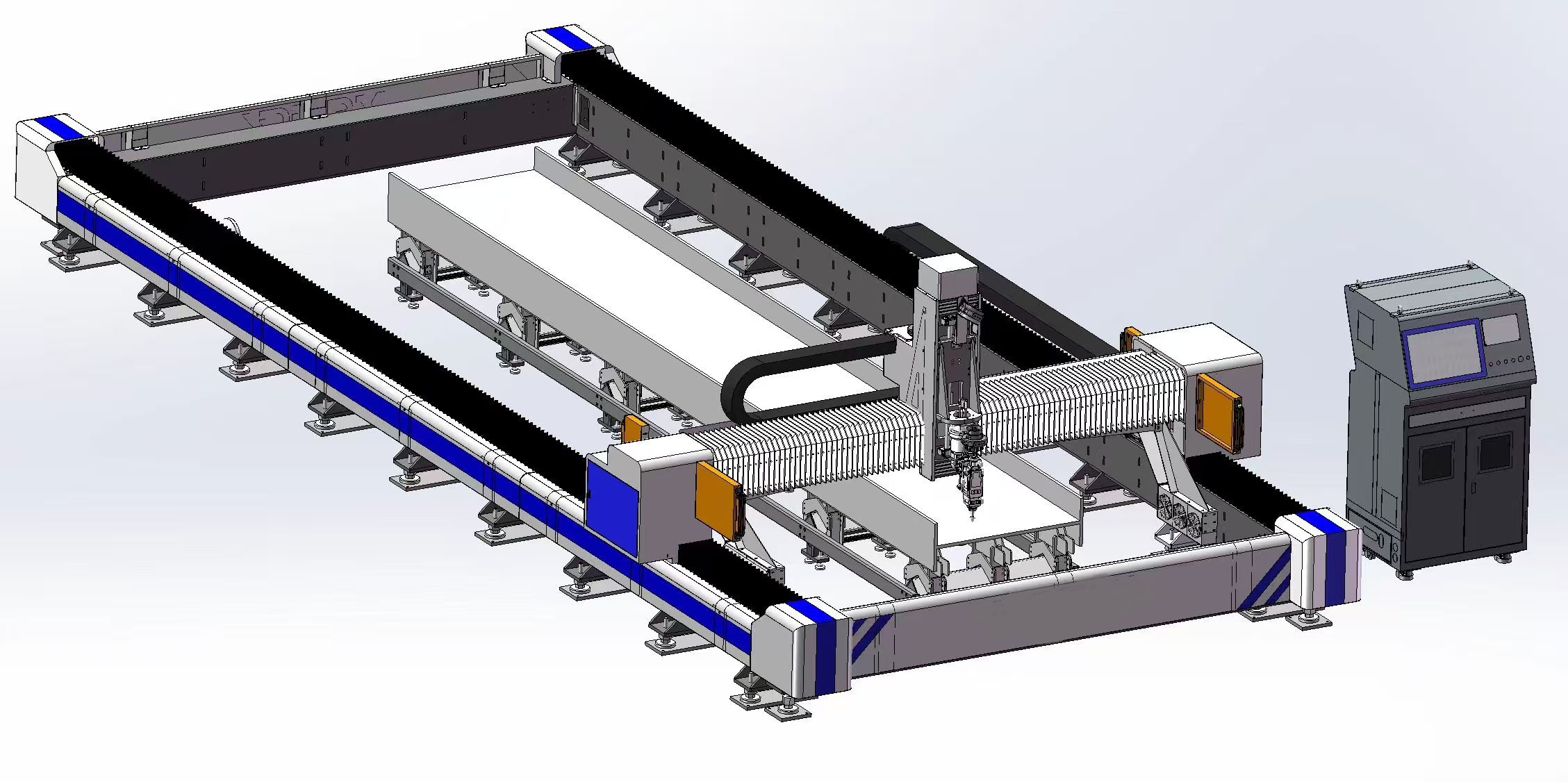
Industrial Application of H-Beam Plasma Cutter
Operational Efficiency and Gas Management at High Altitude
Operating heavy machinery in Bogotá requires specific calibrations due to the lower oxygen levels and air density. For a H-Beam Plasma Cutter, gas flow dynamics are altered. To achieve clean cuts on thick copper or aluminum sections, the system must utilize Precision Gas Metering to compensate for the altitude. This involves electronic pressure control (EPC) systems that adjust the flow of plasma and shield gases in real-time. By optimizing the gas swirl within the nozzle, the system creates a centrifugal force that stabilizes the plasma jet. This stabilization is essential for preventing the “double-arcing” phenomenon, which is more prevalent when cutting reflective materials. The result is a kerf that is narrow and consistent, minimizing the need for secondary grinding or finishing operations.
Economic Impact on the South American Supply Chain
The adoption of anti-reflection plasma technology in Colombia provides a competitive edge in the global B2B market. By reducing the scrap rate of expensive materials like copper and high-grade aluminum, fabricators can offer lower bid prices for international contracts. The ability to process H-beams, channels, and angles on a single machine reduces the footprint of the fabrication shop, a vital consideration in the densely packed industrial zones of Bogotá. Furthermore, the reduction in consumable wear—achieved through the anti-reflection safeguards—lowers the total cost of ownership (TCO) for the equipment. This allows local firms to reinvest in further automation and digital twin technologies, bridging the gap between regional manufacturing and global standards.
Concluding Industry Insight
The evolution of thermal cutting in Bogotá reflects a broader global trend: the convergence of robotics, plasma physics, and digital integration. As the industry moves forward, the distinction between “steel fabricators” and “high-precision component manufacturers” is blurring. The successful implementation of anti-reflection technology for copper and aluminum demonstrates that the limitations of plasma cutting are being systematically removed. For global stakeholders, the Colombian market serves as a blueprint for how high-altitude industrial centers can leverage specialized technology to overcome geographic and physical material constraints. The future of structural fabrication lies in the ability to handle multi-material profiles with the same level of precision once reserved for small-scale laser applications, but at the scale and speed necessitated by heavy infrastructure.
Industrial Expertise & Support
Are you looking for high-performance H-Beam Plasma Cutter tailored for the Global market? Our engineering team provides comprehensive solutions for modern manufacturing.

