Optimizing Structural Fabrication: Heavy-Duty Beam Laser Systems in Caxias do Sul
The industrial landscape of Caxias do Sul, Brazil, represents the second-largest metal-mechanic hub in the country. As global demand for structural steel and heavy machinery increases, the transition from traditional mechanical processing to high-power laser oscillation has become a technical necessity. Specifically, the implementation of the Heavy-Duty Beam Laser has redefined the throughput capabilities for regional manufacturers. This transition is not merely about raw power but involves a sophisticated integration of localized supply chains and rapid-response technical support to maintain high Overall Equipment Effectiveness (OEE).
In heavy-duty applications, precision must be maintained across large-scale workpieces, often exceeding 12 meters in length. The structural integrity of the machine bed, combined with the stability of the fiber source, determines the quality of the kerf and the heat-affected zone (HAZ). For the industries operating within the Rio Grande do Sul region, the ability to process thick-walled profiles and large-diameter tubes with high-wattage fiber sources is the cornerstone of modern production lines.
Technical Parameters of Heavy-Duty Laser Systems
A Heavy-Duty Beam Laser system designed for the Caxias do Sul industrial sector typically utilizes a high-power Fiber Laser Resonator ranging from 12kW to 30kW. These power levels are required to penetrate carbon steel thicknesses exceeding 25mm while maintaining a high feed rate. The motion control systems utilize high-torque AC servo motors coupled with precision rack-and-pinion drives to manage the inertia of heavy workpieces.
Furthermore, these systems incorporate advanced CNC Path Optimization software. This software calculates the most efficient cutting sequence to minimize thermal distortion across long beams. In structural applications, such as the manufacturing of agricultural equipment or transportation infrastructure, maintaining dimensional tolerances within +/- 0.5mm over a 10-meter span is a rigorous requirement that only heavy-duty laser architectures can consistently meet.
Localized Spare Parts: Mitigation of Operational Downtime
For global B2B operations, the primary risk associated with high-tech machinery in South America has historically been the lead time for critical components. In Caxias do Sul, the establishment of localized spare parts inventories has eliminated this bottleneck. By maintaining a regional warehouse stocked with essential consumables and high-value components, the Mean Time to Repair (MTTR) is significantly reduced.

Industrial Application of Heavy-Duty Beam Laser
The localized inventory typically includes:
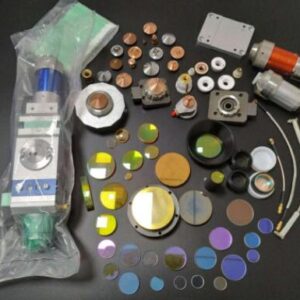
- Optical consumables: Protective windows, collimating lenses, and focus lenses with high-damage thresholds.
- Ceramic parts and nozzles: Specialized geometries for high-pressure nitrogen or oxygen assisted cutting.
- Electronic modules: Laser head sensors, height control units, and PLC I/O modules.
- Mechanical components: Replacement guide rails, bellows, and pneumatic actuators.
By decentralizing the supply chain from international hubs and positioning assets directly within the Caxias do Sul cluster, manufacturers avoid the complexities of customs delays and international logistics. This ensures that the Heavy-Duty Beam Laser remains operational during peak production cycles, providing a predictable output that is essential for Tier 1 and Tier 2 suppliers in the automotive and heavy equipment sectors.
The 24h Service Response Framework
In a high-volume production environment, an hour of downtime can equate to thousands of dollars in lost revenue and disrupted downstream processes. To counter this, a 24-hour service response protocol is mandatory. This framework is built upon three technical pillars: remote diagnostics, local field engineering, and proactive maintenance scheduling.
Remote diagnostics allow technicians to access the CNC interface via secure protocols to analyze error logs and sensor data in real-time. If the issue requires physical intervention, local field engineers based in or near Caxias do Sul are dispatched. This localized presence ensures that on-site support arrives within a 24-hour window, equipped with the specific diagnostic tools required for high-power laser systems. This level of service is critical for maintaining the Structural Steel Fabrication standards required by international engineering codes.
Integration with Industry 4.0 Protocols
The modern Heavy-Duty Beam Laser is not a standalone unit but a node within a larger digital ecosystem. Systems deployed in the Caxias do Sul region are increasingly equipped with IoT sensors that monitor power consumption, gas pressure, and diode temperature. This data is fed into predictive maintenance algorithms that can forecast component failure before it occurs.
By integrating these systems with local ERP (Enterprise Resource Planning) software, manufacturers can automate the replenishment of spare parts. When the system detects that a lens or nozzle has reached its duty cycle limit, an order is automatically generated within the local supply chain, ensuring that replacements are on-site before the machine requires maintenance. This proactive approach transforms the service model from reactive repair to scheduled optimization.
Environmental and Economic Efficiency
Operating heavy-duty lasers in Brazil also requires consideration of energy efficiency and gas consumption. High-power fiber lasers offer a wall-plug efficiency of approximately 30 percent to 40 percent, which is significantly higher than older CO2 technology. In a region like Caxias do Sul, where energy costs are a factor in operational overhead, the reduction in kilowatt-hour consumption per meter of cut provides a clear competitive advantage. Furthermore, the precision of the laser reduces material waste, optimizing the nesting of parts on large-format plates and beams.
Concluding Industry Insight
The maturation of the Caxias do Sul industrial hub signifies a broader shift in the global manufacturing landscape. As regional centers evolve, the demand for sophisticated machinery must be matched by equally sophisticated support infrastructures. The technical viability of a Heavy-Duty Beam Laser is no longer judged solely by its peak power or positioning speed, but by the resilience of its local ecosystem.
The integration of 24-hour service response and localized spare parts inventories indicates a transition toward “Zero-Downtime” manufacturing philosophies in South America. For the global B2B market, this means that Caxias do Sul is not just a consumer of technology, but a benchmark for how localized support can sustain high-performance industrial assets. As laser power continues to scale upward, the focus will inevitably shift toward the data-driven management of these assets, where the speed of technical service becomes as critical as the speed of the laser beam itself. Companies that prioritize this synergy between hardware capability and local service infrastructure will command the highest levels of productivity and market share in the coming decade.
Industrial Expertise & Support
Are you looking for high-performance Heavy-Duty Beam Laser tailored for the Global market? Our engineering team provides comprehensive solutions for modern manufacturing.